


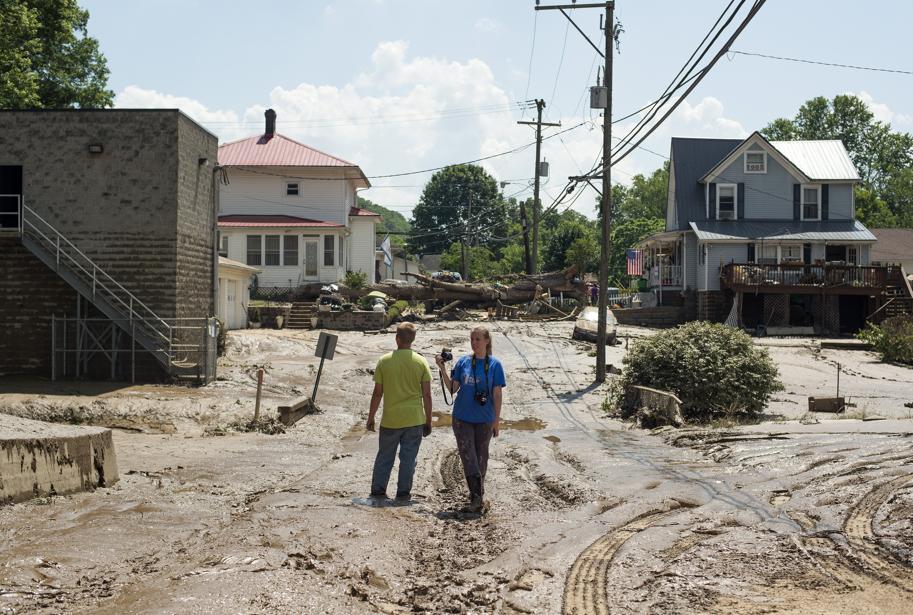
RAINELLE, W. Va. — When the torrential rains stopped in the tiny town of Rainelle, the volunteers started showing up.
By Monday, a small food line at a shopping plaza had ballooned from a couple of hundred hot dogs and hamburgers to a feast for flood victims — everything from bananas to cupcakes to nachos — and more hot dogs. Behind the food line, a large room was filled halfway to the ceiling with bags of donated clothing.
As volunteers sorted the items, the extent of last Thursday’s deluge came into clearer focus: Thousands of homes and businesses were damaged or destroyed and at least 23 people were killed when up to 9 inches of rain fell in a short span, causing perhaps the worst flooding the state has seen in three decades.
Officials said Monday that two men who were presumed dead when a vehicle was swept away in rushing waters were accounted for and the state revised its death toll to 23. That number includes 20 bodies found and three people who are missing and presumed dead.
The storm drew comparisons to floods in November of 1985 that remain the state’s most expensive natural disaster with more than $570 million in damage and 47 dead.
More than 400 people are in shelters after the flooding.
‘‘We haven’t stopped feeding people,’’ volunteer Kelsi Shawver said inside the Park Center shopping plaza. ‘‘I don’t even know that I’d call it volunteering. I’m just here to help.’’
Some of the worst destruction was in Rainelle, a town of about 1,500 people surrounded by hills, the Meadow River, and several tributaries.
Founded by the Rainelle brothers, Thomas and John, and once home to the largest hardwood lumber mill in the world, the town’s motto is ‘‘A town built to carry on. . . building great things since 1906,’’ according to its website.
The recovery and rebuilding has already begun. Along Route 60, the piles along the road came in two forms: ruined belongings and donated household supplies that needed to be picked up. At the shopping plaza, state troopers assisted with traffic flow and helped carry items to a supply drop-off and distribution center while helicopters buzzed overhead.
The Rainelle United Methodist Church, thought to be the largest structure in the world built entirely of lumber from American chestnut trees, had also turned into a donation center. The church basement flooded, but the main level, which sits higher off the ground, was unscathed.
Cindy Chamberlain, who oversees the shopping center distribution center, said she worked with the American Red Cross during the massive response to Hurricane Katrina in New Orleans.
‘‘It parallels Katrina. It is that bad,’’ she said.

