


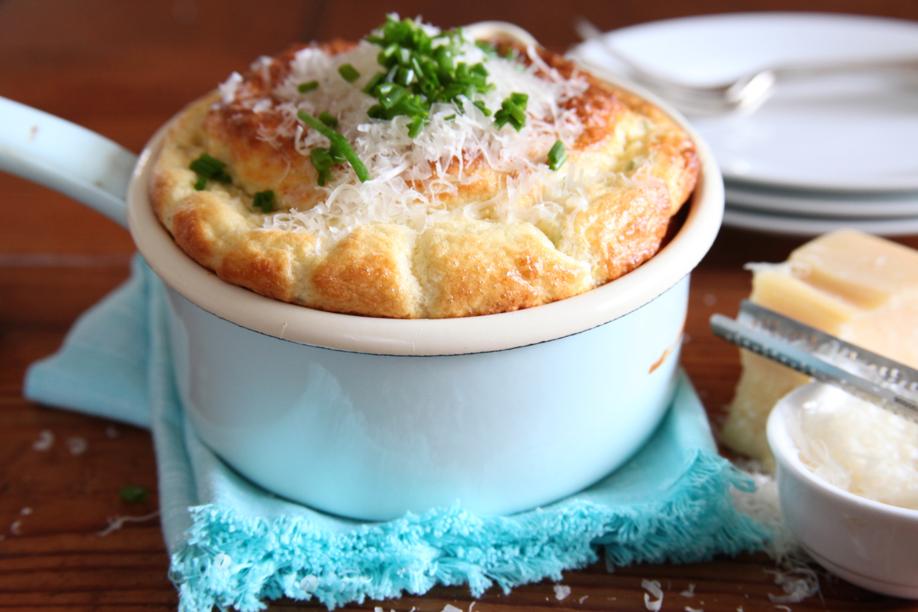
The mystery of the soufflé lies in its paradoxical nature. It is light and airy at the same time as it is rich and creamy. It is steeped in classical tradition but a perfect vehicle for breaking the rules (a soufflé is just as at home dressed in a mash of seasonal vegetables or a sauce made from Nutella as it is in cheese or chocolate). And out of the oven it is a glorious, puffy masterpiece, but it unabashedly falls just as the host is ready to serve it. Science has unraveled the secrets of the soufflé and found its true paradox: This seemingly complex dish is actually simple to prepare.
Perfect, billowy egg white foam
Soufflés are made of two parts: a flavorful savory or sweet base mixed with whipped egg whites. What makes soufflés so lofty are the thousands of small bubbles created when egg whites are beaten into clouds of foam. Egg whites are composed of proteins and water; as air is beaten into the liquid, it is the proteins that hold the bubbles in place. Made of both hydrophobic (water-fearing) and hydrophilic (water-loving) amino acids, the proteins are normally tightly folded, with their water-fearing portions tucked neatly inside. Beating unfolds the proteins, exposing hydrophobic amino acids, which gravitate to the air bubble surfaces, avoiding water. There they bond with neighboring proteins, creating a film around each bubble. Water-loving portions of the proteins remain in the liquid held between the bubbles.
For an impressive soufflé that rises proudly over the rim of its dish as it cooks, whipping whites for the right length of time is essential. If not beaten long enough, too few bubbles and a less cohesive protein film form, allowing the liquid normally trapped in the spaces between bubbles to drain out and bubbles to coalesce and collapse. Overwhipping causes the proteins that surround the air bubbles to bond too tightly to one another, reducing their capacity to expand, which increases the likelihood they will break as the soufflé cooks. Whip whites that have been cleanly separated from yolks (the fat in the yolks makes the foam less stable) until peaks just reach the stage where they firmly hold their shape without collapsing (this is the stiff peak stage).
Bring in the reinforcements
The age-old practice of whisking in a copper bowl guards against overwhipping whites and makes them more stable. Copper from the bowl bonds with specific sites on some of the egg white proteins, preventing them from bonding to one another too tightly. An alternative to using a copper bowl is adding a pinch of cream of tartar, which lends a similar effect by decreasing the pH of the egg whites.
Adding sugar as whites are whipped is another way to stabilize the foam. It dissolves in the liquid between the bubbles, giving it a thicker, syrupy consistency, preventing it from draining out.
The heat of the oven
After the whipped whites are carefully folded into the flavorful base, the soufflé goes into the oven, where it reaches its glorious puffy height and sets with a light yet creamy texture. Like all gases, the air trapped in the egg-white bubbles expands as it is heated. Steam, generated as liquid in the soufflé mixture evaporates, adds to the gaseous contents of the bubbles, puffing them up even more. Flexible protein walls widen and then set to form the support structure of the soufflé. Briefly opening the oven door, and even slamming it closed, will not collapse a soufflé, though it may cause some of the not-yet-set mixture to shift or fall out of the dish.
Time is of the essence once the soufflé comes out of the oven (you’ll want your guests seated at the table ahead of time, wine glasses in hand). The laws of physics dictate that as gases expand with heat, so too must they contract as they cool. The delicate, airy structure formed around the bubbles collapses when the bubbles shrink, and the soufflé loses some of its height soon after arriving on the table.
As the French preach, people wait for a soufflé, but a soufflé waits for no one.
Valerie Ryan can be reached at valerie.ryan.j@gmail.com.

