


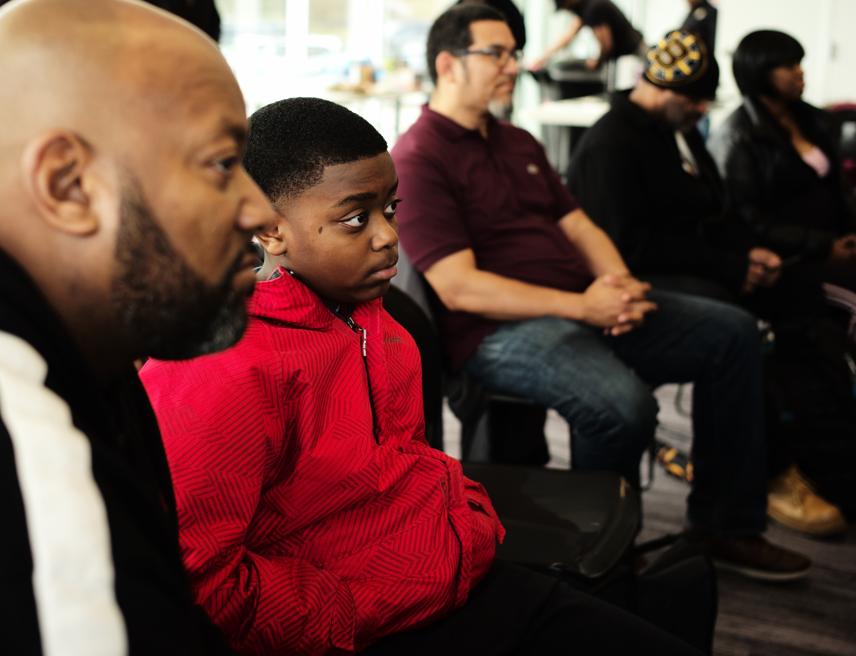
Jalil Rogers-Presley is only 11 years old, but his knowledge of the violence on Boston’s streets runs deep.
Shootings killed two relatives and a teen he knew — 17-year-old Raekwon Brown, who was shot outside Jeremiah E. Burke High School in 2016. Normandy Street, where Rogers-Presley lives in Dorchester, has seen at least two killings in recent years, his grandmother said.
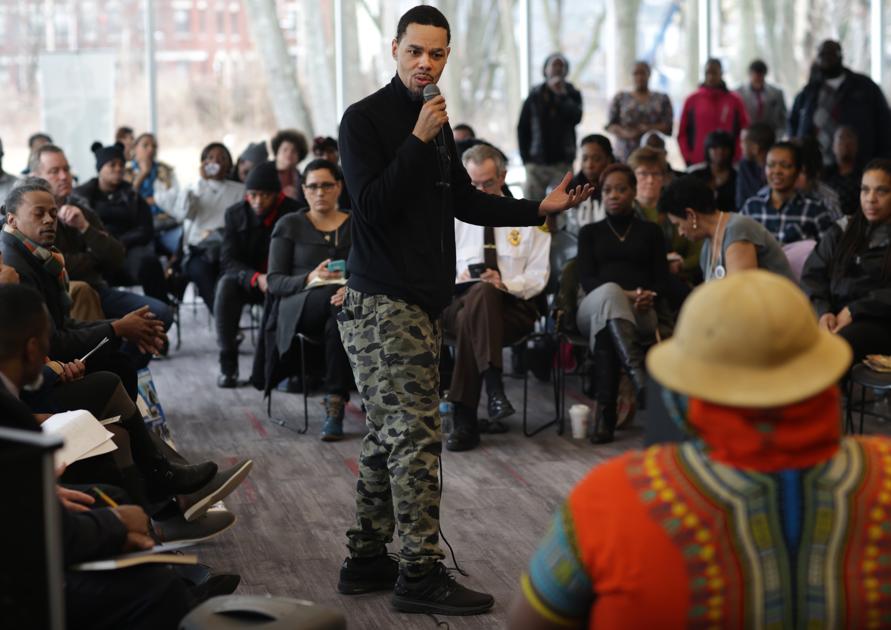
On Saturday, the boy stood before a large gathering of city officials at the Freedom House in Grove Hall and asked how they planned to fix the problem.
“I have cousins that died of gun violence. I wonder: Are they going to find their murderers,’’ he said in an interview. “I wanted to come here so I could talk about the community and the gun violence on the streets.’’
Rogers-Presley was the youngest person in the crowd to press city officials about efforts to help residents who have lost loved ones to violence during an hours-long session organized by James Hills, a community activist.
Hills put the meeting together after his nephew, 17-year-old Ameen Lacy of Dorchester, was shot and killed outside a Mission Hill community center in December.
Representatives from across city government explained what is offered by its programs devoted to trauma victims and violence prevention, and detailed what police officers and emergency medical technicians do at homicides scenes.
“There is no level of violence that’s acceptable in our neighborhoods,’’ said Daniel Mulhern, director of public safety for Mayor Martin J. Walsh. “Our collective goal is to get to zero.’’
But many in the crowd said they had never been made aware of the services and didn’t know who to call for help. The city, they said, needs to do a better job of publicizing the programs and promoting a trauma hot line that is staffed around the clock.
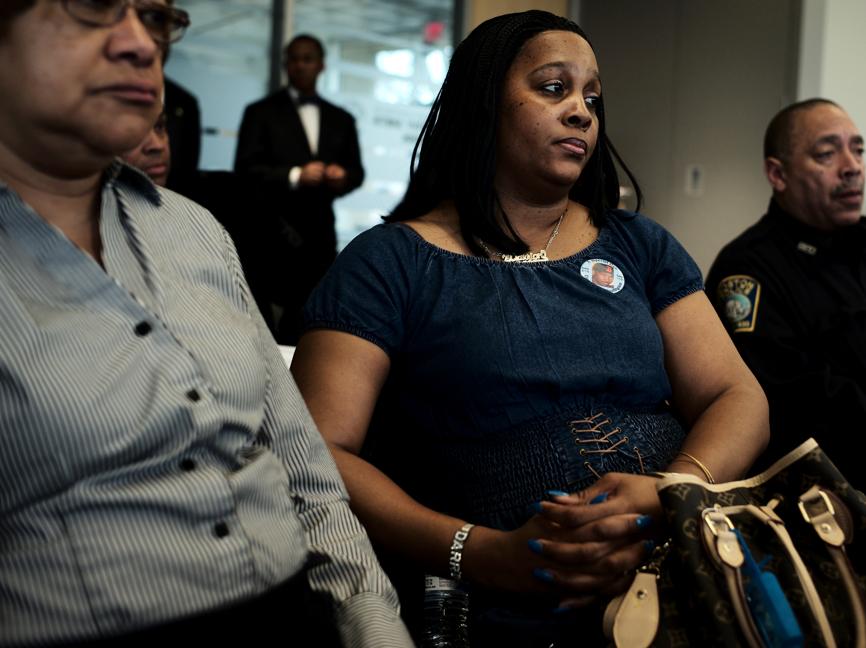
Natasha Carrington said her 18-year-old son, Darrion, was shot and killed 10 years ago last month as he waited for a takeout order inside a Chinese restaurant on Dorchester Avenue.
Since then, Carrington said the city hasn’t offered her any support or provided updates about the homicide investigation.
“None of them came to my aid. Nobody,’’ said Carrington, who lives in Hyde Park. “I still today have no closure,’’ she said.
The city employs different strategies for connecting trauma victims with services, officials said. Street workers go to homicide scenes, and within 24 to 48 hours of a killing, a police officer reaches out to the victim’s family, said Boston police Deputy Superintendent Marcus Eddings, who leads the Criminal Investigative Division.
Neighborhood trauma teams serve Dorchester, Jamaica Plain, Roxbury, Mattapan, and East Boston, plus a mobile group is ready to intervene anywhere in the city and a hot line is staffed at all times, according to the Boston Public Health Commission.
The teams can connect people to therapists, case workers, organize a coping group, and provide support at memorial services and vigils. They only go to a homicide scene, however, if their presence is requested, city officials said.
Monica Valdes Lupi, executive director of the city’s health commission, said officials want to know what they can do better.
“Clearly, there’s a lot of work and room for improvement so that’s what we’re here to do,’’ she said.
Lacy’s mother, Alexa Smith, told city officials that their efforts have fallen short. She said her son’s murder has compounded the fear she has lived with since she was shot when she was 12 years old.
“I’m disappointed,’’ she said.
Rogers-Presley’s basketball coach, Domingos DaRosa, said he brought the boy to the meeting because he wants him to grow up to become a leader and escape the violence that has been reached into so many corners of his childhood.
“Sometimes your eyes see something and there’s no way to erase it,’’ said DaRosa, who lives in Hyde Park. “You don’t have to be the person who got shot. You don’t have to be the person who was doing the shooting. You don’t have to be the person who lost somebody.’’
Mulhern offered Rogers-Presley a way to help, inviting him to join Walsh the next time he meets with leaders from across New England to discuss gun violence and prevention.
Rogers-Presley said he liked the idea.
“I’ll go to the meetings,’’ he said.
Laura Crimaldi can be reached at laura.crimaldi@globe.com. Follow her on Twitter @lauracrimaldi.

