


HEALTH CARE
Deal averts ballot question fight between union, hospitals
A powerful labor union dropped its push for a controversial ballot question that would have cost the state’s largest health care provider $440 million a year, after reaching a deal Wednesday with hospital industry executives and Beacon Hill leaders. The compromise averts what otherwise promised to be an expensive and contentious political fight leading up to the November election. The deal will establish a special commission to study variations in health care prices and calls for hundreds of millions of dollars in new funding for ailing hospitals over the next five years. It may also lead to more jobs for members of the Service Employees International Union at giant Partners HealthCare. Partners and the SEIU said they have formed a “strategic alliance’’ that could lead to more workers at Partners hospitals unionizing under the SEIU. Only about 1,200 of the union’s 52,000 members now work at Partners facilities. The SEIU’s ballot proposal would have dramatically changed the way hospitals are paid. Some of the hundreds of millions of dollars taken from Partners hospitals, which are among the priciest in the state, would have been redistributed to lower-paid hospitals, and some would have been returned to health insurers. — PRIYANKA DAYAL MCCLUSKEY AND JIM O’SULLIVAN
TECHNOLOGY
iRobot fends off board challenge
The two management-backed candidates for iRobot Corp.’s board survived a spirited challenge from a Los Angeles hedge fund in an election that culminated at the company’s annual shareholder meeting Wednesday. Shareholders elected incumbent directors Mohamad Ali and Michael Bell to the board, although the winning margin remained unclear as the voting totals were not available. The two veteran tech executives were originally appointed to the board in the past year after investment firm Red Mountain Capital Partners became the Bedford-based robot company’s third largest shareholder and began agitating for big changes. The campaign became a pivotal test for iRobot chief executive Colin Angle and the company he cofounded — considered a prominent leader in the region’s growing robotics cluster, with 500-plus local employees and a market value of more than $1 billion. Red Mountain first bought shares in the maker of room-cleaning robots last year because founder Will Mesdag saw an opportunity to improve its stock performance: at the time, iRobot’s total shareholder return from its IPO in 2005 was 36 percent, compared to more than 150 percent for the Nasdaq Composite index over the same period. Red Mountain now owns 6.5 percent of iRobot’s shares. — JON CHESTO
RIDE-HAILING
Hub’s Fasten looks to fill gap left in Austin by Uber, Lyft
Competing with the two giants of the on-demand economy is a pretty tall order. So when the stiffer regulations prompted Uber Inc. and Lyft Inc. to pull out of Austin, Texas, earlier in May, Kirill Evdakov took notice. Evdakov launched Boston-based Fasten Inc. last fall as a lower-cost competitor to the big smartphone car-hailing services. So far it’s been offered only in Boston, which Evdakov claims has “several thousand’’ drivers. Now Evdakov is about to make his first big move beyond Boston, when he sets up in Austin to take advantage of the hole left by Uber and Lyft, sensing a rare opportunity to attract riders and drivers without directly battling the industry’s largest competitors. In just three days, Evdakov said, Fasten signed up more than 1,000 drivers for its service. Proposition 1, a ballot question that would have overturned several city regulations, was backed by Uber and Lyft, but rejected by Austin voters on May 7. The two companies promptly withdrew from the city, known for its progressive politics, music scene, and the South by Southwest music, film, and technology conference that attracts luminaries of the digital economy. — CURT WOODWARD
HEALTH CARE
Healy to lead Beth Israel Deaconess flagship
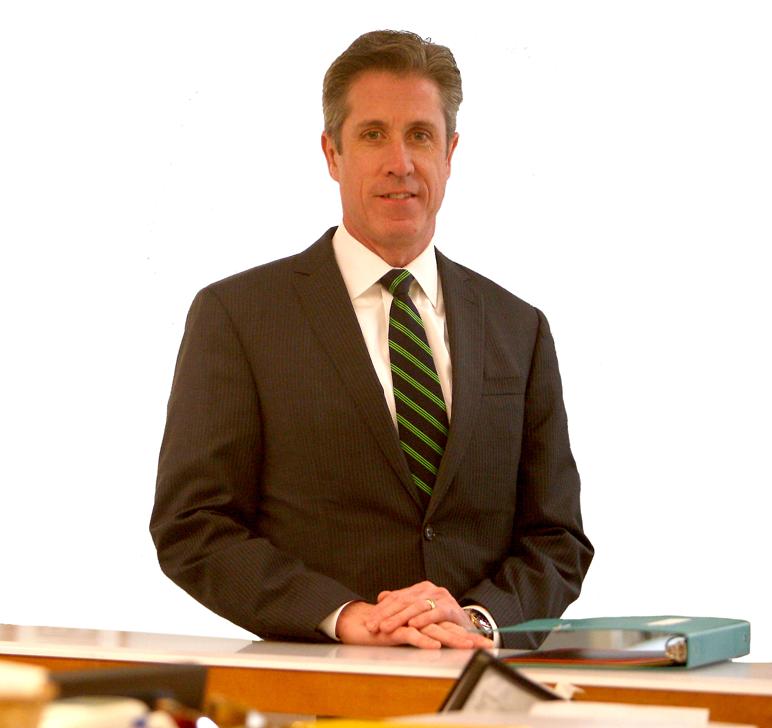
Beth Israel Deaconess Medical Center said Thursday that its flagship Boston teaching hospital will get its own president, a move designed to give the health system’s chief executive more time to focus on strategy. The new position at the medical center will be filled by Peter Healy (left), who is currently head of the Beth Israel Deaconess hospital in Milton. He will start in Boston on Jan. 1. The switch will allow Kevin Tabb, chief executive of the Beth Israel Deaconess network, to develop and implement a “system-wide strategy’’ and increase his fund-raising work. Tabb, a physician who took the top job at Beth Israel Deaconess almost five years ago, said the changes will help the health system weather challenges in the health care industry. Those challenges include a move to new payment models, pressure to control costs, and the consolidation among competitors. Beth Israel Deaconess has grown under Tabb’s leadership. It operates a large teaching hospital in Boston’s Longwood area and three community hospitals in Milton, Needham, and Plymouth. The health system also has affiliations with six other hospitals, and is seeking affiliations with more. — PRIYANKA DAYAL MCCLUSKEY
BIOTECH
Delay by FDA raises hopes for Sarepta’s Duchenne drug
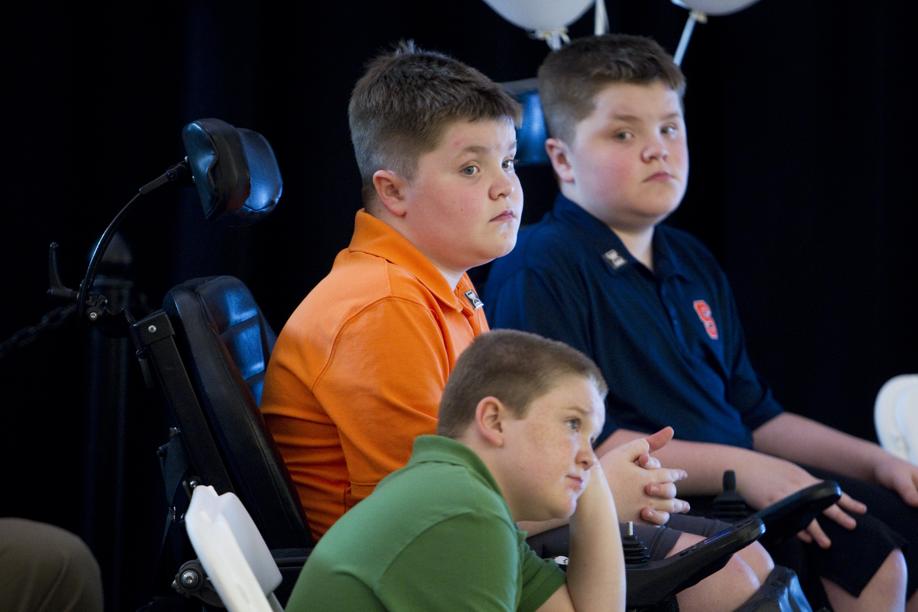
Federal regulators postponed a long-awaited decision on whether to approve Sarepta Therapeutics Inc.’s drug to treat Duchenne muscular dystrophy, a fatal muscle-wasting disease that strikes about one in 3,500 boys. The news, disclosed Wednesday by Cambridge-based Sarepta, sent the company’s stock up almost 27 percent. Investors saw the delay as a sign the Food and Drug Administration might approve the drug, overruling the recommendation of an FDA advisory committee. The company gave no indication of when it expected the FDA to rule on the drug candidate, called eteplirsen, which seeks to treat about 13 percent of Duchenne patients who have a specific genetic mutation. FDA officials declined to discuss their timetable, saying they were prohibited by law from discussing pending drug applications. Despite the investor enthusiasm, patient advocates took a wait-and-see attitude. Hundreds of patients and family members traveled to the FDA advisory committee meeting in Maryland last month to argue for approval of the drug, with some boys who took the drug in clinical trials testifying that it helped them walk and feed themselves. — ROBERT WEISMAN
TRAVEL
TSA cites Logan Airport as model in moving security lines
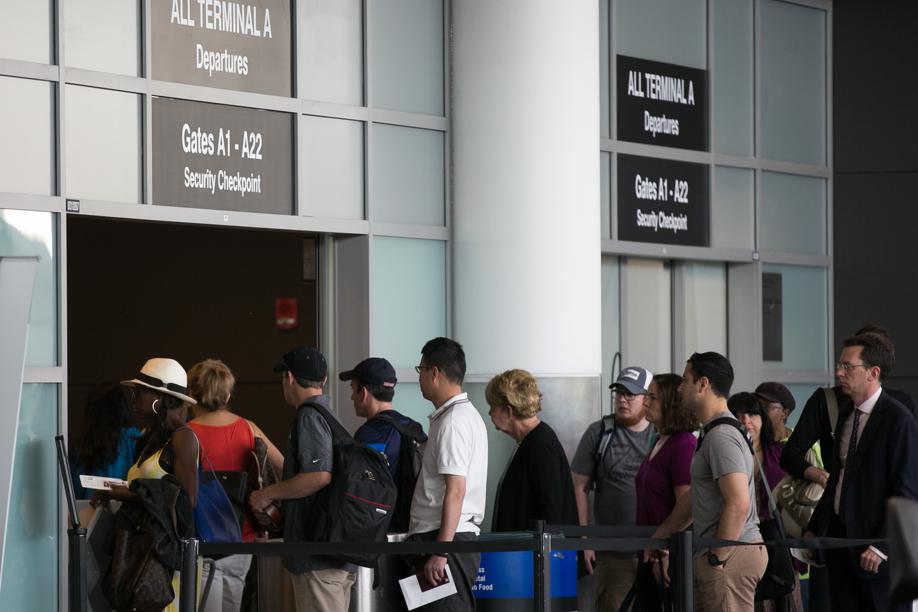
Travelers at Logan Airport have been spared the nightmarish waits at security that have plagued other cities, leaving officials optimistic they can make it through the summer vacation surge without big disruptions. Things are going so smoothly here, in fact, that last week the Transportation Security Administration temporarily redeployed Logan’s federal security director to work with a new management team at Chicago’s O’Hare International Airport, where dozens of passengers recently spent the night on cots after missing flights because of a two-hour-plus wait. The security logjams are due to a convergence of understaffed checkpoints, record-high passenger numbers, and tightened security measures. The TSA, which also replaced its top security official last week, attributes the relatively short waits in Boston to the Logan team’s aggressive recruiting of new agents. Also contributing to the relatively short waits in Boston, according to airport executives: the airportwide security briefing that takes place at 8:30 every morning, which provides airlines, security agencies, and airport station managers a real-time look at hot spots and the ability to collaborate on tackling potential issues. — KATIE JOHNSTON

