


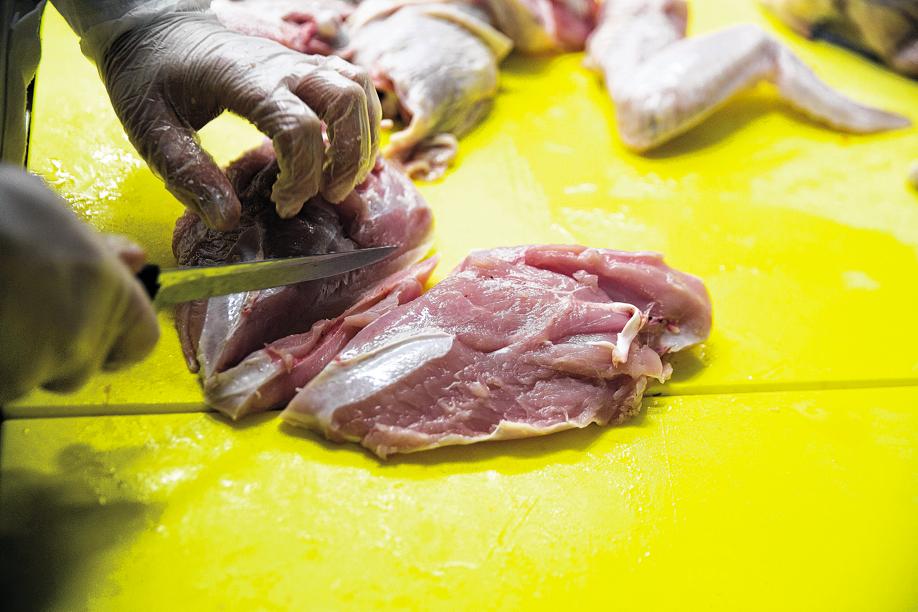
Despite the rise of meat clubs, sold-out public butchering demonstrations, and increasing numbers of restaurants serving locally produced beef, there is a key problem in the homegrown meat movement: a shortage of butchers.
While foodies, chefs, and everyday shoppers increasingly want to trace their meat back to the farmer and town where the animals were raised, slaughterhouses and supermarkets are having trouble finding enough workers who are willing or able to cut meat for a living.
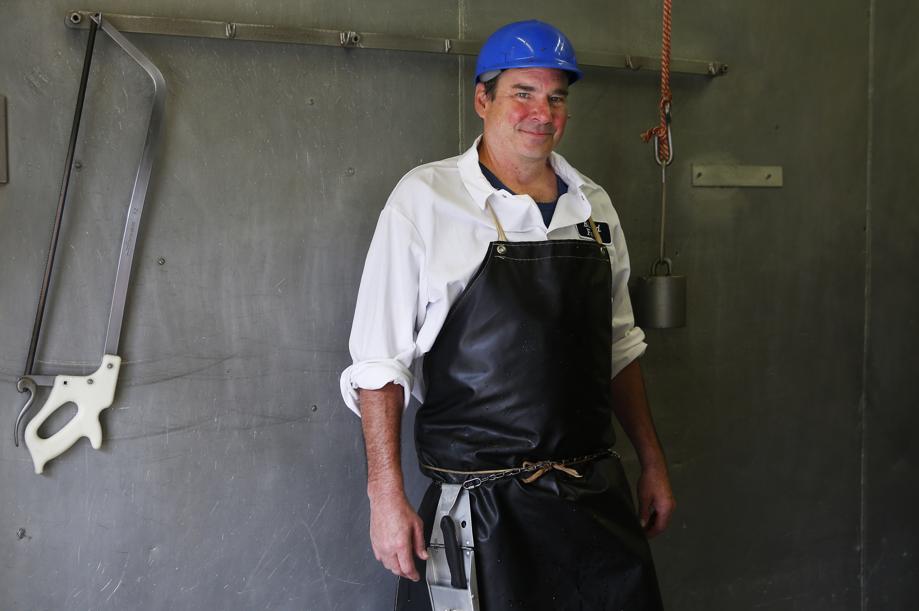
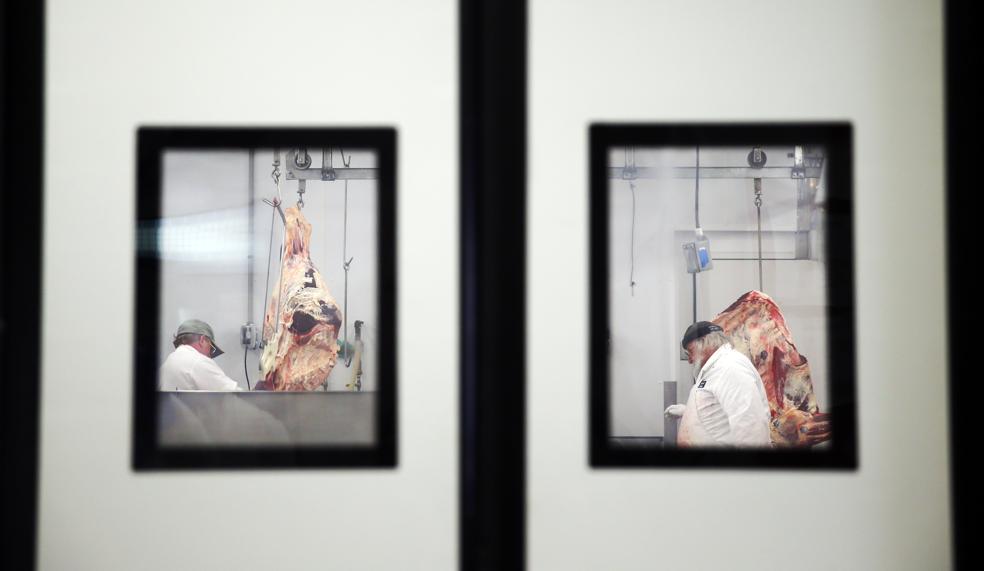
“It’s very hard to get someone to butcher,’’ said Richard Blood, a seventh-generation butcher who works at his family’s Groton slaughterhouse, Blood Farm. They’ve been looking for six months to fill an opening for a butcher and in the fall will need another. Finding help “is always a headache,’’ he said.
Blood is an increasingly rare breed. There are just 40 slaughterhouse butchers in Massachusetts, down 82 percent since 2012, according to data from the North American Meat Institute, an industry group in Washington.
US Bureau of Labor Statistics show significant fluctuations in the number of butchers, who are trained to cut up a whole animal, and meatcutters, who do less specialized work, such as turning large pieces of meat delivered to a supermarket into steaks.
The number of butcher and meatcutter jobs in the United States declined from 146,000 in 1997 to 137,000 last year.
In Massachusetts, there were 2,010 butchers and meat cutters in 2000, compared with 1,860 last year.
“It is very much a lost art, a lost skill,’’ said Edith Murnane, a food industry consultant who was Boston’s “food czar,’’ advocating for local food and farming programs, during the Menino administration. “There are very few people out there who really understand butchering in its many forms.’’
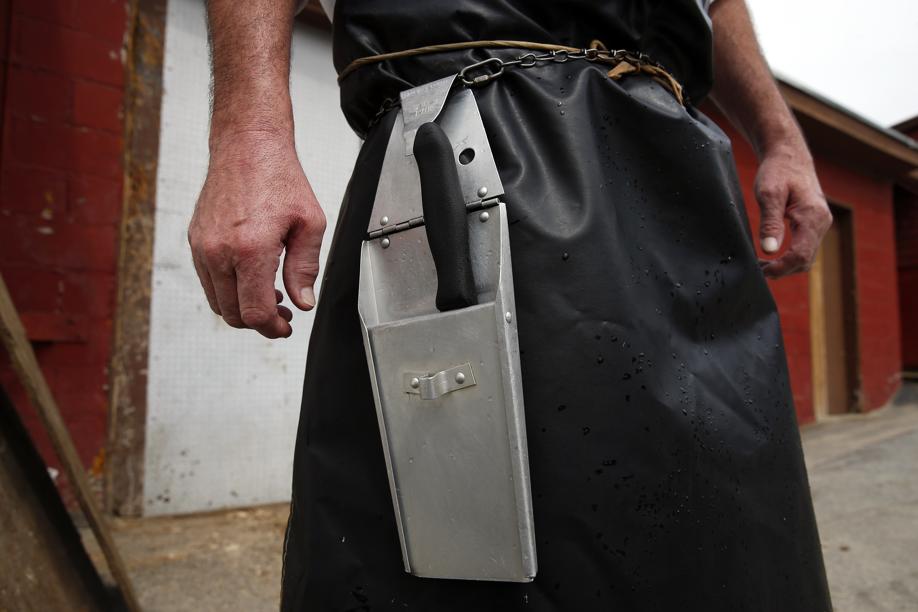
Undoubtedly, the chosen profession of the 58-year-old Blood — who wears a 5-inch blade and a 6-inch hooked knife, gunslinger style, to work — is not for the faint of heart. Animals are killed with a 20-gauge slug, then disembowled.
“You’re working with blood, you’re working with all kinds of fluids,’’ he said. “And they don’t give a hog a towel bath before you butcher it.’’
For those who can stomach the work, the pay isn’t great. Butchers and meatcutters in slaughterhouses or grocery stores earn $14 to $15 an hour, on average, according to the Bureau of Labor Statistics, about $30,000 a year.
Massachusetts is home to 1,423 livestock farms, including 849 raising beef, according to the 2012 federal census of agriculture (the most recent one available). About 141,000 head of cattle are shipped annually from New England, New Jersey, and New York to Midwestern farms for final grazing and slaughtering because of the lack of meat-processing facilities and butchers in New England, Murnane said.
Yet Murnane said a recent butchering demonstration at Boston Public Market with Kari Underly,author of the James Beard-nominated book “The Art of Beef Cutting,’’ sold out. Participants were given knives and saws to help butcher a 500-pound side of meat.
“Culinary schools aren’t teaching these classes, or if they are it’s on a very basic level, like gutting and skinning some fish. Maybe a chicken,’’ she said. “More and more chefs want to be able to do this themselves.’’
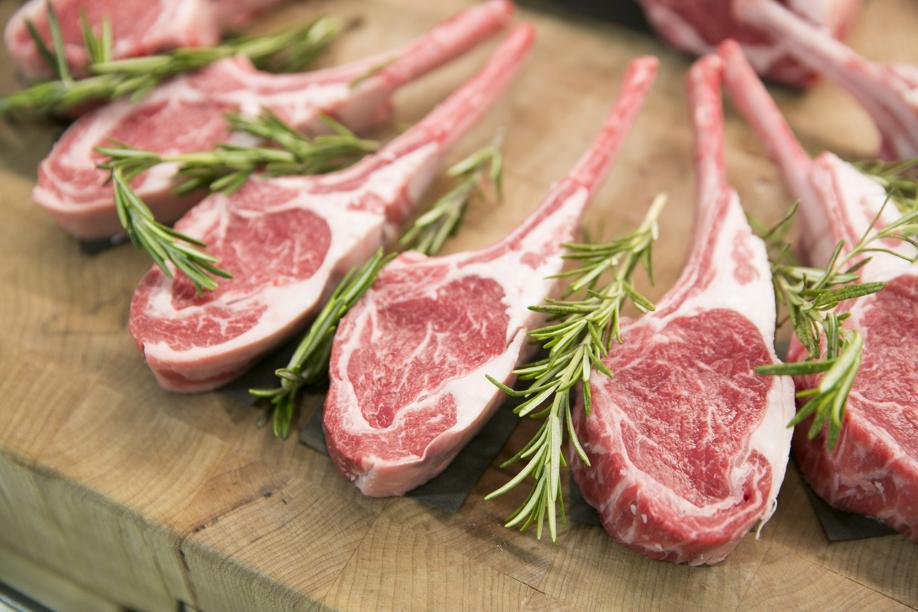
Most Americans buy their beef at supermarkets, not farmers’ markets, specialty shops, or meat clubs — where people buy shares of beef a month or so in advance and receive discounted prime cuts — along with a helping of the more unusual animal parts.
For supermarkets, the shortage of meatcutters is a constant problem.
Whole Foods’ stores in the Northeast have four openings for meat cutters, a meat supervisor job, and several part-time jobs on meat service teams that don’t actually involve cutting meat.
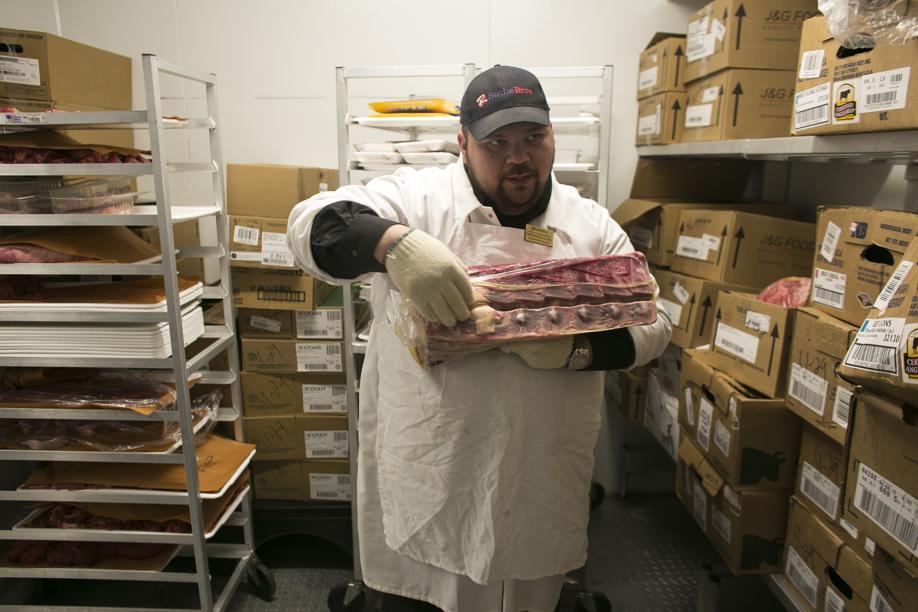
Roche Bros. Supermarkets, which includes its Sudbury Farms markets, currently has four open positions for meatcutters.
Both chains offer apprenticeships, because so few applicants have meat-cutting skills.
The aptly named Paul Butcher, a full-time meatcutter at the Roche Bros. in Boston’s Downtown Crossing, said he thinks fewer young people are interested in learning a craft or working with their hands.
“No one wants to get into the actual trades anymore,’’ the 37-year-old said. “Plus, a lot of people are just grossed out by it.’’
Some supermarket butchers worry that grocery chains will increasingly opt to sell “case ready’’ meat — meat that is cut, packaged, and labelled before delivery — leaving them jobless.
While companies like Roche Bros. and Whole Foods get their meat in hefty beef rounds or large loin ribs that need to be cut, chains such as Walmart sell mostly packaged meat that demands no in-store preparation.
Wes Ishmael, a contributing editor at BEEF magazine, said the business continues to change. “God bless the local butcher if he or she has figured out a way to carve out a business and build a clientele,’’ he said.
Those full-service shops are few and far between. One need look no farther than Boston’s North End, a onetime meat mecca where shops displayed linked sausages, hanging chickens, and rabbits like trophies.
Sulmona Meat Market is one of the few left.
Owner Frank Susi, a fourth-generation butcher who took over the business from his father, said he still caters to a few longtime Italian families who live in the neighborhood and request specific cuts of meat. But more and more, people simply ask him for “something good on the grill.’’
He is one of three butchers who work at the shop, but Susi said he can’t imagine that the business will continue for another generation.
“We’re hanging on by a thread,’’ he said recently. “My 11-year-old daughter tells her friends at school that her father cuts meat, and they’re like, ‘What?’ ’’
Megan Woolhouse can be reached at megan.woolhouse@globe.com. Follow her on Twitter @megwoolhouse.

