


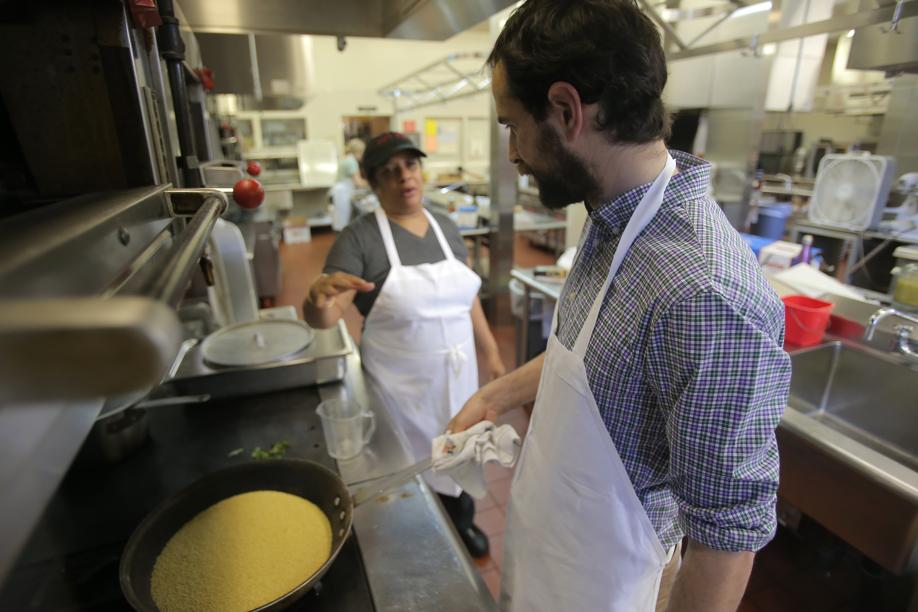
On a Monday afternoon, in a steamy test kitchen at Boston University, chefs and archeologists were hard at work cooking up a curious feast.
Doctoral candidate Daniela Hernandez was wrist-deep in a concoction of amaranth grain and honey that has survived unchanged since the time of the Aztecs. At the next station, Dan Fallu, also a PhD student, stirred a rich stew right off the menu from a Mycenaean palace. Other students were already plating a dessert — peach marmalade sponge cake, popular with the prostitutes of 19th-century Boston.
Their recipes came not from Pinterest, but from the remains of privies, the bottoms of millennia-old clay pots, and the traces of cooking fires thousands of years extinguished. In a few hours, they hoped to allow hungry members of the public a chance to experience a taste — several tastes, in fact — of history.
The dinner, aptly named “Eating Archeology,’’ was the brainchild of Ilaria Patania, a graduate student who is as passionate about food as she is about archeological science.
Food is practically Patania’s native tongue; her parents run a hotel and restaurant in her native Italy. “To me, cooking is such an important part of who I am,’’ she said. “It reminds me of where I’m from when I’m far away.’’ If food could connect Patania to her roots, she wondered, what about the deeper past? What would it mean to taste a recipe thousands of years old?
So this semester, armed with funding, Patania and her colleagues set out to reconstruct the past through food. They split into four teams, comprising students in BU’s archeology and culinary schools, as well as graduates who had gone on to become chefs. Each team tackled an era: Bronze Age China, Bronze Age Greece, pre-Colombian Mesoamerica, and — closest to home in both space and time — Boston’s 19th-century Endicott Street brothel, uncovered years ago in the Big Dig.
Of course, the ancients didn’t write down recipes. It all had to be reconstructed by examining what they left behind. “You can scrape off residue from a pot and analyze it and tell what was cooked in it,’’ Patania said. “All of these different pieces of the puzzle have to be put together.’’
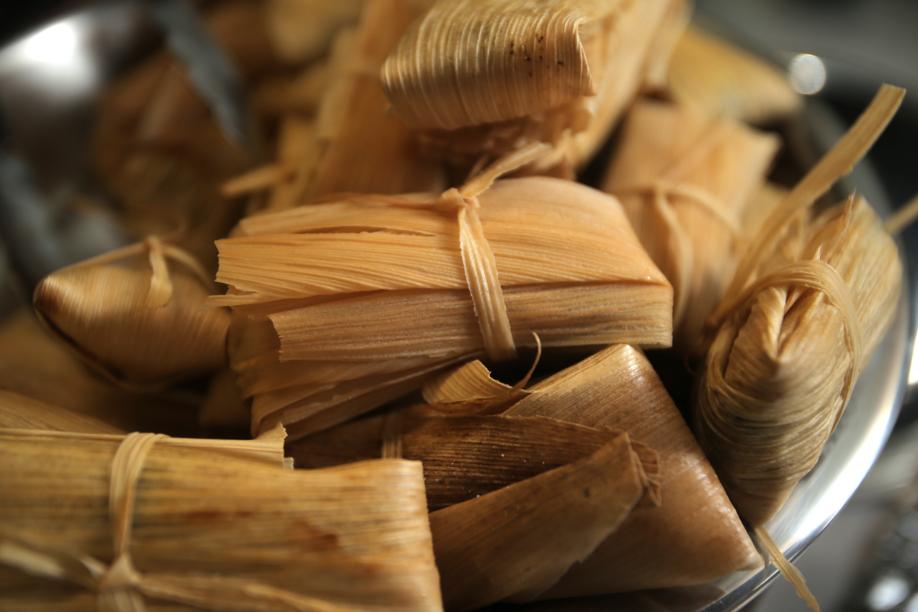
Hernandez, for example, researched botanical remains at Aztec sites, as well as ethnographic studies of Mexican foodways. The amaranth-and-honey dish, known as alegria today, “still has a ritualistic purpose’’ in parts of central Mexico, she said. “They mix it with blood and offer it for the Day of the Dead.’’
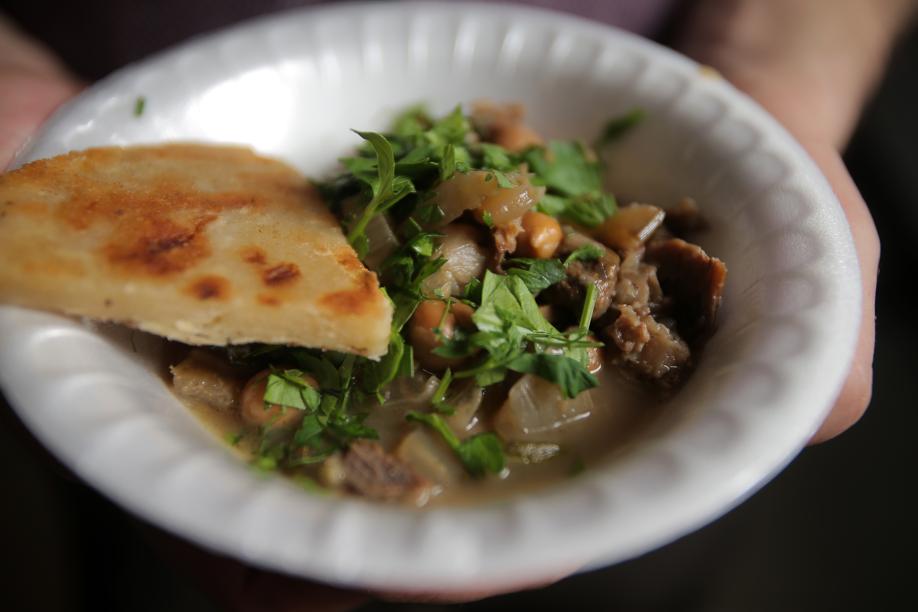
Nearby, Fallu held up the remains of a lamb shank. “Do we have any use, analytically, for bleached and stewed bones?’’ he asked colleague Caroline Pierce. Their stew was based on residue found on ancient Mycenaean clay pots, but they agreed that the leftover bones could serve science, too: By comparing their chemical composition and microscopic structure to ancient lamb bones, they can tell how long the Mycenaean simmered their stew. “We have ways of making these bones talk,’’ Fallu said.
They also gained insight through culinary reenactment. Patania had a local potter reconstruct ancient Chinese vessels, so her team could see how they worked when actually used for cooking. “Every time you make a dish,’’ Patania said, “you’re re-creating movements and re-creating tastes that have been re-created by thousands of generations of people thousands of years ago.’’
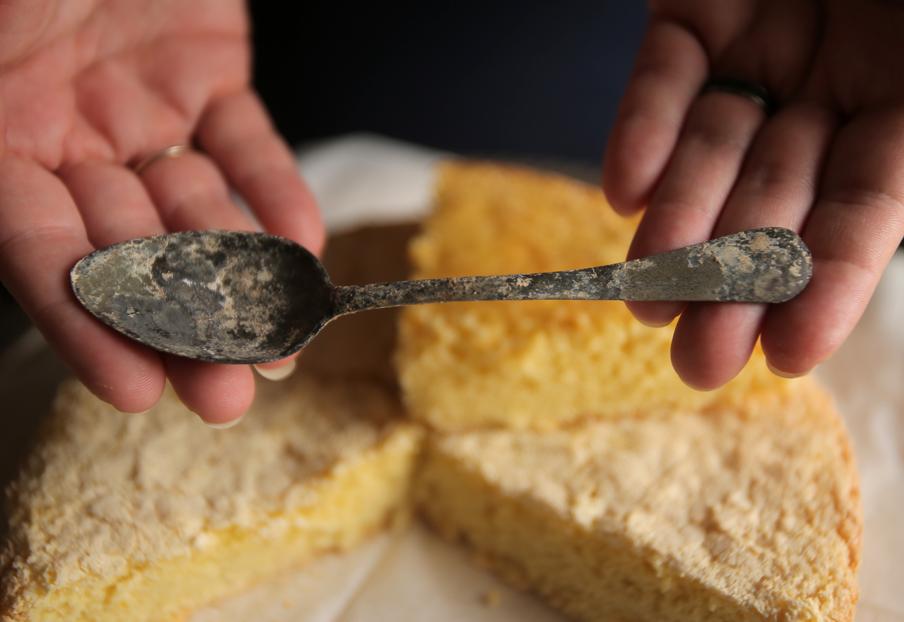
Of course, tastes change. One of the hardest recipes to get right was one of the few that was written down. The peach-marmalade sponge cake, inspired by the remains of peach pits found at the brothel site, came from an 1850s cookbook. The first test run was strictly historically accurate, and almost inedible — way too dense and too sweet, said graduate student Jade Luiz. “The Victorians really loved their sugar,’’ she said ruefully.
At 5 p.m., as BU students and interested others lined up to sample the modified version — lighter and spongier — they seemed pleased. Luiz and her colleagues had a more faithful version on hand, just in case anyone was curious.
For Patania, it was a way of accessing the intangible, and ephemeral, parts of ancient cultures — not just the pottery shard, but the taste of the food it once held. “Isn’t this more powerful than going to the Museum of Fine Arts and looking at [an artifact] in a vacuum-sealed case?’’ she said. “The food is here now, and even though you consume it and it goes away, it’s still powerful, still beautiful, and still ancient.’’
S.I. Rosenbaum can be reached at si@arrr.net. Follow her on Twitter @sirosenbaum.

