


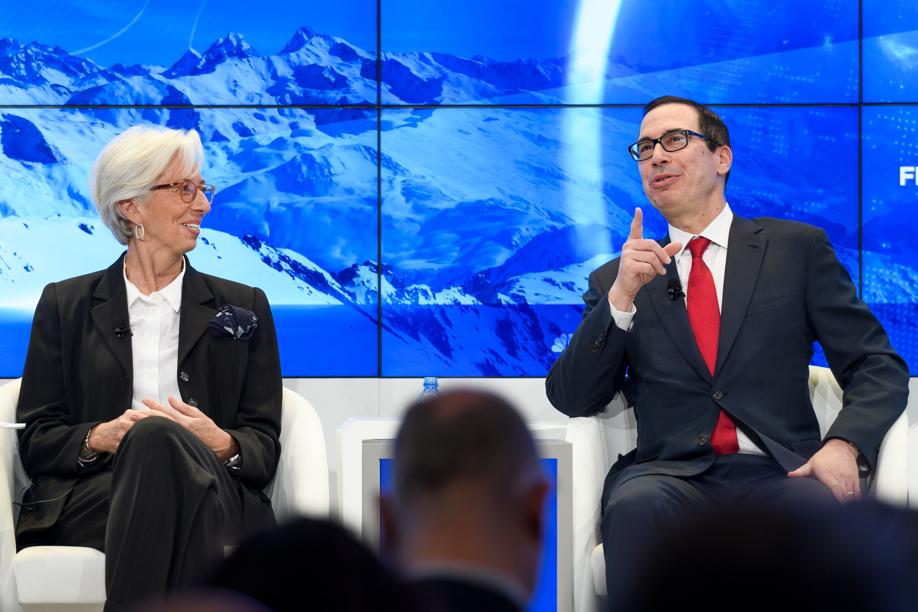
DAVOS, Switzerland — His name now appears on the dollar bill. But that does not mean it is safe for him to actually talk about the dollar.
Treasury Secretary Steven Mnuchin got a reminder of that truism this week when an apparently offhand comment — that a weak dollar benefits US trade — helped plunge the currency to a three-year low and touched off a flurry of speculation about the Trump administration’s economic plans.
The market-moving hullabaloo highlighted the sensitivity about President Trump’s “America First’’ trade agenda here at the World Economic Forum, the annual gathering of capitalist titans and world leaders. If the United States were reversing more than two decades of policy, as some feared Mnuchin’s comment indicated, it could spark a return to the currency wars that once roiled the global economy.
But Mnuchin, a former hedge fund manager and Goldman Sachs executive, insisted Thursday that was not the case, saying he had been misunderstood. He meant his previous remark only as a statement of fact, not an objective of the administration or another tool in Trump’s war against what he considers unfair practices by US trading partners.
“I thought my comment on the dollar was actually quite clear yesterday,’’ he told reporters hours before Trump arrived in Davos. “I thought it was actually balanced and consistent with what I’ve said before, which is we’re not concerned with where the dollar is in the short term, it’s a very, very liquid market and we believe in free currencies. And that there’s both advantages and disadvantages of where the dollar is in the short term.’’
Maybe it should have been. But Treasury secretaries have learned over the years that comments they thought were clear have not always been taken that way.
“Treasury secretaries normally are highly disciplined when they speak on the dollar to ensure their words are treated seriously when they want to signal policy shifts or to build confidence in challenging economic moments,’’ said Gene Sperling, who served as the top economic adviser to Presidents Barack Obama and Bill Clinton. “This type of seemingly off-the-cuff and politically careless back-and-forth just erodes that type of authority when it will be most needed.’’

