


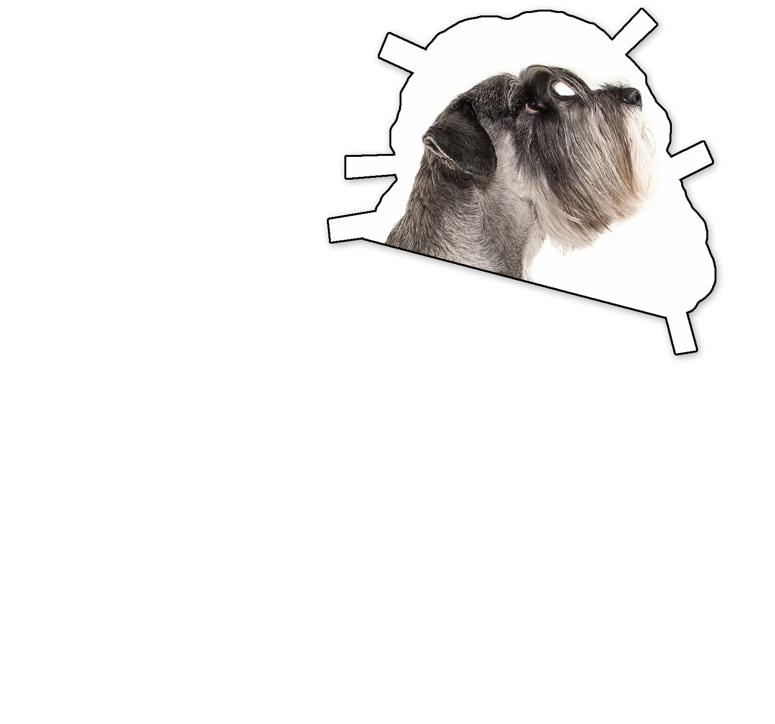
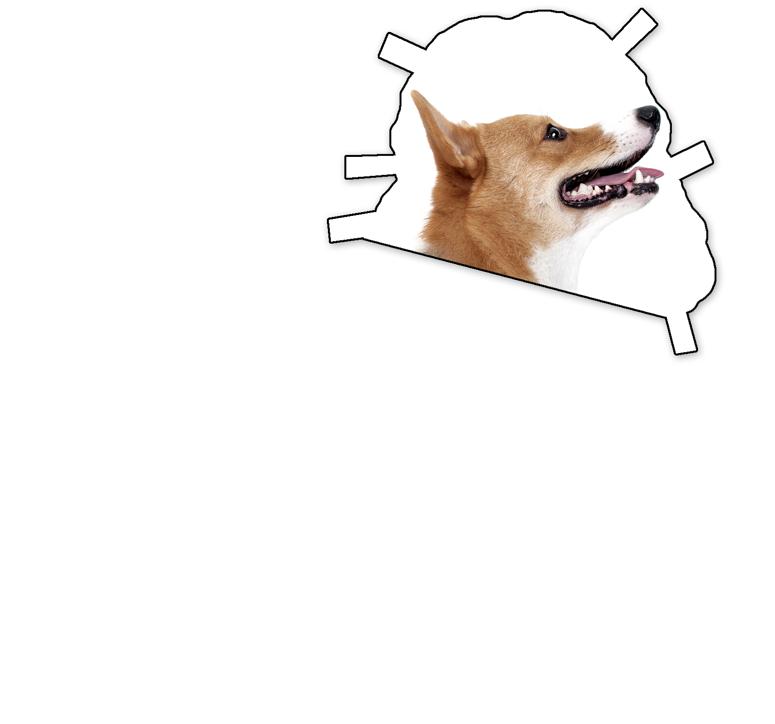
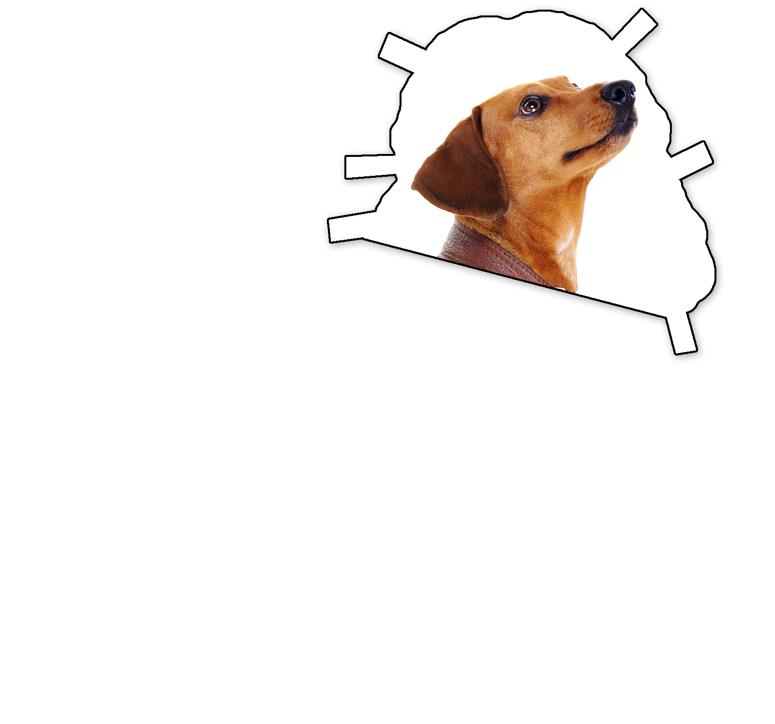
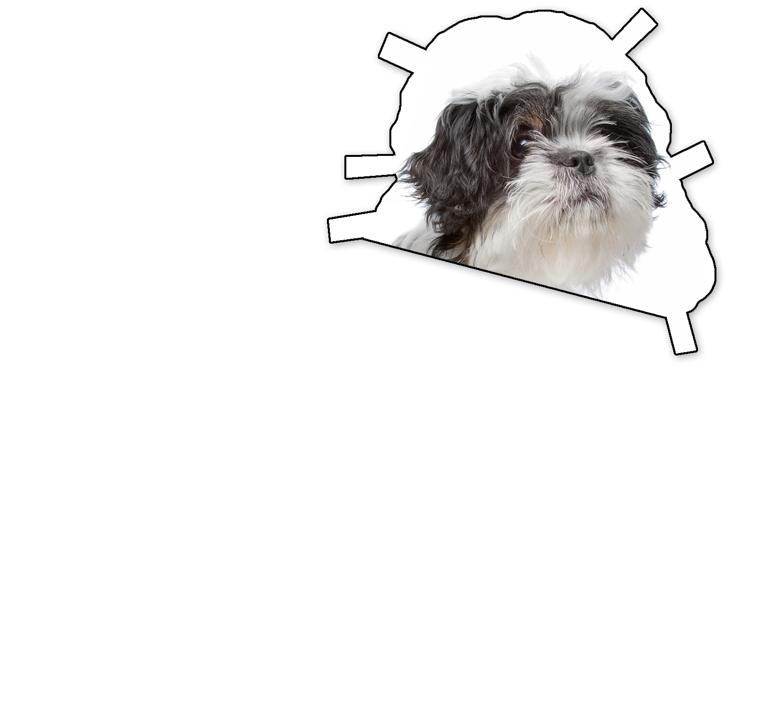
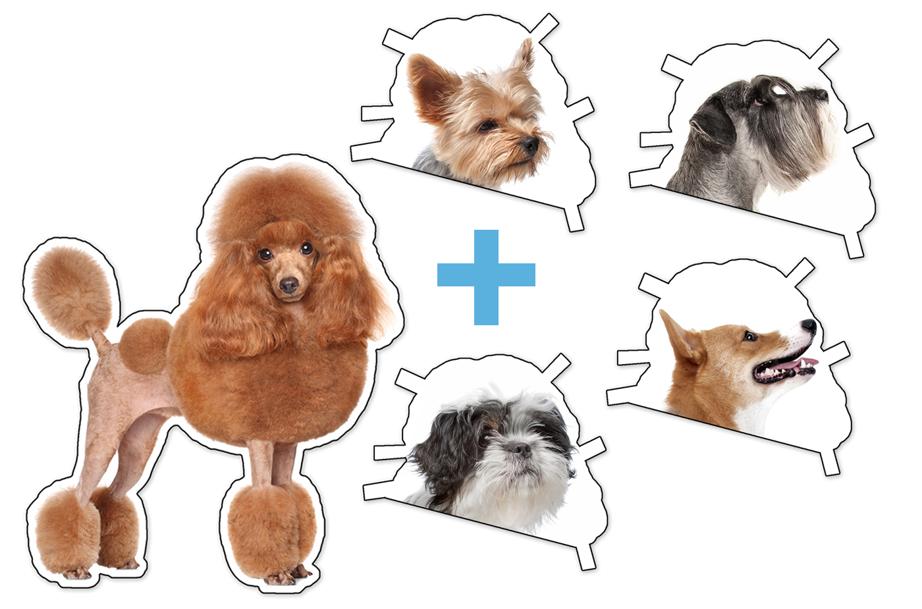
Though there’s an endless supply of dogs available at shelters and rescues, many people don’t want a secondhand dog. Some demand a purebred pooch, but others are looking for a specific mix of breeds, like a schnoodle (schnauzer and poodle) or chug (Chihuahua and pug). Whatever you think of the mix-happy world of designer dog breeds, one things is certain: The words for those breeds are always silly, often humorous, and definitely a distinct pack of words in the larger population of word blends.
Just about any combination of breeds can produce a new word, but the most fertile ingredient is the poodle. The oldest is cockapoo, a variation of cockerpoo, which goes back to 1960 and this use in Holiday magazine: “Poocock, or Cockerpoo. This up-and-coming ‘breed’ originated about 1954 in Los Angeles.’’ That blend of a poodle and cocker spaniel is influenced by the name of a totally different species: the cockatoo.
Other poodle crosses — also known poo Xs — have the following names and breeding partners: doxiepoo (dachshund), dalmadoodle (Dalmatian), Irish troodle (Irish terrier), pootalian (Italian greyhound), and poogle (beagle). There are a few patterns for these blends. Many abbreviate the other breed names and tack on a poo (maltipoo, shih-poo), while others add oodle or doodle (weimerdoodle, golden doodle, Saint Berdoodle, Great Danoodle). A few start with poo, like poovanese (havanese) and poolky (silky terrier). Fortunately for dog-namers, the word “poodle’’ is just as mix-friendly as the dog.
There’s an immature charm to many of these words, mostly thanks to poo. Besides the obvious bathroom sense, poo has been a cutesy suffix since the 1930s. If you’ve ever asked for a drinky-poo or kissy-poo, you have a high tolerance for this sort of word. That adds an extra layer of meaning to words like malti-poo and yorkie-poo, which name breeds that are nothing if not cutesy-poo. The ultra-adorable sense of poo fits like an extra-small doggie sweater.
Poodles are the champions of dog-blend names, but they lead a wide field. The offspring of a cocker spaniel and American Eskimo is a cockamo. If you mix a pug with a beagle or a rat terrier, you get a puggle and a puggat, respectively. A schnauzer mixed with a yorkie is a snorkie, but a schnauzer mixed with a westie is a wauzer. Some names aren’t that popular but show admirable creativity, like when a dachshund (wiener dog) and Chihuahua blend is called a wienerhuahua.
Lexicographer Orin Hargraves said in an e-mail that the charm of such words is often due to the mix of languages as well as dogs: “Many dog breed names are from foreign languages, reflecting their provenance (and probably their promoters’ wishes to make them seem exotic or desirable). And when you blend two words from different languages that have different sound patterns and rules of morphology, you’ll nearly always get something that would not occur naturally in either of those languages, and that is amusing in English.’’ You can see that type of international blend in the pekichi, an English word that brings together the Chinese Pekinese and Mexican Chihuahua.
Animal word blends have their greatest concentration in the dog world, but they can be found throughout the animal kingdom. For some reason, there are a lot of zebroids, which sound like fanciful beasts concocted in a dystopian future but are real zebra hybrids. Zedonk and zonkey are two words for a zebra-donkey blend. There are also zonies and zorses, for zebras blended with ponies and horses, respectively. A grolar bear (or pizzly) is a mix of a grizzly and a polar bear, while a combination of lion and tiger and be called a liger or tigon, depending on the details of the hybrid. Unfortunately, such creatures are usually infertile and often unhealthy. Creating new animals isn’t as risk-free as creating new words.
The animal that is actually most associated with word blends isn’t any zebroid or whatever-doodle: It’s us. People love blending words: It’s likely the most common way to make a new word. Plenty of older words evolved via blending, such as smog, motel, triathlete, brunch, and the more extravagant turducken (a Thanksgiving dish involving a turkey, duck, and chicken). A recent Orlando Sentinel article mentioned the sharrow: “A word blend of ‘share’ and ‘arrow,’ the term describes roadway markings intended to guide bike riders along a safer path through city streets while reminding motorists that the road is for cyclists, too.’’ Celebrity couple names — like the famous Bennifer — are blends. Marketers love to blend, as in the recent Snickers ad that asks “Feeling Confulish?’’ (confused and foolish) and Taco Bell’s introduction of the Quesalupa (quesadilla and chalupa).
In fact, blends are so common that we don’t always recognize them. Kory Stamper, an associate editor at Merriam-Webster, said in an e-mail that blends are so common that “some of them don’t even look like blends to the casual observer. We might recognize bridezilla as a blend, but we’ll pass right over bodacious (probably a blend of bold and audacious) or adenosine (a constituent of RNA that is a blend of adenine and ribose).’’ Telling a blend from a totally novel coinage can be as tough as telling a shih-poo from a poovanese. For example, though the suffix -splain soon took on a life of its own, mansplain was originally a blend, too.
Though you can find blends everywhere, few are as distinctive as the canine kind. Michael Adams, Indiana University professor and author of “Slang: The People’s Poetry’’ and “Slayer Slang: A Buffy the Vampire Slayer Lexicon,’’ said in an e-mail, “Dog breed mixes provide the perfect opportunity for blending because the thing itself, the dog, is a blend, and also your best friend. No one snuggles with a spork; no one takes a republocrat for a walk.’’ We should be thankful for that.
At the risk of dumping cold water on a shivering maltipoo, it’s a shame such fun words accompany the unnecessary world of breeding. Words like schnoodle might be fun, but you’d do more good by going to a shelter for an old-fashioned mutt-poo.
Mark Peters is the author of the “Bull[expletive]: A Lexicon’’ from Three Rivers Press. Follow him on Twitter @wordlust.

