


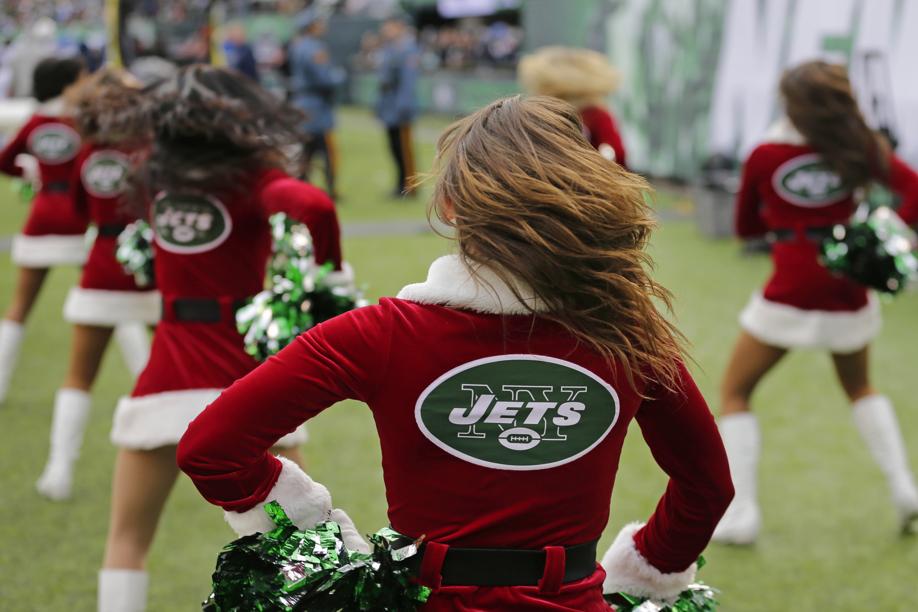
The knee-jerk reaction seems as sensible as defensible, sincere as it is clear: The NFL should get rid of cheerleaders.
In the #MeToo world we live in now, isn’t that the easiest way to combat the rash of allegations against NFL teams for demeaning, disgusting, and deplorable treatment of women they regard as little more than part-time appendages to titillate the male majority of their audience?
I know that was my first reaction. Was it yours? In the wake of the most recent reports, this time coming out of Washington, where a New York Times story included women saying they were forced to serve as evening escorts for high-money donors, and New Orleans, where reports detailed a set of rules and regulations that demeaned everything from a woman’s weight to her social behavior away from the job, I couldn’t help but think the best way to remove the potential for ongoing problems is to have the league get out of the cheerleading business altogether.
But given the weapon of time and the value of consideration, I realize that’s not the right answer. Why should women who want nothing more than to be treated fairly and with respect for doing a job they love pay the price for the incompetence of the teams that employ them?
The problem isn’t with cheerleading. It’s with the cheerleaders’ workplace, one continually exposed as sexist, discriminatory, and ripe for harassment. Taking aim at the women rather than their bosses further punishes the victims.
So how about it, NFL? What say you, Roger Goodell? What an opportunity to step in and help fix a situation that is so obviously broken. Rather than pretend these women don’t represent your league because they are not directly employed by you but by individual franchises instead — when any sane person who watches them on the sidelines in their team colors with team logos assumes otherwise — stop hiding behind excuses that push the onus of treatment on the teams themselves and lead from the front.
That’s what Florida-based attorney Sara Blackwell is trying to get them to do. In representing clients Bailey Davis, a former New Orleans Saints cheerleader, and Kristan Ann Ware, a former Miami Dolphins cheerleader, Blackwell has begun a dialogue with the NFL (well, at least with the outside counsel currently representing the NFL in the claim filed by Davis and Ware) with the aim of improving work conditions for cheerleaders throughout the league. If that can start by accepting the obvious, that past practice is abhorrent and change is necessary, and if it can go forward behind the power of an NFL that has bungled too many past problems to count (domestic violence and peaceful protest come immediately to mind), everybody wins.
“The NFL could be the example, the leader of the #MeToo movement,’’ Blackwell said in a phone conversation Friday, a day after she said she had a productive conversation with the NFL’s outside counsel. “Let’s not make it a Ray Rice situation when they’re a year behind.
“I really believe the NFL could be the example of what to do and how to react when this kind of incident occurs, when women speak out and say this is going on in your organization. If we can collaborate, they can be the example. This is going on in the NBA, the NHL, in careers outside sports. We want to be the ones that say everyone should do what the NFL is doing.’’
Credit Blackwell for her optimism. Count me as a skeptic, but open to change. The treatment of cheerleaders has been exposed as an ugly open secret in team circles, including minimal pay (reportedly from $75 to $150 a game), high demands (such as unpaid practice time and time-consuming appearances), and little respect (parading them on sidelines with scant clothing but lots of suggestive dancing). No one has been willing to step in or step up for an underpaid, overworked, undervalued, highly vulnerable group until now, with media attention ramping up and society’s tolerance for such behavior disappearing. It’s no surprise Blackwell said she hasn’t heard from any active cheerleaders for fear they will lose their jobs, but that she has heard from many former ones who substantiate everything her clients contend, and more.
“There are so many commonalities, which makes it easy for me when I’m negotiating with the NFL, talking about what are the changes that are needed,’’ she said.
In addition, Blackwell said she’s heard stories of unknown numbers of other women who went through an arbitration process and settled complaints, details of which are not available to the public and are sealed by nondisclosure agreements. In other words, women have been speaking up, but the message has stayed within NFL doors. We’re only now finally forcing some cracks.
Of course this isn’t easy. How we continue to put women in these impossible situations — don’t be too attractive, the Saints say in banning interaction with any players for fear they would get sexually involved, but be sexy and appealing enough, the Redskins say, to be chosen by a high-money sponsor as evening company — is sad.
But the knee-jerk answer of disbanding them altogether seems rooted in an antiquated impression of what a cheerleader is, that she is, or can be, nothing more than a version of eye candy, a feminine counterpart ready to be paraded alongside the uber-masculine combatants in pads.
That discounts the sport that cheerleading has become, ignores the dancing and gymnastic abilities built after years of the same hard work, dedication, and practice required for any other athletic pursuit — while many of the women work or attend school at the same time.
With so many girls now choosing cheerleading as their primary athletic pursuit, what a shame it would be to remove one of the few professional opportunities for them to pursue. And what a shame it is to reduce these women to one-note profiles. One look at the Patriots’ current cheerleader roster includes electrical engineer Jenna Cloutier, histologist Kelsey Cornwell, and doctors of physical therapy Alicia Capone and Michaela Main. Emphasizing and spotlighting these aspects of women — much the way college cheerleaders use their sidelines to perform athletic feats that spur on the crowd — would be so much better than the gyrating sideline antics the NFL highlights now. In other words, don’t simply keep the cheerleaders, but celebrate them in a way that is respectful, too. There will never be a better time or opportunity for productive dialogue. Listen to what they need, what they want, and deliver.
“I thought feminism is to give us more choices, not less. If women want to do this, they should have the right to do it or not. We want more choices,’’ Blackwell said. “The other thing is to be able to say these women are told when you’re in there, keep your mouth shut, they are intimidated and eliminated into not having their own voice. To get any of them to speak out is very, very hard. To get them to speak out, to then say, ‘Let’s just get rid of it for everyone,’ is like saying to women you don’t have a voice, and if you use it, we’ll get rid of it.
“I think both messages are really bad for women in general, and all over America, not just in cheerleading. This goes on in most industries and they’re watching, thinking, ‘What happens if I speak out?’ ’’
The NFL has a chance to answer that question. Here’s hoping it decides to change the conversation for the better.
Tara Sullivan is a Globe columnist. She can be reached at tara.sullivan@globe.com. Follow her on Twitter @Globe_Tara.

