


Mohegan Sun lost its bid for a Boston-area casino license nearly two years ago. But its legal fight against a decision that instead favored Wynn Resorts is still going strong as the case lands in the state’s highest court.
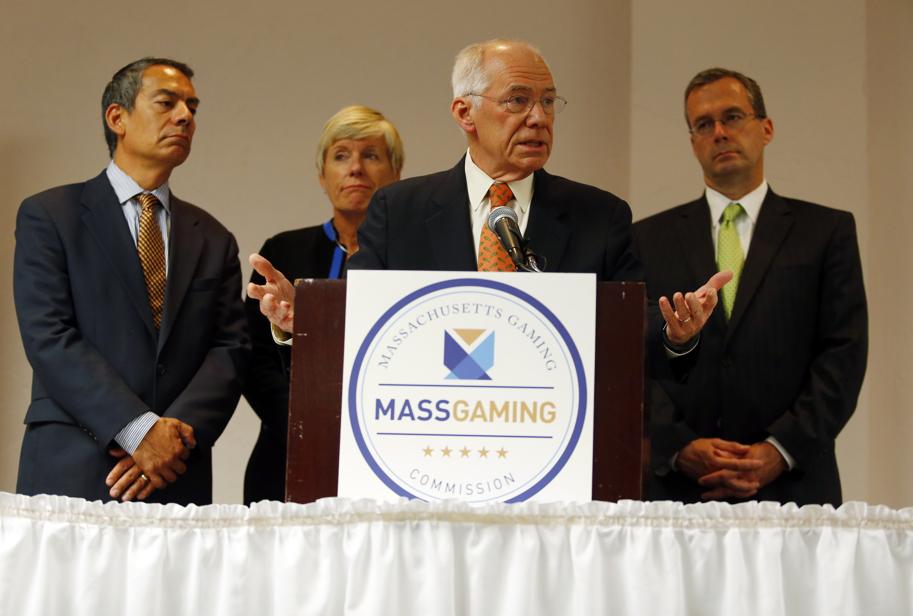
The Massachusetts Gaming Commission has asked the state Supreme Judicial Court to kill Mohegan Sun’s appeal of the Wynn license, once and for all. The commission’s argument: A Suffolk Superior Court judge was wrong in December to keep Mohegan’s lawsuit alive, a move that the commission’s lawyers say threatens to delay the $2 billion Wynn casino.
Mohegan last week filed its response with the state’s highest court, urging the judges to deny the commission’s request.
The issue involves a clause in the 2011 law authorizing up to three resort casinos in different parts of the state that says that applicants shall not be entitled to “any further review if denied by the commission.’’ The commission contends that language should be enough to shield it from further litigation over its September 2014 vote on the Boston-area license.
Mohegan says it is actually appealing the approval of the license to Wynn, not the denial of its application. In its filing last week, Mohegan contends, among other things, that the commission is interpreting the clause in the 2011 law too broadly.
The legal battle underscores just how much money is at stake. As the operator of one of two resort casinos in Connecticut, Mohegan stands to lose millions in revenue to Wynn’s casino if it opens in Everett. Mohegan also invested heavily in a potential Massachusetts venture, first with unsuccessful plans for a casino in Palmer and then teaming up with Suffolk Downs for the proposal in Revere that eventually lost to Wynn.
“No matter what happened with that decision, somebody was going to be ticked off,’’ said Paul DeBole, assistant professor of political science at Lasell College in Newton. “The MGC had a really tough job because they had to choose between two applicants that had they been in different regions [from each other], they both would have won hands down.’’
Mohegan’s attorneys at Boston law firm Foley Hoag say that Wynn received favorable treatment in the licensing process, particularly regarding convicted felon Charles Lightbody, who had ties to the property in Everett that Wynn eventually acquired. Mohegan’s attorneys allege that Wynn received improper guidance and coaching to ensure its application could pass the commission’s suitability test.
“The goal of our suit is to get the court to reverse the commission’s grant of the license to Wynn . . . to start at square one and reopen the process,’’ said Kenneth Leonetti, a lawyer who represents Mohegan.
In its court filing last week, Mohegan cites several points raised during a recent criminal trial, in which three former owners of the Everett property, including Lightbody, were acquitted of trying to hide Lightbody’s involvement from Wynn. Among other things, Mohegan says that evidence emerged that a commission staffer helped pave the way for a proposed “cure’’ to Lightbody’s involvement so the sale of the land could go forward.
A spokeswoman for the gaming commission said the agency is confident that its licensing process was thorough and fair. The commission’s legal staffers, she said, want the SJC to dismiss the case because they believe the state law is clear: Denied applicants aren’t entitled to further review.
Robert DeSalvio, president of the Wynn Boston Harbor project, had stronger words for Mohegan’s approach. He called it a “desperate, self-serving attempt to delay our resort and protect, by its own account, $20 million a month they will lose when Wynn Boston Harbor opens.’’
Officials at Wynn say construction is being delayed, but not because of the Mohegan suit. Instead, the Nevada-based company is waiting for the state Department of Environmental Protection to weigh Somerville Mayor Joseph Curtatone’s challenge of a crucial state permit for building in a waterfront area. On Monday, Wynn announced progress elsewhere: It received a building permit from Everett to start work on the project.
The various appeals that Wynn Resorts has faced in Massachusetts became a topic of conversation during a call that CEO Steve Wynn held with stock analysts last week. One analyst, Harry Curtis of Nomura Securities, said the legal challenges seemed “a bit like whack-a-mole.’’ In December, the cities of Boston and Revere lost their lawsuits challenging the Everett license.
Wynn assured the investment community, “We will get through Somerville and we will be in construction this summer.’’ He didn’t mention the Mohegan suit on the call.
Richard McGowan, a Boston College professor who studies gambling, said he believes it’s highly unlikely that Mohegan will prevail. The 2011 casino law, he said, is aimed at insulating the commission and sidelining these types of appeals.
“It’s the longest of long shots,’’ McGowan said. “I’ll be quite honest. This looks like they’re sore losers.’’
But DeBole, the Lasell professor, said the Mohegan case raises a broader issue: Should the Legislature be giving immunity from court actions to state regulatory agencies?
“What if the Legislature starts inserting that language into other types of omnibus regulatory bills?’’ DeBole said. “We’re talking gaming right now. What if we’re talking solar? What if we’re talking wind energy? What if we’re talking any other type of business regulation?’’
Jon Chesto can be reached at jon.chesto@globe.com. Follow him on Twitter @jonchesto.

