


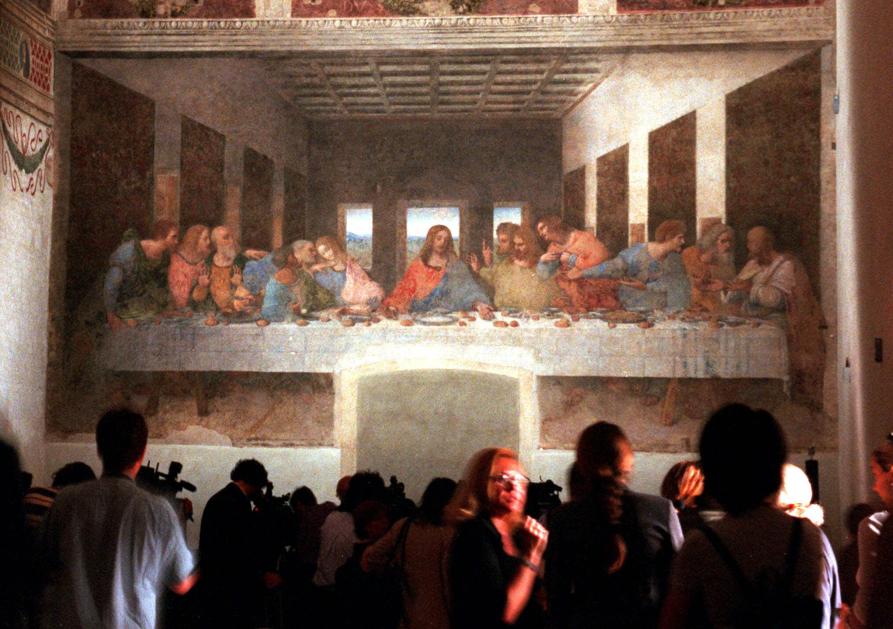
On this Easter Sunday, I’d like to ask one deceptively simple question: Who were the apostles? As a child in Sunday school, I dimly lumped the apostles and disciples together. But that’s too neat. “Disciple’’ is Latin for pupil; the 12 disciples were the pupils of Jesus. “Apostle’’ comes from the Greek verb “apostolos,’’ or “to send out.’’ To be an apostle — at first — you had to be sent out directly by Jesus. See Matthew 28:19: “Go ye therefore, and teach all nations.’’
I worked the math further in “After Acts: Exploring the Lives and Legends of the Apostles’’ (Moody, 2015), a slim, helpful book by Bryan Litfin, a professor of theology at Moody Bible Institute. So after Judas’s betrayal, there were 11 apostles. Then, in Acts, which traces the earliest efforts — acts — of the apostles, we learn that these 11 decided to choose a replacement to fill the turncoat’s spot. (It was vital to stick to 12, to echo the 12 tribes of Israel.) They agreed the new man should “have companied with us’’ when they were with Jesus (Acts 1: 21) — even if Jesus hadn’t singled him out. They cast lots, and Matthias won.
Soon, the criteria for apostleship widened further. Some who saw Jesus after the resurrection became known as apostles, including Barnabas and James, “the Lord’s brother’’ (most likely, Jesus’ cousin). Others argue that Timothy, Titus, Philemon, and Jude met the standard. The Gospel of John names Mary Magdalene — the first person the risen Jesus appeared to — as an apostle. The Eastern Christian tradition lists 70 in all.
But the most famous non-disciple apostle is Paul, who spread the teachings of Jesus more than any other early Christian. And so to “Paul: Apostle of the Heart Set Free’’ (Eerdman’s, 2000, first out in 1977), a truly absorbing work by F.F. Bruce, who had been a professor of Biblical criticism at the University of Manchester. It cleared up several questions of mine. First, why exactly was Paul (aka Saul of Tarsus) on the road to Damascus? This is where he was “apprehended of Christ Jesus’’ (Philippians 3:12) after the resurrection, and literally blinded by the light. Paul was a zealous Pharisee en route to Damascus, intent on “breathing threats and murder’’ on Christians who’d fled there from Jerusalem. But conversion altered his (and their) fate. Paul, though, said he did “not even deserve to be called an apostle, because I persecuted the church of God’’ (I Corinthians 15:9).
As a Pharisee, Paul would’ve been a lawyerly sort, so why do his letters have such an ardent, headlong quality? It’s because he verbally dictated them to scribes, often Luke or Timothy. Can’t you now picture him, pacing back and forth, exulting and exhorting? Like this from Corinthians: Love “bears all things, believes all things, hopes all things, endures all things.’’ Finally, why did he change his name to Paul? I’d guessed it was a signpost of his conversion. But Saul was already Paul; Paul is the Latin version of the Hebrew Saul, so he adopted it to put would-be gentile converts more at ease.
This two-name business carries over to Peter, or Simon before Jesus rechristened him. Peter is Greek (“petra’’) for rock, which inspires Jesus’ pun in Matthew 16:18: “Upon this rock will I build my church.’’ Peter is also the first disciple/apostle sought by the risen Jesus. Yet in spite of this centrality, “Rocky,’’ as theologian Larry R. Helyer sometimes jokingly calls him, is considered the “underestimated Apostle.’’ And that’s partly because, as a lowly fisherman, he was likely illiterate and thus wrote no gospel. But scholars now believe the Gospel according to Mark is based on Peter’s oral history.
Helyer’s “The Life and Witness of Peter’’ (Apollos, 2012) ably plumbs the story of this early-recruit disciple, renowned both for serving Jesus — and famously denying him three times. “One moment he is the hero; the next he is the goat,’’ as Helyer writes. I’ve always been moved that this “rock’’ had feet of clay, since he embodies our quintessential human frailty.
Frailty reaches its height, perhaps, in Judas, initially a designated apostle until his betrayal. Like Peter, he, too, was unlearned. Nonetheless, the Gospel of Judas calls him “the one disciple who both understood Jesus and did his will.’’ Written at least 100 years after Judas died, it’s one of the Gnostic gospels unearthed in 1945, in the Egyptian village of Nag Hammadi. In “The Lost Gospel of Judas Iscariot: A New Look at Betrayer and Betrayed’’ (Oxford, 2006), University of North Carolina religion professor Bart D. Ehrman reveals this gospel’s far-out theology (eventually branded heretical). Indeed, besides Jesus, Judas, and God, there’s a feminine God named Barbelo, and a spiritual realm called “Pleroma,’’ Greek for “fullness.’’
Perhaps even stranger, though, is the lost gospel’s powers of reputational repair. In the New Testament, Mark gave Judas no motive for betrayal, while Matthew cites the 30 pieces of silver, and Luke said the devil made him do it. The Gnostic writer reverses all three. He says Judas did Jesus “the greatest favor possible’’ by helping him escape “this wicked world to return to his heavenly home.’’ It was a holy apostolic act, Judas believed, a sending out.
Katharine Whittemore is a freelance writer based in Northampton. She can be reached at katharine.whittemore@ comcast.net.

