


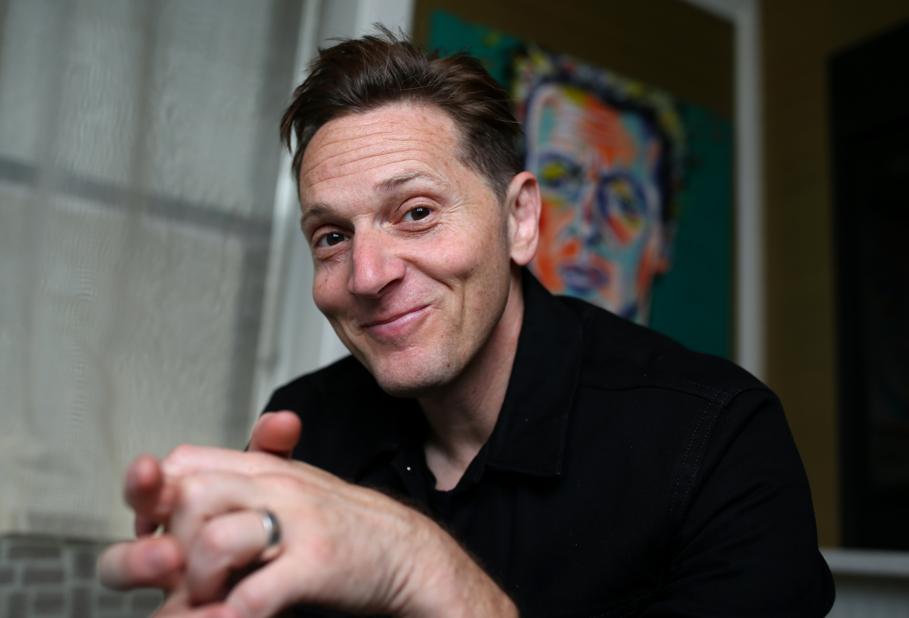
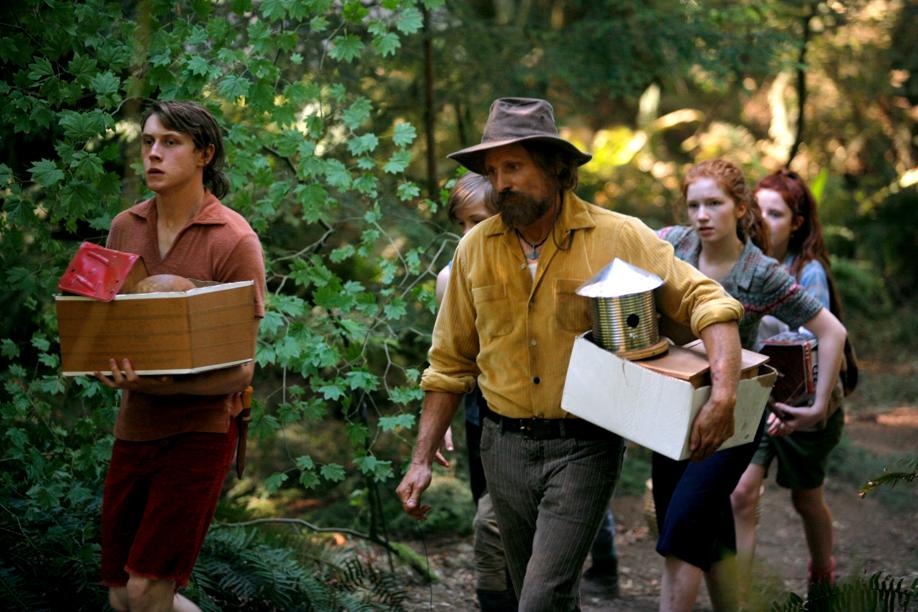
PROVINCETOWN — Writer-director Matt Ross is aware that his second feature, “Captain Fantastic,’’ could be claimed as an endorsement by both ends of the ideological spectrum. It stars Viggo Mortensen as Ben Cash, an eccentric but devoted father who’s raising his six kids in the woods of the Pacific Northwest, imparting survival skills and intellectual dexterity (Noam Chomsky is required reading).
“It’s the association with survivalism,’’ Ross said last month at the Provincetown International Film Festival, which opened with “Captain Fantastic.’’
“The off-the-grid culture manifests itself in a variety of ways: Brooklyn hipsters raising chickens and goats; the fear of government tyranny that survivalism is associated with rather than the way I posit it, which is being in harmony with nature. That’s neither right nor left wing.’’
“Captain Fantastic’’ earned Ross the directing prize of Un Certain Regard at this year’s Cannes Film Festival and reportedly got a nearly 10-minute standing ovation. But Ross, 46, still is best known as an actor; besides dozens of films on his resume, he’s currently playing narcissistic CEO Gavin Belson in the HBO comedy series “Silicon Valley.’’ Before that, he was in HBO’s “Big Love,’’ playing creepy Alby Grant, the son of the polygamist cult leader played by Harry Dean Stanton.
Ross, a Juilliard School graduate, “grew up making short films and acting at the same time so there was no real transition to directing,’’ he said. He made his feature film debut at the 2013 Sundance Film Festival with “28 Hotel Rooms.’’
It was while editing that film that he started writing “Captain Fantastic,’’ drawing on his own nomadic childhood and his experience as a father in the age of over-parenting.
“I spent most of my life in Oregon. . . . My mother started some alternative living communities — not hippie communes; it was the ’80s not the ’60s. They were people who wanted to live what we now call ‘off the grid,’ in harmony with nature. A lot were artists, artisans, weavers,’’ Ross said. “Sometimes they bought land communally. Some houses had electricity and plumbing; some didn’t.’’
Ross’s children, now 9 and 13, inspired him to examine the idea of parents “curating the lives’’ of their kids as he developed his script.
“My wife [writer and chef Phyllis Grant] and I don’t always agree. We argue a lot about how we want to raise our kids and we compromise. ‘What are they reading? What are they watching? Are we allowing them to watch TV? What are our rules?’?’’ he said. “I think in some ways Ben Cash is aspirational. Is it possible to devote your existence to your children’s education and upbringing? So few of us are present, especially with our children. We’ve all seen the kids on an iPhone completely disconnected with the world.’’
A lot of that found its way into the script. When Ben and the kids reenter society after a family tragedy, their road trip lands at the suburban house of Ben’s sister and her husband, played by Kathryn Hahn and Steve Zahn. A culture clash ensues between modern, video-game-playing kids versus kids who can recite the entire Bill of Rights from memory. Ben also tangles with his traditional and religious in-laws, Frank Langella and Ann Dowd, who disapprove of the way Ben’s raising their grandkids.
“There are many Americas within this country, and we depict three of them: rural; suburban, which is most of us; and a wealthy, gated community,’’ said Ross. “But it’s intentional that we didn’t demonize any of them. I told Frank Langella, ‘You are not the villain.’ That’s simplistic. Hopefully you are constantly questioning what you think about certain characters and they all have valid viewpoints.’’
In Mortensen, Ross found a kindred spirit. “He had many, many questions about the script; pages of fact-checking and ideas about ways the narrative could go,’’ said Ross. “The authenticity of the compound [where Ben and his family live] in the movie was very important to Viggo and to me and to our production designer, Russell Barnes.’’
But more than the physical and practical realities of raising a family off the grid, Ross was concerned with the moral and ethical choices of what a father teaches his children.
“Some of these are my values. I adore Noam Chomsky. Celebrating Noam Chomsky is something I do in my own house. I think everyone should celebrate him,’’ he said. But mostly “Captain Fantastic’’ examines the basic question of “if there is a better way to live and a better way to raise kids.’’
Loren King can be reached at loren.king@comcast.net.

