


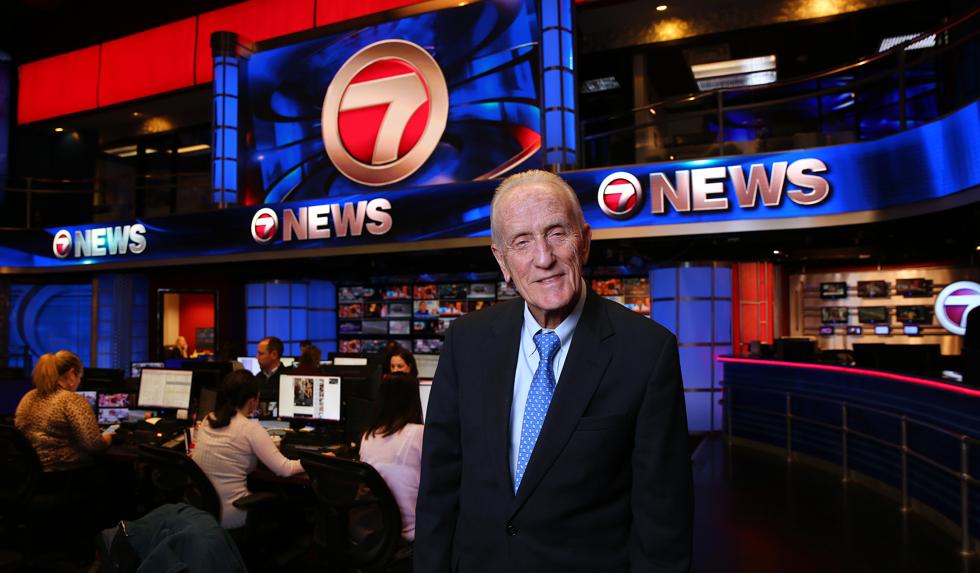
Like me, Ed Ansin has heard the rumor: that NBC may buy the Fox station in Boston now that it’s dumping Ansin’s WHDH-TV (Channel 7), and he would then jump into the arms of Fox.
“We have had great success with Fox,’’ says the 80-year-old billionaire, whose station in Miami has been with the network for decades.
But so far, it’s all speculation.
Ansin told me he has “not heard a word’’ from the local Fox affiliate WFXT (Channel 25), which is owned by Cox Media Group.
Cox and NBC are throwing cold water on the chatter.
For those of you who have not been following this real-life soap opera, let me hit the replay button. Back in January, NBC announced with much fanfare that it will not renew its contract with WHDH after Dec. 31, and instead will launch its own station, called NBC Boston.
Ansin, who waxes nostalgic about his family doing business with NBC for half a century, refused to go quietly. So he did what rich people do to show true love: He sued. More precisely, Ansin filed a lawsuit against NBC’s parent company, Comcast Corp., in federal court in Boston, alleging breach of contract and antitrust violations.
A judge in May dismissed Ansin’s suit, and we really haven’t heard from him — until now. To my surprise, Ansin still longs to remain an NBC affiliate. I figured he would have gotten the message by now that the network has moved on.
“That situation is unresolved,’’ Ansin insisted.
But ask Ansin about his next legal move, and he’s less certain.
“I’m open to suggestions,’’ he quipped.
Now Ansin does have something up his sleeve, and that is to complain to the Federal Communications Commission.
I’ve opined that he has a legitimate gripe about whether NBC has a good plan for its new station.
The network has yet to announce where it will broadcast from, but one idea is to share a transmitter with NBC-owned WNEU in New Hampshire, which currently broadcasts Telemundo.
Ansin contended in his lawsuit that the New Hampshire signal reaches less than half the audience WHDH’s does, and would force viewers to subscribe to cable to watch an over-the-air channel.
Already, some viewers have complained to the FCC about the potential loss of free access.
Asked why WHDH hasn’t brought a case before the regulatory agency, Ansin would only say: “That’s a complicated situation.’’
Which brings us back to the three-way channel flip. NBC wants a stronger signal. It offered to buy WHDH, but Ansin balked at what he considered a low-ball offer.
Cox took over WFXT in 2014 in a multicity station swap with the Fox network.
But local news ratings for WFXT under Cox have been dismal, according to Nielsen, though viewership numbers in key time slots at other local TV stations have also declined.
The difference is that WFXT hovers around last place and by far draws the smallest total audience of the network stations.
Officials from both NBC and Cox tamped down speculation that a deal is in the works. In a statement, Cox said: “We enjoy competing in the Boston Market as a Fox affiliate with a long-term affiliation agreement.’’
Of course, this could all be pre-negotiation posturing, because a deal makes all the sense in the world for NBC and Cox if the price is right.
Ansin, meanwhile, will do what he has always done to survive in the volatile TV business. He’ll sit there with his catcher’s mitt, waiting for a perfect pitch.
Shirley Leung is a Globe columnist. She can be reached at shirley.leung@globe.com. Follow her on Twitter @leung.

