





‘Downton Abbey’’ gave us many gifts, including Maggie Smith, Rock Star and enough soap to launder the tea cosies in all of Great Britain. And, most pleasingly, we got to see PBS finally get some due, in an era when cable and streaming outlets get the most recognition. For years, “Masterpiece’’ has been serving up wonderful period miniseries, and at last one caught on, big-time.
So what’s next, PBS? You captured the eyes of millions of viewers for whom the network has primarily served as a guilt-free babysitter. Will you be able to find another period drama with the same power and reach? I’ve been wondering what I’d like to see next on “Masterpiece,’’ beyond the series’ usual roster of elegant tragedies and comedies of manners — a new show that, like “Downton Abbey,’’ might have the potential to transport a ton of viewers and make a nice showing at the Emmys.
If we could design a smart and entertaining period drama for the “Downton’’-less channel, what would it be? Who would write it?
I’m thinking PBS’s Next Big Thing would need to be an original story, rather than an adaptation of a classic — not Martin Scorsese turning his film of Edith Wharton’s “The Age of Innocence’’ into a series, but more like his “Boardwalk Empire,’’ with less brutality. One of the charms of “Downton’’ was not knowing exactly where the story was heading, which cannot be said about “Madame Bovary’’ or “Anna Karenina’’ (frowny face). Adaptation is a great art, and when it’s done well — Andrew Davies is one of the best translators to TV of classics such as “Pride and Prejudice’’ and “Bleak House’’ — it can be dazzling. But for a story line that will move forward for a few seasons, the show needs to be written from whole cloth.
And how convenient: We’re in the age of TV auteurs, those gifted writer-producers who can create a TV series that unfolds like one long movie across years. The past two decades of TV have been defined by these people — Aaron Sorkin, David Simon, Alan Ball, Jenji Kohan, Vince Gilligan, Jill Soloway, David Chase — all of whom have their own distinct visions of storytelling. Why shouldn’t one of them build a show for PBS? (Naturally, this is all fantasy; money, of course, would play a role.) They’re not all locked into contemporary stories; some have been quite fluent in period settings — David Milch, for example, who took Robert Altman’s revisionist western “McCabe and Mrs. Miller’’ and ran with it in “Deadwood.’’ Why not recruit one of these behind-the-camera stars for the new venture? Why not Matthew Weiner, the creator of “Mad Men,’’ who knows how to reframe the past from a 21st-century perspective?
That contemporary perspective is part of what made “Downton Abbey’’ work. The story was set in the early 1900s, but the themes it focused on — the roles of women, the breakdown of class, the oppression of minority groups — were rooted in contemporary awareness. “Mad Men’’ was also told from our point of view, and much more so than “Downton’’; without the present-day take on social issues and personal angst, the 1960s-set series would have been only pretty nostalgia. The new PBS show from Matthew Weiner would need to speak to our times, and not just focus on elaborate visual authenticity.
And the 21st-century perspective needs to guide the show’s narrative structure, too. During a 2013 interview, “Downton’’ creator Julian Fellowes told me he’d purposely taken a period drama and made it “pacy,’’ like so much current American TV. “I think American television changed world television in its reinvention of the series,’’ he says, referring to the way the single-plot shows of the ’70s gave way to brisker multi-narratives such as “ER.’’ “We look like a traditional British period show of lords and footmen and people coming in to dinner, but the actual pace of it is modern.’’ His first experiment with this hybrid form was when he wrote the 2001 Oscar-winning “Gosford Park’’ script for Altman, a director famous for crowding together many characters with interlocking story lines.
What’s a time period that might benefit from a modern outlook? Just as we’re in a golden era of TV series, we’re also in a rich time for TV period dramas, and so many eras are already being covered and reframed. Set in 1900, Steven Soderbergh’s “The Knick’’ is a dark, unsettling look at the early days of surgery, hospitals, and New York. Set in the 1980s, “The Americans’’ takes on the Reagan-era Cold War. “Masters of Sex’’ tracks the sexual revolution, beginning in the late 1950s and moving into the 1960s. And “Vinyl’’ does the New York City music business in the early 1970s.
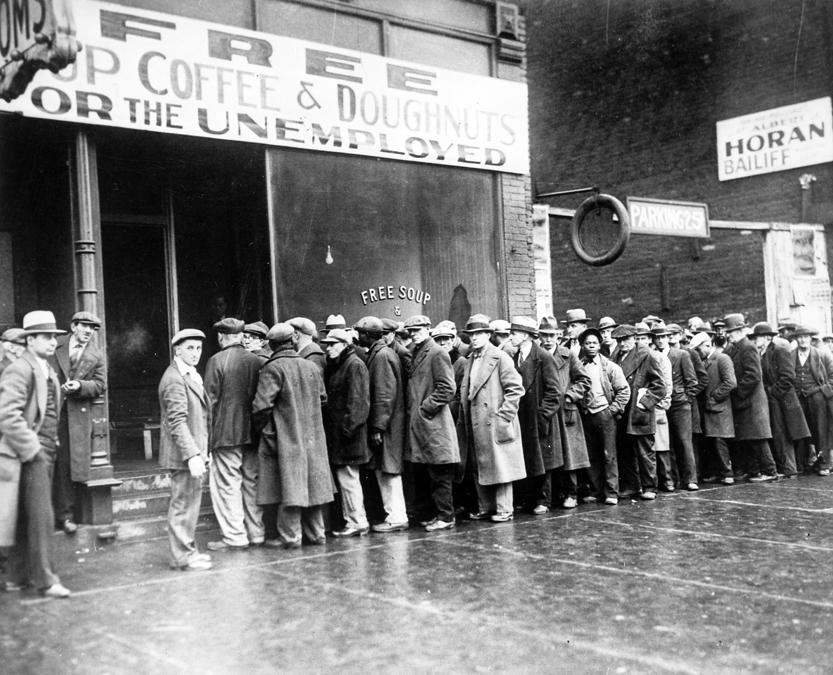
How about a PBS series by Weiner that picks up where “Downton’’ left off, to some extent — with the advent of the Great Depression in 1929? The show would be set in the United States, but not in the Dust Bowl or the rural areas that have already been done a lot, most notably in “The Waltons.’’ It would need to have a broader scope and deeper well than “The Waltons’’ — a larger ensemble of unexpected characters, some of whose lives have been altered extremely. Maybe one of the characters is British but married to an American and moved here before the crash, the inverse of “Downton,’’ which had one American, Cora, among Brits. That Brit — and his or her family — would perhaps make the series more attractive to UK viewers.
And, obviously, the new show would need to be written without an excess of sentiment, with a more probing look into the characters. That is Weiner’s specialty, getting at the feelings behind the feelings while grounding all the plotlines in historic events and social change. What happened socially during the Depression? What did it do to marriages? To families? To individual self-esteem? We’re still coming out of the recession that began in earnest in 2008. Surely there are thought-provoking parallels to be made, as well as deviations.
The two-season 2003 series “Carnivale’’ assayed the Great Depression, but it was grounded in mythology, religion, surrealism, and cryptic plots involving a battle between good and evil. The new “Masterpiece’’ series would be much more bent on realism, if not of the darkest cable-TV kind since PBS is a somewhat softer platform. I’m not saying Don Draper would be too complex for PBS viewers; PBS would benefit from some more anti-heroic tendencies, to match the intensity of many of its documentary series. I love Poldark on “Poldark’’ and Sidney Chambers on “Grantchester,’’ but the new PBS hit would need to be a little more challenging to viewers. Certainly there would be hope floating somewhere in the ether of this show, as there was in “Mad Men’’ and certainly “Downton.’’ But still: I’d like to see some clouds with the sun on PBS.
As with “Downton,’’ the cast of this show needs to be large, the plot many — anchored by one family, but with a lot of tendrils reaching into different classes. Casting won’t be easy. You don’t come across a Jon Hamm or a Bryan Cranston every day. I’d love to see Paul Dano on this series. For one thing, he looks like he could be a young man in the 1920s; for another, he’s quite an actor. In “Love & Mercy,’’ “War and Peace,’’ and “There Will Be Blood,’’ he was extraordinary. He could play a promising businessman thrown asunder by the economy. Other possibilities: Nicholas Hoult and Dane DeHaan.
And as his wife? Even since the first season of “In Treatment,’’ I have wanted to see more of Australian actress Mia Wasikowska. She was mind-blowingly good as a young gymnast in that series, and since then has continued to prove herself in movies including “Jane Eyre’’ and “The Kids Are All Right.’’ She projects great inner life, even when she’s holding back — especially when she’s holding back. Other possibilities: Elizabeth Olsen, Emma Watson.
Naturally, the casting conversation could go on and on. But there must be an equivalent to Maggie Smith’s Dowager Countess, an older actress as a Depression-era wiseacre, a person who doesn’t avoid gallows humor as money disappears and World War II approaches. How about Faye Dunaway? When her character, like Smith’s, asks, “What is a weekend?’’ she’ll be coming from quite a different place.
Matthew Gilbert can be reached at gilbert@globe.com. Follow him on Twitter @MatthewGilbert.

