



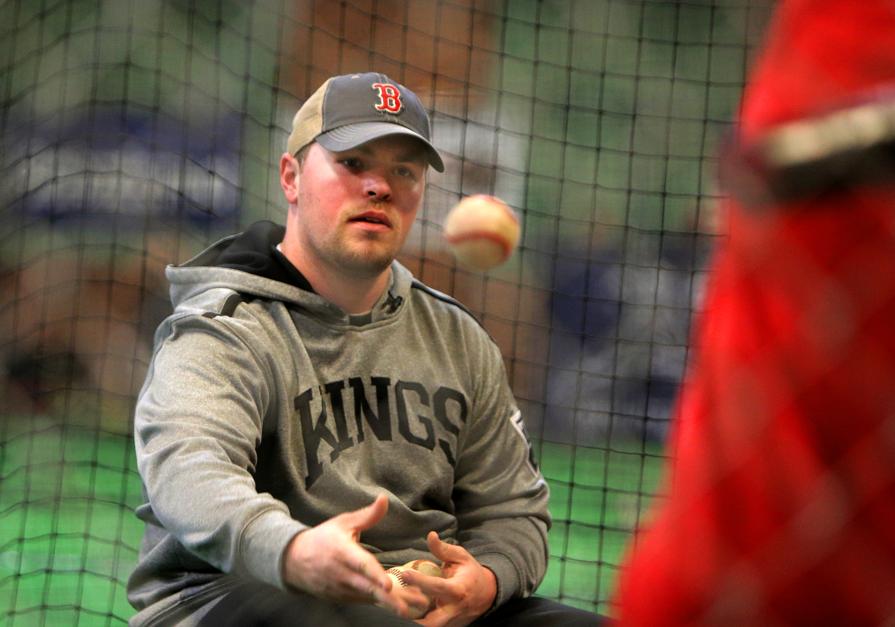
Baseball and softball diamonds are no longer in use nonstop from after school until dusk, particularly on the weekends. Sandlot ball is in the rearview mirror.
But the games have not been abandoned. The players participating, at least anecdotally, appear to be taking the games more seriously, with a more structured approach. And that explains the rise of more intensive coaching alternatives and training facilities, such as the growth of the Extra Innings franchises, with facilities in Watertown (www.extrainnings-watertown.com), Middleton, Tewksbury, Woburn, and Wrentham, On Deck Sports in Brockton (ondecksports.com) , Atlantic Baseball Club in Pembroke (atlanticbaseballclub.org) , and GameTime Sports in Lowell (gametimesportsandfitness.com), among others.
At those indoor facilities, players can focus on the finer points of the game, from hitting, to pitching, to fielding.
“The primary benefits of the training programs are coaches who understand the subtleties that it takes to improve, while also being able to relay that information in a manner that makes sense to players of any age and background,’’ said Jack McLaughlin , the 23-year-old owner of the Extra Innings franchise in Watertown.
“We take pride in our instructors’ abilities to teach our players, while also keeping it fun for them.’’ Their instruction is not limited to the young athlete, with McLaughlin noting that adults benefit most from breaking their bad habits, allowing them to perform better, whether it’s in a family softball game, or a competitive men’s league.
Waban resident Sarah Winnay says that the additional instruction has been beneficial for her 12-year-old son Jack, who plays in the Newton Southeast Little League, as well as in the New England Elite Baseball League.
“With all of the subtleties in baseball, having a different set of eyes take a look at his swing, or receiving corrections in a new way, has benefitted his approach to batting,’’ she said.
“He also loves hearing the experiences of the coaches who have played college or pro baseball.’’
Winnay acknowledged the nostalgia of sandlot ball, but added that dedicated coaching reflects a growing emphasis on specialized tutoring that exists in academics, as well as athletics.
“Parents might look at a sport like baseball or basketball and remember days of pickup games, where you learned by playing and modeling after players whose talent you admired, rather than seeking out, and paying for, specific instruction,’’ said Winnay.
“Today’s youth are more exposed to individualized coaching and instruction in all aspects of life – from math to language to sports – so I don’t think the idea that individualized coaching for a team sport will be any exception.
While pursuits such as skiing have a tradition in individualized instruction, other sports are catching up.
“I’m a big fan of parents being into their children’s training, but I do think at a certain point, it’s beneficial to get someone who is more experienced to work with them,’’ said McLaughlin.
And while repetition is important, those workouts, and training sessions, need to be backed by proper instruction and technique.
“Never just do repetitions; understand why you’re doing them,’’ said Ray Farquhar, a former coach in the Newton Central Little League who has taken his son to Extra Innings for instruction the last seven years.
“Working with an experienced coach or instructor can assist a player in learning how to play the game properly.
“As players move forward, the slightest change in bat angle, batting stance and other positions can lead to bad habits,’’ he said. “It’s beneficial to use video to capture the proper position for repetitions, and then to build your skill base from that point.’’
Furthermore, Winnay said expert instruction can help prevent injuries in this day of sports specialization.
“(It’s) up to the parents of youth players to become educated in this area, and coordinate the activities across games, practices and training in a way that best protects their son or daughter,’’ she said. “Having expert advice on this is very helpful.’’
Despite an increased demand for coaching at every level of the game, Farquhar suggested the best approach might be a combination of modern techniques and ‘old school’ methods.
“I would advocate for some instruction and more parental involvement during repetition,’’ he said.
“The greatest improvement comes when a parent takes the instruction provided by a knowledgeable coach, or instructor, and then spends 20, 30 times more time with his or her child doing repetitions.
“Unless a parent has endless cash, these drills are best spent as one-on-one time. You may just find that although your child never ended up playing college baseball, the time spent with your child was a fantastic way to bond.’’
For a more complete listing of batting cages in Eastern Massachusetts, visit the Boston Amateur Baseball Network web site at bostonbaseball.com/batting_cages_indoor.php.
If you have an idea for the Globe’s “On the Move’’ column, contact correspondent Brion O’Connor at brionoc@verizon.net.
 PREVIOUS ARTICLE