


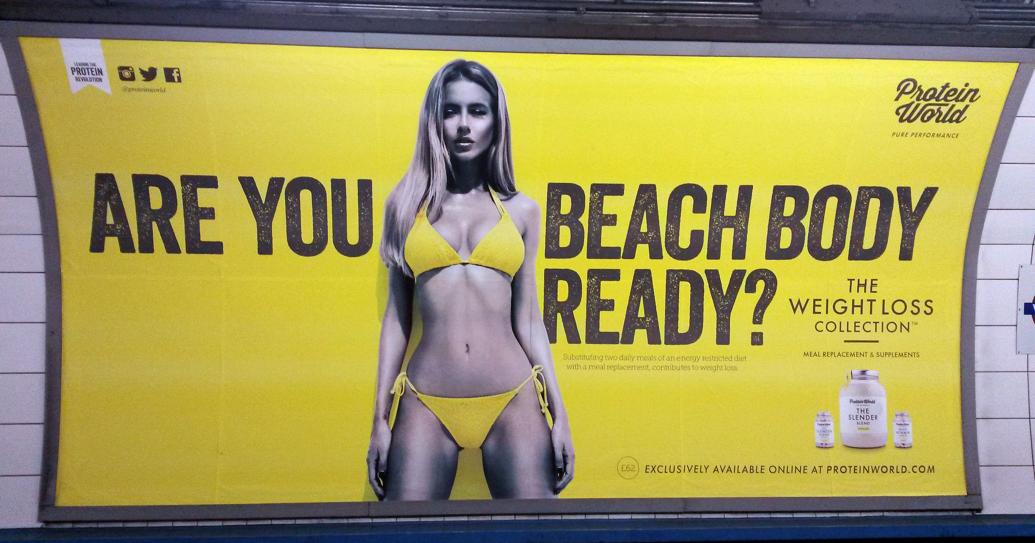
LONDON — The young, thin model wore a bright yellow bikini and stared seductively at passers-by.
“Are you beach body ready?’’ asked the ad for Protein World, a maker of dietary supplements. The ad was defaced in subway stations across London when it appeared in April 2015, and it drew strong protests.
London’s new mayor, Sadiq Khan, moved on Monday to ban such ads — which critics call “fat-shaming’’ — from London’s public transportation system starting in July, saying the messages encourage unhealthy body images for young women.
“As the father of two teenage girls, I am extremely concerned about this kind of advertising, which can demean people, particularly women, and make them ashamed of their bodies,’’ Khan said in announcing the ban on Monday.
“Nobody should feel pressurized, while they travel on the Tube or bus, into unrealistic expectations surrounding their bodies.’’
The move is the latest effort by the authorities in Europe and elsewhere to address concerns about unrealistic or unhealthy body images in advertising, and the effect impossibly thin models can have on the self-esteem and health of consumers.
France, Israel, Italy, and Spain have enacted policies aimed at preventing models with stick-thin bodies from working in the industry.
The mayor, who said he wanted to send a “clear message’’ to the advertising industry, said the new guidelines would apply to any form of transit run by Transport for London that could create body-confidence issues.
An estimated 12,000 ads appear annually on London’s transport network, and Khan was following through on a campaign pledge in imposing restrictions on them.
Transport for London said in a statement that it would not allow ads that “could reasonably be seen as likely to cause pressure to conform to an unrealistic or unhealthy body shape, or as likely to create body-confidence issues, particularly among young people.’’
Graeme Craig, the agency’s commercial development director, said the new rules were necessary because transit passengers were a captive audience.
Unlike ads that appear in other forums, like television, online, and print, he said, passengers on public transportation “cannot simply switch off or turn a page if an advertisement offends or upsets them — and we have a duty to ensure the copy we carry reflects that unique environment.’’
The announcement of the ban inspired mixed reactions, with some saying that Khan, a member of the Labour Party, had performed a public service by fighting the regular portrayal of unrealistic body types.
“A great start for London’s ‘feminist Mayor’’’ Women’s Equality Party wrote on Twitter.
But some critics suggested that Khan, a Muslim, was using the ad ban to clamp down on racy images of women because they were counter to the norms of conservative Islam. Khan’s office declined to comment when asked about that line of criticism.

