


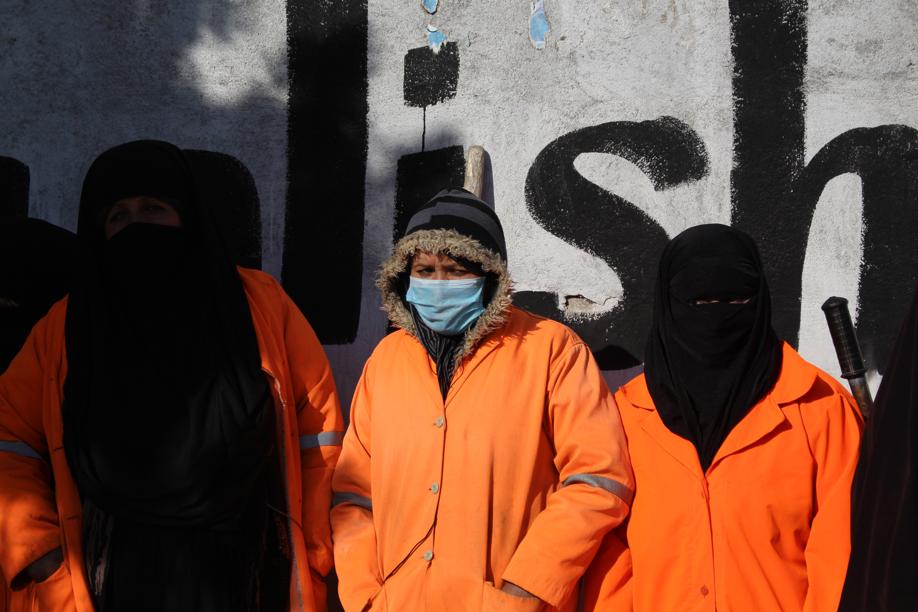
KABUL — The street cleaners huddled around a portable stove on the sidewalk to pour midday tea, taking sips under masks that filter acrid smog.
Mohammad Sharif’s throat burned. His lungs ached. But he can’t afford a doctor on his wages, any more than he can afford to use gas or electricity to heat his home.
Sharif burns wood, animal fat, and sometimes plastic to keep himself and his family warm, although he knows that adds to the airborne toxins blanketing this city of 5 million.
‘‘We don’t have any other option,’’ he said.
Afghanistan, long embroiled in conflict, has focused for the past 18 years on security and reconstruction at the expense of issues affecting the environment, according to current and former environmental officials. They say the government remains ill-equipped to curb the practices — including coal consumption and vehicle exhaust — that cause Kabul’s thick haze.
About 4.2 million premature deaths worldwide were linked to ambient, or outdoor, air pollution in 2016, according to the World Health Organization, which put Afghanistan’s total for that year at more than 17,000. Health officials in Afghanistan said they do not have data to measure death rates related to pollution.
Health and environmental experts measure ambient PM2.5 pollutants, particulate matter so small it can embed in human lungs, causing severe problems including heart attacks, strokes, and respiratory infections, along with stunted development in children. The WHO’s recommended daily-exposure level is 25.
Kabul’s population has tripled over the past decade, and the capital buzzes with Soviet-era cars emitting thick plumes of exhaust. Apartment buildings and factories send columns of coal smoke into the air, which grows even smoggier in winter as temperatures plummet and residents crank up their furnaces.
At 11:10 a.m. Friday, Kabul’s air quality ranked worst in the world with a score of 277, ahead of Delhi and the Pakistani city of Lahore, according to a snapshot from the commercial air-quality website AirVisual, which logs readings from consumer-operated sensors around the globe.
Those readings are perhaps the only way Kabul residents can quantify the severity of air pollution day-to-day.
Afghanistan’s National Environmental Protection Agency, or NEPA, has its own air-quality monitors but does not publicly release the data, said Mohammad Iqbal Hamdard, a spokesman for the agency, adding that NEPA is working toward a format geared for social media.
Residents were relieved when two separate days of heavy snow this week drove away the smog. Precipitation is typically the only thing that cuts the haze during the winter.
While some Afghans are unaware of the dangers of air pollution, even those who know the risks have little choice but to continue the behavior that causes it. More than half of all Afghans live below the poverty line, according to the World Bank, forcing many, like Sharif, to burn whatever they have to cook and stay warm.
Ezatullah Sediqi, the agency’s current technical deputy director, said NEPA is in no position either financially or technically to deal with the crisis. Among the reasons, he said, is that since Taliban rule ended in 2001, the government has prioritized development and security, leaving little money or political clout to support environmental initiatives.
Still, he said, government leaders have recently signaled a deeper commitment to reducing pollution. He cited NEPA’s call for more inspections of new buildings, as well as an ongoing program to plant 1 million trees in Kabul over the next few years and a wave of crackdowns on big polluters, among other initiatives.
Winter brings more reports of cardiovascular diseases among adults and respiratory problems in children in big cities such as Kabul and Mazar-e Sharif, said Wahidullah Mayar, a spokesman for the Public Health Ministry.
In response, the ministry prepares for the season by training doctors on new approaches to diagnosing and treating pollution-related illnesses, Mayar said.
And yet, the ministry has struggled to develop even rudimentary statistics for pollution-related illnesses across Afghanistan, he said, leaving officials unsure whether rates are up or down, or whether health policies have made an impact.

