


‘Ladies and gentlemen: We have just crossed into the Arctic Circle. The time is 7:15 a.m. The temperature is 63 degrees.’’
We sailed past Vikingen Island, making it official. This short, grassy, rock that peeks out from the sea is unremarkable, aside from the stark globe statue marking the border of the Arctic.
On the deck of Hurtigruten, passengers in polo shirts and sunglasses leaned over the railings to search the waters ahead for icebergs and polar bears that never came. As the ship turned, a German tour group trudged deck chairs from port to starboard so that they could work on their tans.
The Arctic towns of Norway are enormously popular in winter, when frozen tourists shuffle outside at all hours of the night in order to view the spectacular Northern Lights. In summer, an entirely different version of the Arctic opens up — one with just as many colors and far more predictability.
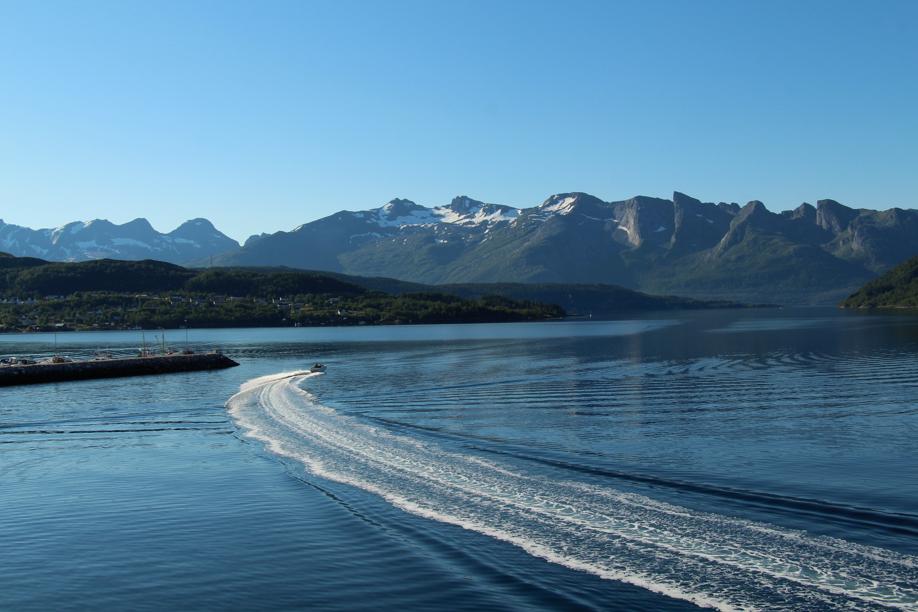
The Arctic Circle in summer has the air of an old-school holiday destination. Many Norwegians from “the cities’’ have their summer homes in towns along the Arctic Circle, in the ultimate bid to get away from it all. At sea, speedboats parted jewel-toned waters and men cast fishing lines into crisp winds. On land, people lingered outside, basking in the kind of manic glee that comes from an acute awareness that the sun could decide to hibernate at any point.
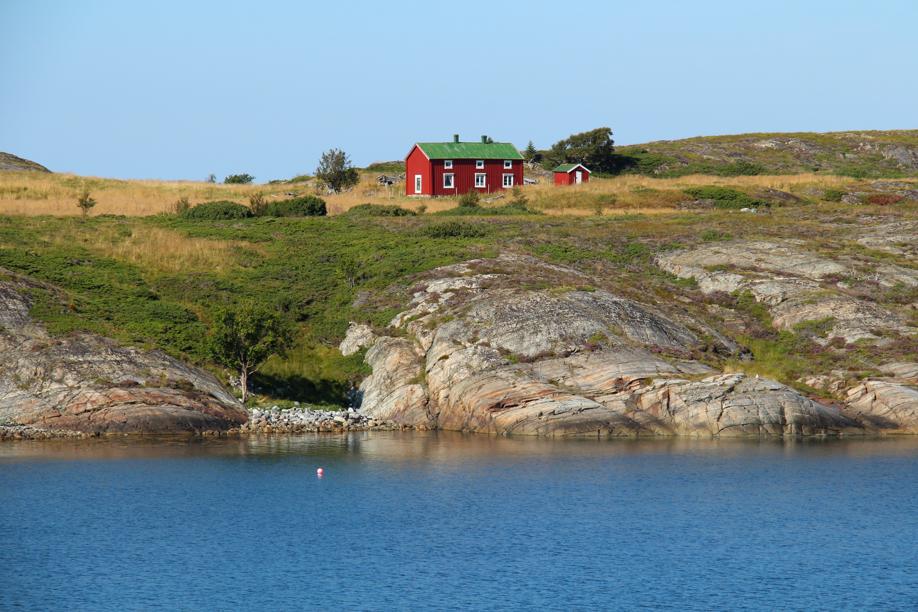
The 780-mile coastal route from Bergen to Kirkenes offers some of the world’s most pristine views. Small villages sit at the bottom of jagged green mountains, creating scenes that reflect perfectly off of the glass-like sea. We cruised by dozens of islands, uninhabited and undeveloped save for the occasional red wooden house with its hand-made dock.
Just like in the fjord regions of Norway, there is only one guaranteed way to experience the breadth of the Norwegian coastline, and that is by boat. Norway’s national line, Hurtigruten, has been ferrying passengers and cargo around Norway for over 100 years. Hurtigruten (“the fast route’’) started as a shipping vessel that reached remote areas of the country in a fraction of the time it would take to drive the circuitous routes. These days, the Hurtigruten ships carry as many tourists exploring the Norwegian coastline as locals using it for transportation.
The Norwegian Arctic in the summer hammers home the grandiosity of nature. Every form of life seems heartier and healthier — from the tall, thick pine and birch forests to the flourishing bird colonies to the island residents who grow and catch their own food. As we glided past scenery so perfect it couldn’t be photographed accurately, I felt like I had stumbled into some kind of secret, colorful utopia.
It takes just over three days by boat to go from the start of the Arctic Circle to Kirkenes. In that time, Hurtigruten stops at 22 ports in the Arctic Circle. Since it’s a hybrid passenger ferry, car ferry, and cruise ship, many of the stops are under 30 minutes and others are several hours, allowing for local tours.
Around Bodo, sea eagles flew between giant nests perched in trees halfway up the green mountains, which were dotted with public huts for through hikers. (“Affordable, clean and on the honor system,’’ a Norwegian man told me in passing).
Farther north, the ports’ claims to fame become increasingly specific (“This town has the largest concentration of wooden houses’’) and the local characters more impressive.
In Finnsnes, a group of men drove their impeccably maintained classic cars into town, parked them next to each other, and walked off without a word. Meanwhile, a sharply dressed man with white hair idled a shiny motorcycle next to the ship. In front of him sat a fluffy white dog with a miniature pink helmet and matching goggles, flanked by tiny Norwegian flags. Both watched the ship intently, as if waiting for someone to disembark.
(“He does this every day. He says his dog enjoys it,’’ shrugged one of the boat’s workers.)
In Tromso, a tall Norwegian man and his girlfriend sat on the step of a candy shop as he recited a recipe, punctuating the air with a whisk he was twirling intently. “I am sorry!’’ he called out in perfect English as I walked by. “I have been drinking a long time today,’’ he explained in earnest, gesturing towards the sun with his whisk as his girlfriend tried to grab it from him.
Tromso, the third largest settlement in the Arctic Circle and historically the most important, was the base for polar journeys and exploration to Svalbard. The town was an Arctic Wild West of sorts, with a tragic past full of scientists and explorers perishing in the name of research. These days, its university brings in a surprisingly international crowd – like a kayak instructor from Spain who pointed out an abundance of colorful Arctic starfish and jellyfish as we paddled through an icy fjord.
Then, there’s the Top of the World: Nordkapp (“North Cape’’) on Mageroya, the northernmost point on continental Europe. Everything is “the northernmost,’’ which gives this otherworldly landscape 62 miles above the tree line even more prestige. Mageroya is only 559 miles from Svalbard and 1,300 miles from the North Pole. There are systems in place to warn Mageroya’s residents of approaching polar bears swimming over, but that rarely happens. (The last polar bear sighting turned out to be a fluffy dog.) The herds of reindeer found all over this area swim regularly during their annual migration, however.
The Top of the World is surprisingly green for a place where snowstorms can last until mid-June. Herds of furry reindeer cross the stark landscape, with antlers that would easily blend in with barren tree branches if there were any. Because of its year-round fishing, humans have existed in this part of the world for 10,000 years — and its bird colonies are spectacular. Gjesværstappan Nature Reserve is home to Norway’s largest sea bird colony. Warm and cold ocean currents meet, creating an incredibly rough sea that bashes waves against slick black stone cliffs. Dozens of oyster catchers, eider ducks and Arctic skuas nest amid this oceanic chaos. Flocks of clownish puffins bob and flap comically while curious seals pop out of the ocean to stare at the commotion. It was an all-encompassing moment at the top of the world, surrounded by nothing and yet everything.
Hillary Richard can be reached at Hillary@HillaryRichard.com

