


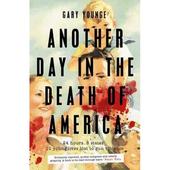
ANOTHER DAY IN THE DEATH OF AMERICA: A Chronicle of Ten Short Lives
By Gary Younge. Nation, 304 pp., $25.99
An average of about seven Americans under the age of 20 are reported killed every day by gunfire. The dead are disproportionately male, black, and poor. There were 10 on Nov. 23, 2013. Some were killed by accident, shot by friends wielding guns they didn’t know were loaded. Others died in random violence or because they feuded with the wrong guy. All left behind families and friends, an unmendable tear in the fabric of their communities. Journalist Gary Younge’s new book is an often unbearable act of bearing witness, written, he says, to provide “a snapshot of a society in which these deaths are uniquely possible and that has a political culture apparently uniquely incapable of creating a world in which they might be prevented.’’
As a black man from Britain, Younge writes, one of the aspects of American life he found most alien when he moved to Chicago was our nation’s embrace of guns and acceptance of a high rate of gun deaths. [T]his is not a book about gun control,’’ Younge writes, adding, “this is a book about what happens when you don’t have gun control.’’ Many of the children he profiles face other problems, of course. Class and racial inequality would still mark some as winners and others as losers; joblessness and crime would still scar some neighborhoods and leave others untouched. But it’s impossible to pretend we don’t have a problem when we lose 10 young people in one day, leaving their families to feel, Younge says, “as though they had lost a loved one in a war without any clear purpose, end, or enemy.’’
SOMETHING IN THE BLOOD: The Untold Story of Bram Stoker, the Man Who Wrote ‘Dracula’
By David J. Skal. Liveright, 672 pp., $35
Since its publication in 1897, “Dracula’’ has never ceased being read, interpreted, adapted for stage and screen, and plumbed for clues about the human condition. Its author, on the other hand, is nearly forgotten today — and even in his own lifetime, Bram Stoker was somewhat overshadowed by his longtime employer, the actor Henry Irving, and his longtime acquaintance and fellow Dubliner Oscar Wilde. But as David J. Skal makes clear in this thorough, thoughtful biography, Stoker was a fascinating character whose own anxieties and obsessions — sexuality, disease, death, the supernatural, and “a lifelong juggling act of materialism versus faith, and reason against superstition’’ — were perfectly in tune with his late Victorian era.
Born during the depth of the potato famine to an upwardly mobile family, young Bram spent his first seven years bedridden because of a mysterious illness; there, he was entertained by the Bible, Irish fairy tales, and his mother’s stories of her own childhood travails during a cholera epidemic in County Sligo. He recovered, attended Trinity College, was exposed to Baudelaire, Poe, mesmerism, and the theater. After working as a theater critic and civil servant, Stoker accepted a job managing Irving’s affairs and his theater, the Lyceum, in London — his devotion to Irving was “an all-consuming, lifelong preoccupation,’’ Skal notes, and the saturnine, self-centered actor was among the many models for “Dracula.’’ Stoker left fewer records than many writers, but Skal turns this to his advantage, focusing less on Stoker’s life than his times. The result is a gossipy entertaining book filled with fascinating digressions and juicy connections (such as the fact that “Dracula,’’ published within hours of Wilde being released after his imprisonment for gross indecency, was likely edited to remove some of its more homoerotic moments). The result is exceedingly entertaining.
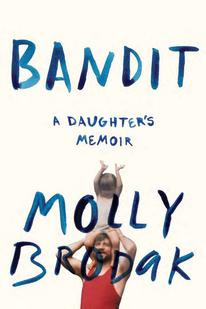
BANDIT: A Daughter’s Memoir
By Molly Brodak. Black Cat/Grove Atlantic, 240 pp., paperback, $16
Molly Brodak remembers the first time she stole something. She was 7. Her father marched her back into the store, forced her to return it, and leaned in with a scary admonition never to do it again. “I didn’t steal again until I was a teenager,’’ she writes, “when he was in prison.’’ Brodak’s father was a bank robber; he went on a spree of heists when she was 13, before being caught and imprisoned.
In “Bandit,’’ Brodak ponders her father’s crimes, his absence, what it means to make money, to take it, to be sick, to heal. A poet by training, Brodak writes with great precision and grace, distilling some memories, expanding others; many of her short chapters feel like prose poems. “The facts are easy to say; I say them all the time,’’ she writes. That alone is unflinching, but what she does here is even braver: to tackle the truth.
Kate Tuttle, a writer and editor, can be reached at kate.tuttle@gmail.com.

