


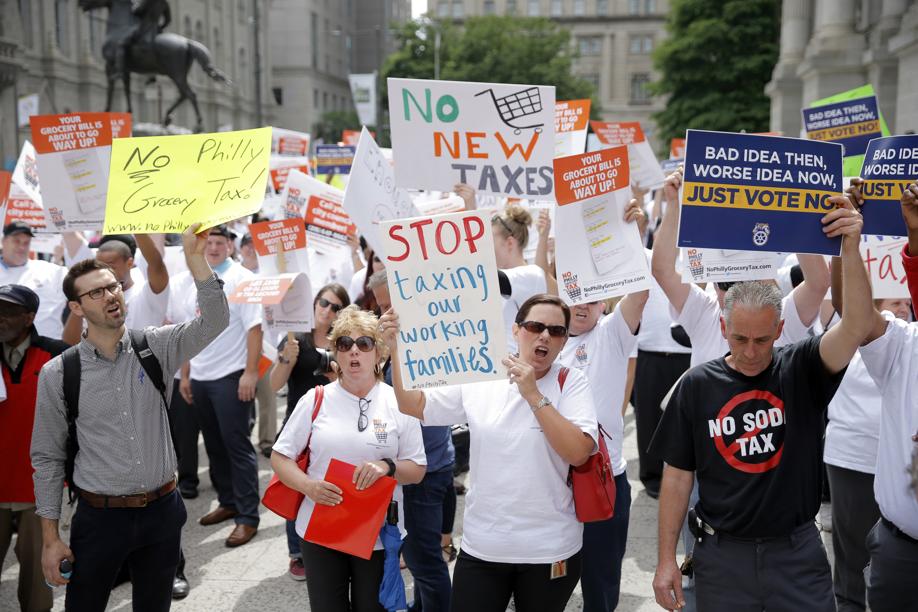
From Seattle to New York City to Chicago, proposed taxes on soda and other sugary drinks have failed in just about every city that’s tried to enact them.
That’s largely thanks to Big Soda — specifically, spending by the American Beverage Association. In New York, for instance, the ABA spent $12.9 million in 2010 to halt a sugary drink tax — almost more than the next three biggest lobbying groups combined that year. The group dropped $9.1 million in San Francisco two years ago. It says it has defeated 45 soda tax measures nationwide since 2008.
But one big city is now on the verge of defeating Big Soda. That’s Philadelphia, whose City Council Thursday is expected to finalize a new tax.
The measure will charge 1.5 cents per ounce of diet and regular soda, iced tea, energy drinks, juice drinks with less than 50 percent juice, and other sugary beverages. That would add $1.01 to the cost of a 2-liter soda, 21 cents to a 13.7-ounce Starbucks Frappuccino bottle, and $2.16 to a 12-pack of soda.
Philadelphia had twice tried and failed to put in place soda taxes based on the argument they would discourage unhealthy drinking habits. But this time, Mayor Jim Kenney, who took office six months ago, promoted the tax as a way raise desperately needed funds for community schools, renovations to community centers and parks, and, most notably, universal preschool. That aims to serve 10,000 students by 2020.
‘‘It’s easier to have children get pre-K,’’ Kenney told the Associated Press.
New York University professor Marion Nestle, who has authored popular books on food and soda politics, said the move by the Philadelphia City Council was a ‘‘huge deal,’’ and likely to be replicated in cities nationwide. Oakland, Calif., and Boulder, Colo., residents will vote on taxes this fall.
It’s not Philadelphia’s first tango with these taxes. The previous mayor, Michael Nutter, proposed soda taxes twice. Nutter has said his second attempt in 2011 was subverted by ABA’s $10 million donation to the Children’s Hospital of Philadelphia.
So, when Kenney proposed the tariff again in February 2016, the city was familiar with the debate. What differed this time was Kenney’s emphasis on boosting funding for education and community resources, as well as the the tax’s rate — 3 cents per ounce, which would have doubled the cost of some beverages.
Supporters of the tax ranged from groups involved in health care, education, and business to law enforcement unions. The Philadelphia Inquirer has published multiple editorials in favor of it. Those against the tax include the ABA, some local restaurants and grocery stores, and the Teamsters Union, which includes beverage truck drivers.
Debate in Philadelphia has centered around the impact on the poor. Proponents of the tax said that the improvement to community resources and possible cutback in diabetes and other diseases linked to sugar consumption would hugely benefit the poor, who would also be most likely to use the new community resources.

