


THE GLASS UNIVERSE:
How the Ladies of the Harvard Observatory Took the Measure of the Stars
By Dava Sobel
Viking, 324 pp., illustrated, $30
Adecade ago, in a speech that enraged many women, Harvard President Lawrence H. Summers hypothesized why America’s top universities had hired so few female professors in science and engineering. He suggested it was neither gender discrimination nor a consequence of the differences in how our culture socializes boys and girls but rather “issues of intrinsic aptitude’’ — an innate inequality of the sexes. It was an admittedly tactless remark, and Summers quickly apologized, but the resulting controversy raised an important question: If given encouragement and opportunity, how far might women rise in the sciences?
Dava Sobel, the master storyteller of astronomy (author of “Longitude’’ and “Galileo’s Daughter’’), now presents an elegant historical tale that could easily work as an answer. Indeed, one might interpret “The Glass Universe’’ as a subtle rejoinder to Summers’s inartful comment, for in a turn of poetic irony, the book’s central narrative unfolds at Harvard itself.
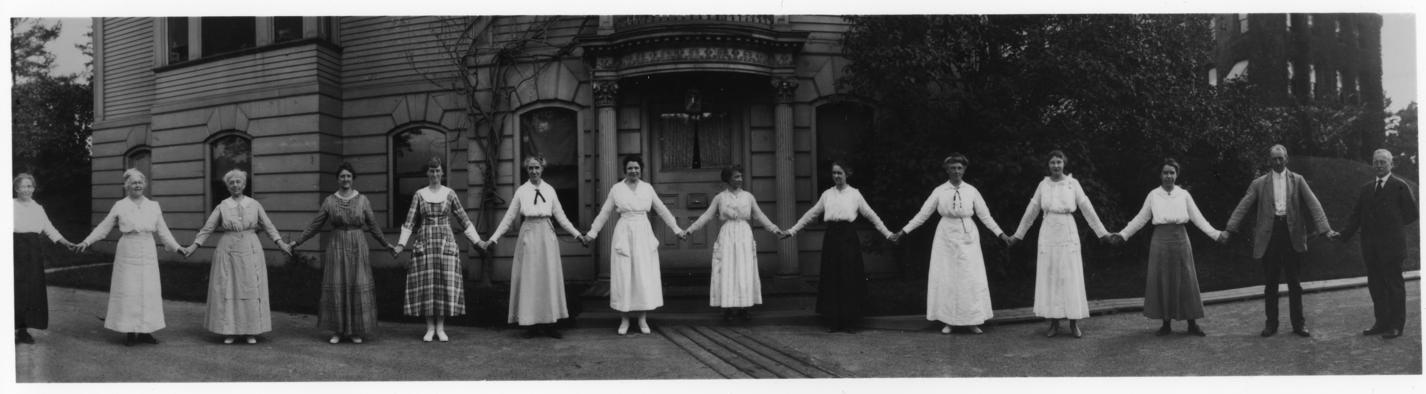
The stage for this drama lies just up Garden Street from the Cambridge Common where, in the 1880s, the Harvard College Observatory launched an ambitious project: to photograph the entire night sky in exquisite detail, creating thousands of glass negatives that were stored like books in a vast library. The observatory’s visionary director, Edward C. Pickering, needed skilled “readers’’ to painstakingly study these images under magnifying glasses and classify each star based on its luminosity, variability (the tendency to fade and brighten again), and the component colors of its light separated by a prism, thereby revealing the star’s chemical composition. The task, as Sobel describes it, was to parse the starlight, and for this crucial assignment, Pickering assembled a team of “lady assistants.’’
The story of “Pickering’s ‘harem’ ’’ (a dismissive label some affixed to the team) has been told in broad outline before, and it is often cast as a condemnatory tale, one that demonstrates the oppression of women in the sciences. In the usual telling, Harvard’s female assistants are portrayed as “underpaid, undervalued victims of a factory system,’’ Sobel writes. “Pickering stands accused of giving them scut work that no man would stoop to do.’’
But this was not the reality that Sobel uncovered when she mined Harvard’s archives for her book, and her retelling of the story turns it on its head. Although the observatory did blatantly underpay these women, Sobel shows that it also gave them something priceless: the support and freedom to work as bona fide scientists at a time when that was nearly impossible for women.
Among those who flourished was Williamina Fleming, a Scotswoman whom Pickering had first hired as a maid but who showed great talent for scientific work and ended up managing the colossal star study. Along the way, she devised a system of stellar classification based on traits that reflected underlying differences, and she earned honorary membership in Britain’s Royal Astronomical Society. Her colleagues Antonia Maury and Annie Jump Cannon further refined this taxonomy of the heavens, and Cannon is credited with the astonishing feat of manually classifying several hundred thousand stars during her career. Henrietta Swan Leavitt, also at Harvard, made a key discovery about variable stars called Cepheids that revolutionized our understanding of the immensity of intergalactic space.
Not only did women perform this scientific work they also funded it. Harvard relied on the generosity of two New York heiresses, one of whom — Anna Palmer Draper — underwrote the effort as a tribute to her late husband, a pioneering astrophysicist. The Henry Draper Memorial, as the project came to be known, continued for decades, slowly gathering data to uncover nature’s secrets. Sobel’s story builds in similar fashion. It follows the struggles, loves, lives, and deaths of these women, largely from the 1880s through the 1940s, gradually revealing the personalities of the individuals and the profound import of their combined work. These women may not have received the same salaries or academic titles as their male counterparts, but they proved themselves to be intellectual peers.
As for those star-spangled glass plates that Harvard accumulated over the years — which eventually totaled half a million images — they remain in storage at the old observatory on Garden Street and are now being digitized. Sobel calls the photographs “group portraits’’ of the night sky. The same terminology could apply to “The Glass Universe,’’ for it too vividly portrays a remarkable group, one in which these women are the stars.
THE GLASS UNIVERSE:
How the Ladies of the Harvard Observatory Took the Measure of the Stars
By Dava Sobel
Viking, 324 pp., illustrated, $30
David Baron is author of the forthcoming “American Eclipse: A Nation’s Epic Race to Catch the Shadow of the Moon and Win the Glory of the World.’’

