


No pain, no gain.
This once-heralded mantra, embodied in the 1980s by aerobics diva Jane “Feel the Burn’’ Fonda, has been largely debunked by the medical community and fitness experts alike. Constantly exercising to your pain threshold is an invitation to injury.
But the adage also ignores another critical element to any productive exercise regimen, said Amanda Visek, an associate professor with the Department of Exercise & Nutrition Sciences at George Washington University in Washington, D.C. And that element is fun.
“Fun is immensely important,’’ said Visek, also known as “The Fun Doc.’’ “The key to maintaining any type of physical activity, exercise — whatever it is — the answer is as complex as it is simple. It’s fun. As human beings, we’re wired to repeat the things we find joy and pleasure in doing, and we avoid the things we find displeasure in.
“Discovering what is most fun for you is critical to maintaining a healthy, active lifestyle for mind and body, because those are the activities or sports that are going to keep you coming back,’’ she said.
While much of Visek’s research focuses on youth sports, she said her findings can be applied to adult physical activities, and even in the workplace.
“Part of the key to getting physical activity or exercise as a staple in people’s lives is by creating synergy around it,’’ she said. “The more a single activity or exercise can meet multiple needs we have, the greater synergy we create around the activity and the more likely we are to repeat the activity.
“Obviously, exercise meets particular needs we have for our physical health, sure,’’ said Visek. “It also has tremendous benefits for our mental health. [We] even use exercise, such as running, to help us cope with the day.’’
Some activities can also provide a beneficial social aspect, such as running with a partner, participating in exercise classes, or the sense of community at a gym, she said.
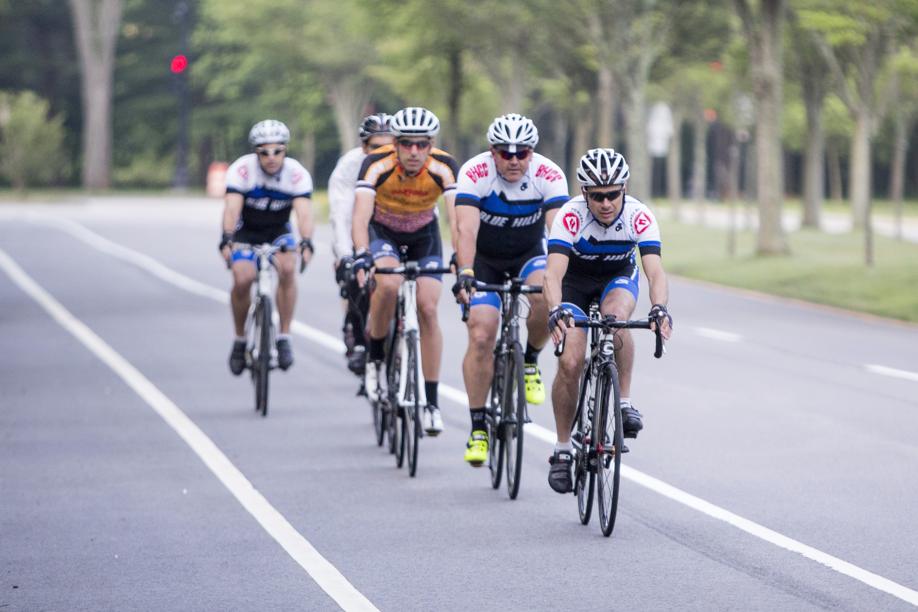
“An example of this synergy are social sports, such as a mountain biking group, running group, team kickball,’’ said Visek. “The more needs an activity can meet, the more likely we will want to repeat it. And, chances are, the more synergy, the more fun.’’
However, Adam Naylor, a sport psychology consultant and clinical assistant professor at Boston University, said he believes that the word “fun’’ isn’t broad enough, or weighty enough, to convey its significance.
“Fun is overrated in sports and exercise, but enjoyment is essential,’’ said Naylor. “This is actually a word-precision and mental-cuing issue. ‘Fun’ too often plants seeds of frivolousness in our minds. Think tropical vacation with frozen drinks. ‘Enjoyment,’ on the other hand, cues images of challenges being embraced. Think the healthy struggle of a hard fought victory on the playing field or other positive stresses attacking a triathlon.’’
Those physical challenges, said Naylor, enrich our lives.
“A regular, healthy approach to exercise reaps so many cognitive and emotional benefits – lower levels of stress, greater feelings of energy, better cognitive functioning, and deeper and more sound sleep,’’ he said. “Beyond this, the accomplishment that comes with reaching exercise goals or succeeding at an athletic challenge can enhance our feelings of self-efficacy and ultimately confidence.’’
However, it’s equally imperative to keep our activity goals in perspective, and not set goals that are unrealistic, or unnecessarily daunting.
“I actually think ‘positive attitude’ and ‘adventurous spirit’ can be a bit dramatic and intimidating,’’ said Naylor. “Exciting exercise goals can be tough. But the occasional good-hearted frustration is part of engaging emotionally.
“ ‘Adventurous’ sounds a bit like scaling large mountains and sky diving,’’ he said. “Healthy lifestyles can be simple and fulfilling: A jog on the beach. A game of tennis with a friend. Walking the dog. These all can suffice for exercise.’’
The key, said Visek, is to find a physical activity that’s a good fit.
“For those of us that haven’t yet discovered what that is, be open to trying new things,’’ she said. “Give yourself the opportunity to experience something novel, keeping in mind that the body was and is meant to move.’’
Understanding our own personalities, including limitations and goals, “can be immensely helpful in that self-discovery,’’ she said.
“For example, someone who is more introverted and likes familiar structure isn’t probably the best match for signing up for ultimate Frisbee team, but might find more individual-type activities, say yoga or cycling, to be fun,’’ said Visek. “When you go to the doctor because you are sick, the doctor must match the treatment to the symptoms. The same goes here: The activity has to be a good match to the person.’’
Rather than “no pain, no gain,’’ Visek prefers another time-honored maxim to accentuate the best way to maintain a healthy fitness regimen.
“By and large, people undervalue the significant role fun plays in our lives,’’ she said. “The adage, ‘Find what you enjoy and love doing, and you’ll never work another day in your life,’ applies to an active lifestyle too. Find what is fun, and keep doing that.’’
If you have an idea for the Globe’s “On the Move’’ column, contact correspondent Brion O’Connor at brionoc@verizon.net.

