


If there was one incident that summed up better than any other how music circulated in 2016, it was an exchange I had with a friend after posting my review of Kanye West’s September concert at TD Garden. “I wish I’d known about this,’’ the pal wrote. I felt for her; even though the tour and its radical reframing of the arena-show setup had been seemingly wall-to-wall news in my various feeds of news, it simply wasn’t on her radar.
But this was just one indication that whatever center pop music might have had was becoming increasingly difficult to hold together — the idea of who the biggest names are might be pretty certain to those people charged with writing music-news headlines, but the reality is far messier, and far more uncertain about whether or not stars exist at all.
The 21st century has been a rough one for the music business. Recall that right before the calendar flipped to the year 2000, the Recording Industry Association of America established the Diamond Award, which commemorated 10 million sales of an album in the United States. It was the era of boy bands and Santana’s “Smooth.’’ When the 2000s hit, though, the music industry took a tumble on multiple levels — file-sharing ate into the profits that once seemed to be infinitely expandable, chains like Tower and Virgin Megastore exited the States, and the number of major labels contracted from five to three.
Download and streaming services brought back the idea of paying for music in some capacity, and artists like Chance the Rapper have shown how striking deals with those services (in his case, Apple) can pay dividends for certain artists. But those services aren’t ideal for discovery — even for fans on the lookout for specific musicians. The editorial decisions and algorithms that place playlists and albums front and center can be frustratingly opaque to navigate through, let alone further customize. Charts of the most popular songs can be useful, but they can also be self-reinforcing, resulting in a sense of stagnation taking over.
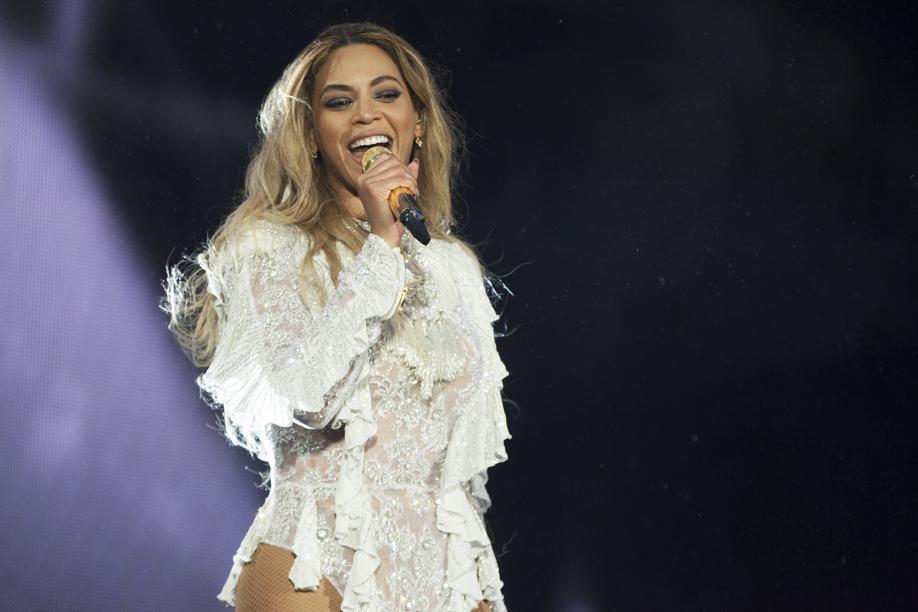
The most talked-about release of 2016 was probably “Lemonade,’’ Beyoncé’s maximalist poison-pen letter to a straying lover; it’s topped a number of critics’ year-end lists, served as the fulcrum for her massive “Formation Tour’’ this summer, and been the source of many memes. This is impressive, since it’s existed in a bit of a walled garden. Immediately following its premiere on HBO in late April, “Lemonade’’ could only be experienced by subscribers to Tidal, the streaming-music service headed up by her husband, Jay Z; it became available for sale via Apple’s iTunes Store about 24 hours after coming out on Tidal and was released as a CD-DVD package in May to any of the stores still selling music out there. But it is not yet available on Spotify or other streaming-music services, and individual videos for select songs — the dizzying “Sorry,’’ the feather-light “Hold Up,’’ the uxorious “All Night,’’ and the call to arms “Formation’’ — are only available piecemeal on YouTube.
Spotify, which had dabbled in streaming exclusives before, came out against the practice definitively in April, when the Swedish company’s global head of creator services, Troy Carter, told Billboard that limiting albums to certain platforms was “bad for artists, bad for consumers, and bad for the whole industry.’’ But they’re good for publicity; rush-released albums on specific platforms, like Drake’s indulgent “Views’’ (initially an Apple exclusive) and Rihanna’s sulky “Anti’’ (initially a Tidal exclusive) collapse the cycle of announcement-date publicity and release-date frenzy into a single event, allowing the news cycle, at least, to be ruled for a day.
Which isn’t to say that people who can’t listen to “Lemonade’’ are out of luck; there’s a lot of music out there. A cursory spin through any streaming-music service’s welcome page will indicate the sheer tonnage of music that comes out every week. But that surplus of selection has in some senses resulted in a narrowing of the playing field, with listeners being so overwhelmed by choice that they gravitate toward the familiar and radio stations specializing in current music spinning airtight, dictated-from-above playlists that heavily emphasize a small roster of songs and artists.
The year-end edition of the Billboard Hot 100, which ranks pop’s biggest hits using data from sales, streaming, and radio play, was populated by the reborn Justin Bieber at Nos. 1 and 2, Drake at No. 3 and in a supporting position at No. 4 (on Rihanna’s sparse “Work’’), and the bro-EDM duo the Chainsmokers at Nos. 8 and 10. Meanwhile, Beyoncé’s “Sorry,’’ her only song to crack the singles countdown, landed at No. 71 for the year, while Kanye West, whose overstuffed “The Life of Pablo’’ ended the year at No. 27, did not chart a single on the year-end list.
The split between albums’ popularity and singles’ popularity is not all that new; just ask any WZLX diehard how many singles from “Led Zeppelin IV’’ topped the charts. But the new divide that is emerging in 2016 is one where “pop music’’ is becoming ever more individually defined, even though the term indicates a communal release. That the songs topping these more personalized charts are growing more inwardly focused and sour — with the exception of Justin Timberlake’s roof-raising “Can’t Stop the Feeling!,’’ which is so group-minded it has an exhortation to dance — is probably not too much of a coincidence.
Maura Johnston can be reached at maura@maura.com.

