


You’ve heard the phrase “a tough nut to crack,’’ but when you’re deep in Peru’s Amazon jungle, hungry after a hike and attempting to break apart a Brazil nut perhaps destined for your dinner plate, it takes on a special significance.
But the results of your labor are well worth it: Once split into smaller pieces, the locally grown nuts — they’re actually highly nutritious seeds — are tossed into a batter containing sautéed garlic and onions, layered upon chicken, then baked until browned and crunchy.
Peru is a country where residents are extremely passionate about food, and where diverse, indigenous ingredients and immigrant-influenced creativity are both in abundance. The climate yields everything from seafood on the coast to a wide variety of grains and potatoes in the mountainous Andes to tropical fruits and nuts growing in the jungle. As a result, dishes prepared by ancient civilizations can still be enjoyed today, frequently mingled with European, African, and Asian cooking traditions.
Like most visitors to Peru, we fly into the oceanside capital city of Lima, and then on to the southern Amazon River basin city of Puerto Maldonado, on the edge of the Tambopata National Reserve. Here, we meet up with guides from Rainforest Expeditions, an ecotourism group that operates three jungle lodges in the area and has been running wildlife tours for more than 20 years.
A nearly three-hour boat ride southwest along the Tambopata River delivers us to Refugio Amazonas, our home base for the night. It’s here that we consume the aforementioned chicken and Brazil nuts — thankfully, the lodge works with local harvesters, so our nut-cracking ineptitude doesn’t delay the meal — followed by after-dark sightings of snakes, spiders, and alligator-esque caiman.
The next morning, following a visit to a misty oxbow lake where we feed crackers to piranhas, we climb back aboard the boat for a four-hour ride to the next lodge. Along the way, we’re served chifa, or Peruvian Chinese food, with a jungle twist: The fried rice is wrapped in a banana leaf for easy portability.
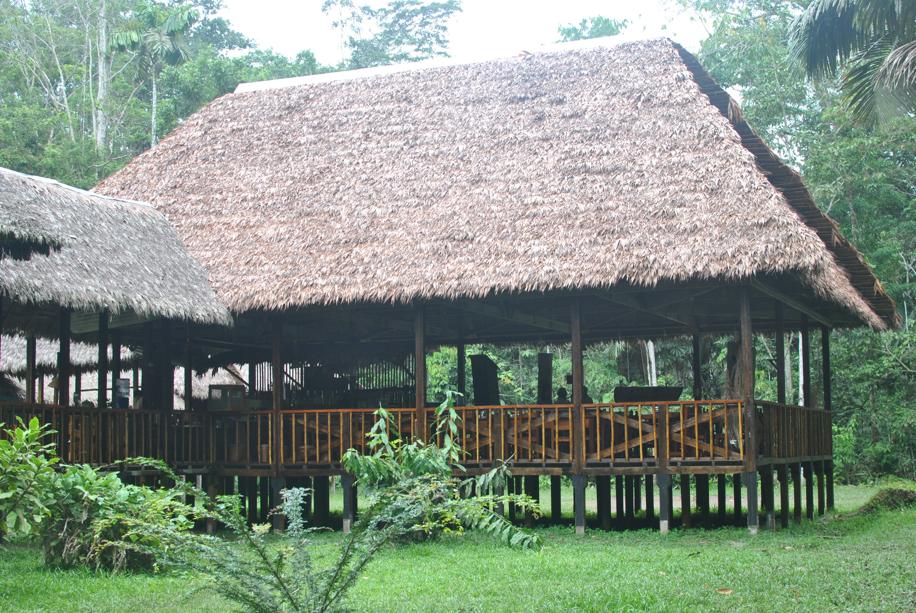
The boat transports us to the thatched-roof Tambopata Research Center, where we will spend the next two nights. Mornings here start with pre-dawn traipses through the region’s dense rainforest; we see vibrantly colored macaws feeding at a clay lick, spot capybaras swimming through the river, and spy five different types of monkey high up in the canopy, bounding from branch to branch.
Wildlife sightings can be unpredictable, but one thing’s for sure: All that hiking works up an appetite. Meals at the center, served buffet-style at communal tables in an open-air dining room, are an extraordinary representation of Peru’s varied cuisine, drawing largely from ingredients and traditions of the Amazon and Andes regions.
Potatoes and their close cousins feature prominently on the menu. A dish called olluquito highlights the olluco, a yellow and pink root native to the Andes. It is thinly sliced and combined with mashed garlic, onions, chicken stock, and yellow potatoes. Another offering, carapulcra, is an Andean potato stew accentuating two varieties of Peru’s famed aji (pepper), the panca and mirasol, alongside pork, garlic, onions, red wine, peanuts, cloves, and cocoa.
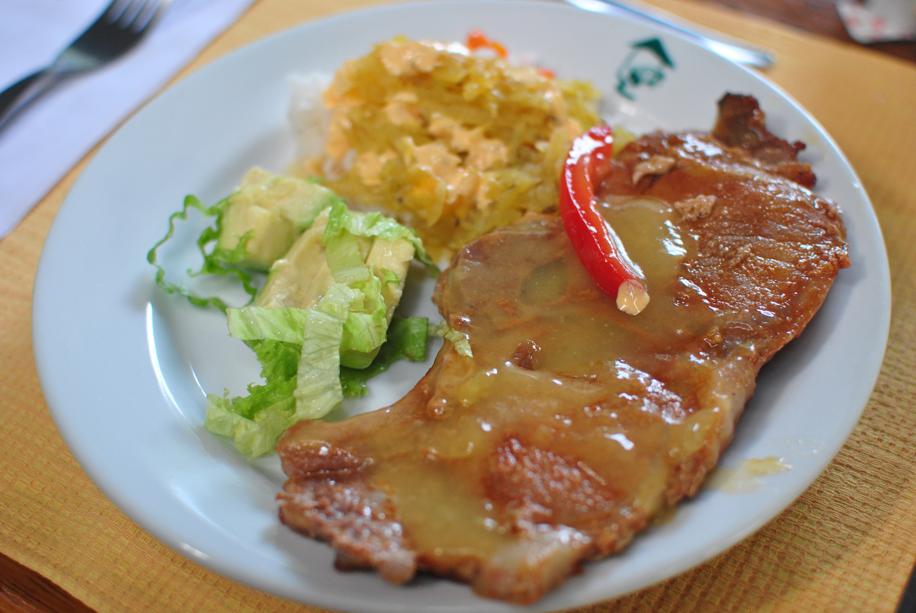
In one especially memorable meal, the juice of the cocona, an aromatic, slightly acidic fruit that’s native to the Amazon basin, is reduced with butter and sugar, thickened with flour from the starchy cassava root, then used as a glaze for pork cutlets. At another meal, I fill up on patacones — twice-fried green plantains — and quinoa soup, based on the grain originally grown in Peru’s Lake Titicaca region. Here it is blended with hot peppers, garlic, cumin, potatoes, fresh cheese, and cilantro, served with finely chopped hard-cooked eggs on top.
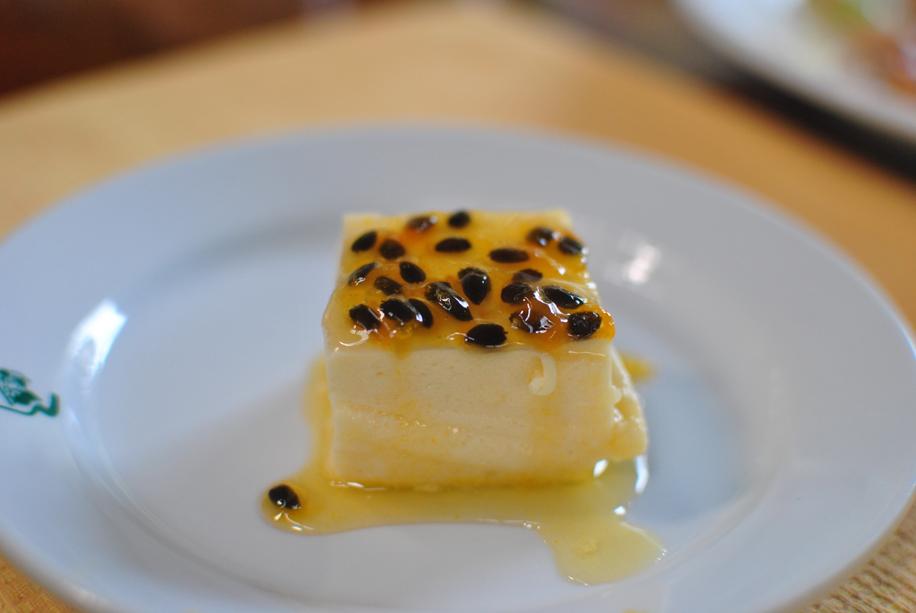
Perhaps the prettiest dessert, with a smooth texture reminiscent of custard, is the “passion fruit delicacy.’’ Egg whites are whipped until stiff with sugar and passion fruit juice, then folded with egg yolks and condensed milk. The mixture is molded into neat, wobbly squares, refrigerated, and enrobed in a bright orange, sticky sauce studded with the fruit’s black seeds. Other sweets wow us as well: Lucuma, a Peruvian fruit, is sweet and luscious blended into mousse, while “jungle-style’’ rice pudding is seasoned with cinnamon, cloves, and cocona syrup.
Like me, you might stare wistfully at the posted menu before you depart, regretting that you’ll miss chicken simmered with coca leaves and pisco, the grape brandy that’s a particular point of Peruvian pride. In your time in the jungle, you develop a deep respect for the country’s culinary traditions — which, as it turns out, aren’t such a tough nut to crack.
Rainforest Expeditions, Av Aeropuerto, La Joya km 6, Puerto Maldonado, Madre de Dios, Peru, 877-231-9251, www.perunature.com
Rachel Lebeaux can be reached at rachel_lebeaux@yahoo.com.

