


Cookin' with Karl
Spaghetti Aglio e Olio

Karl Gerhard
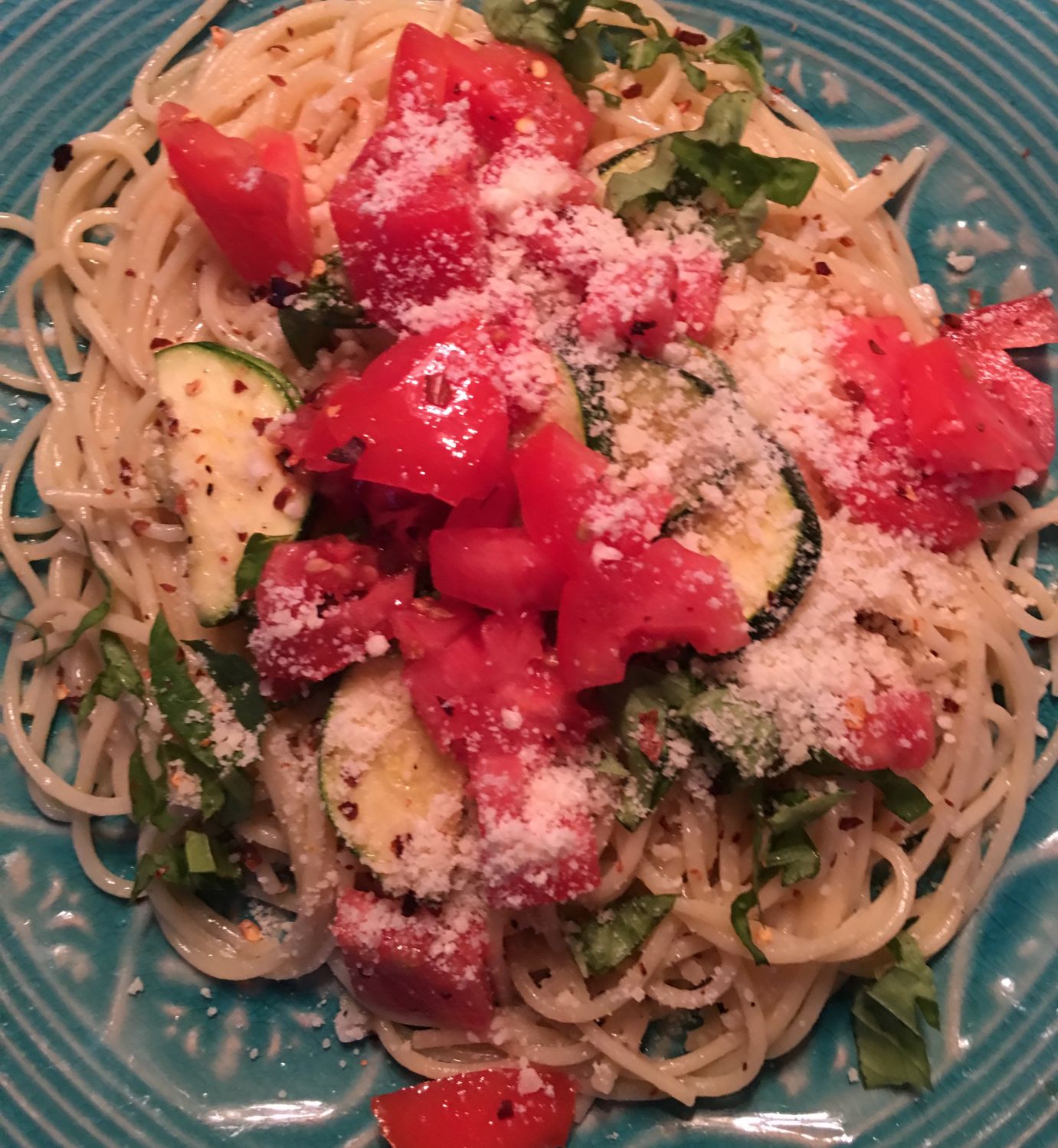
Spaghetti Aglio e Olio is more than just spaghetti with garlic and oil. Photo by KARL GERHARD


I caught the name while watching a favorite TV show one night.
The couple was going to dinner at mom’s house, and mom made an excellent “ollie oh eee ohlio.”
At least that’s what it sounded like to me.
She kept saying the rhyming name over and over, so it really forced me to look it up.
Say that fast three times in a row.
I don’t have a lick of Italian ancestry in me, obviously, or I would have known it just meant “spaghetti with garlic and oil.” We make that all the time! But I figured that I must be missing something, so I did some research and found out that I was, indeed, missing a few key details.
In the Gerhard family, this has always just been a quick excellent dish made with spaghetti, cooked al dente, and tossed lightly in olive oil, adding in some garlic powder or fine chopped garlic and parmesan.
Decent, but not near as good as it could be, as I soon found out.
My research showed me that while many Italians crave this dish, and it is often the “go to” sauce for pasta, it is often not very well known in America. Add a little crushed red pepper flakes, and this becomes Spaghetti Aglio e Olio e Peperoncini. That is what I am going to tell you how to make properly today.
It is really just as simple as this: fill your pasta pan up with water, add a few tablespoons of salt to the water, and bring it to a boil. It should be as salty as a broth or salty as the ocean. This is a key to good, restaurant quality pasta. For every 1 pound of pasta, use 4 quarts of water and add 2 tablespoons of kosher salt. Morton’s Coarse Kosher Salt is what I recommend. Do not use table salt.
Add your pasta and begin cooking it. Salt in the past water is the secret to getting restaurant quality results, but the pasta will not absorb all that salt, and it will be the only salt in the dish. It will be done for this dish when it is 80 percent to al dente, because you are going to finish it in the saucepan. Use a saute pan big enough for the portions of pasta you plan to serve. While the pasta is cooking, add ½ cup of olive oil to a saute pan, not yet heated. Add to that 4 to 8 cloves of thin sliced garlic. By thin sliced, I mean thin like in the movie “Goodfellas.”
Turn on the heat to medium, and heat it up to get the fragrance and infuse the oil with garlic. Do not get the garlic to the point of browning. Stir it up a bit. Then add a tablespoon of crushed red pepper. That is the sauce, more or less. But the key here is you then take a ½ cup of the pasta water, when the pasta is almost done, and add it to the saute pan, stirring it up continuously. This uses the salty water and starch from the pasta as a thickening agent and thickens the sauce naturally.
There is no butter, no cheese in a traditional Aglio e Olio. Now when the spaghetti is 80 percent done, take it right from the pot with tongs and right into the saute pan with the olive oil and garlic. This is the part where it all comes together. At this point, it will still be “watery”. You use the tongs to constantly stir it and agitate it. This emulsifies the sauce and makes all the difference. It should be creamy, not watery. If the emulsion breaks, just add a little more pasta water to bring it back together. It should not be oily.
It is as simple as that. After the spaghetti is thoroughly coated, cooked through, and the sauce is thickened, you are ready to serve.
At this point, feel free to add some parmesan or pecorino and maybe some rough chopped parsley. You can quickly stir that in right before plating. I will admit here that since we are in the midst of summer, I added homegrown tomato, and, of course, lightly sauteed home grown zucchini, and used garden fresh basil since we had it. That of course is a stray from the traditional Aglio e Olio but it turned out to be a perfect summer meal.
Healthy, easy, and fabulous!
The couple was going to dinner at mom’s house, and mom made an excellent “ollie oh eee ohlio.”
At least that’s what it sounded like to me.
She kept saying the rhyming name over and over, so it really forced me to look it up.
Say that fast three times in a row.
I don’t have a lick of Italian ancestry in me, obviously, or I would have known it just meant “spaghetti with garlic and oil.” We make that all the time! But I figured that I must be missing something, so I did some research and found out that I was, indeed, missing a few key details.
In the Gerhard family, this has always just been a quick excellent dish made with spaghetti, cooked al dente, and tossed lightly in olive oil, adding in some garlic powder or fine chopped garlic and parmesan.
Decent, but not near as good as it could be, as I soon found out.
My research showed me that while many Italians crave this dish, and it is often the “go to” sauce for pasta, it is often not very well known in America. Add a little crushed red pepper flakes, and this becomes Spaghetti Aglio e Olio e Peperoncini. That is what I am going to tell you how to make properly today.
It is really just as simple as this: fill your pasta pan up with water, add a few tablespoons of salt to the water, and bring it to a boil. It should be as salty as a broth or salty as the ocean. This is a key to good, restaurant quality pasta. For every 1 pound of pasta, use 4 quarts of water and add 2 tablespoons of kosher salt. Morton’s Coarse Kosher Salt is what I recommend. Do not use table salt.
Add your pasta and begin cooking it. Salt in the past water is the secret to getting restaurant quality results, but the pasta will not absorb all that salt, and it will be the only salt in the dish. It will be done for this dish when it is 80 percent to al dente, because you are going to finish it in the saucepan. Use a saute pan big enough for the portions of pasta you plan to serve. While the pasta is cooking, add ½ cup of olive oil to a saute pan, not yet heated. Add to that 4 to 8 cloves of thin sliced garlic. By thin sliced, I mean thin like in the movie “Goodfellas.”
Turn on the heat to medium, and heat it up to get the fragrance and infuse the oil with garlic. Do not get the garlic to the point of browning. Stir it up a bit. Then add a tablespoon of crushed red pepper. That is the sauce, more or less. But the key here is you then take a ½ cup of the pasta water, when the pasta is almost done, and add it to the saute pan, stirring it up continuously. This uses the salty water and starch from the pasta as a thickening agent and thickens the sauce naturally.
There is no butter, no cheese in a traditional Aglio e Olio. Now when the spaghetti is 80 percent done, take it right from the pot with tongs and right into the saute pan with the olive oil and garlic. This is the part where it all comes together. At this point, it will still be “watery”. You use the tongs to constantly stir it and agitate it. This emulsifies the sauce and makes all the difference. It should be creamy, not watery. If the emulsion breaks, just add a little more pasta water to bring it back together. It should not be oily.
It is as simple as that. After the spaghetti is thoroughly coated, cooked through, and the sauce is thickened, you are ready to serve.
At this point, feel free to add some parmesan or pecorino and maybe some rough chopped parsley. You can quickly stir that in right before plating. I will admit here that since we are in the midst of summer, I added homegrown tomato, and, of course, lightly sauteed home grown zucchini, and used garden fresh basil since we had it. That of course is a stray from the traditional Aglio e Olio but it turned out to be a perfect summer meal.
Healthy, easy, and fabulous!

