


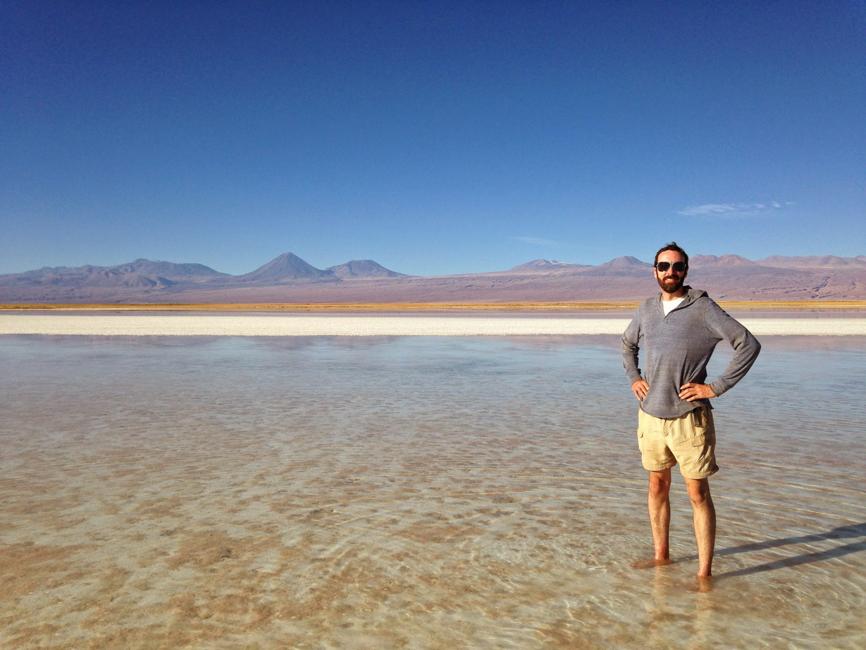
Like a lot of Harvard students who wrote for the National Lampoon, Steve Hely went on to write for TV, in his case “The Late Show with David Letterman,’’ “30 Rock,’’ and “The Office.’’ Unlike a lot of Lampoon writers, Hely traveled from Los Angeles to the very tip of South America, a trip he chronicles in his new book, “The Wonder Trail: True Stories from Los Angeles to the End of the World.’’
BOOKS: What did you read on your trip?
HELY: I had Gabriel García Márquez’s “One Hundred Years of Solitude.’’ I also had Rachel Kushner’s “The Flamethrowers,’’ which was great. I have a memory of reading that in a boring hotel room in Oaxaca, Mexico. When I got back, I read books to fill out the history and geography of the places I went.
BOOKS: What did you read for background?
HELY: “1491’’ by Charles C. Mann, which was great. I read Bernal Díaz del Castillo’s “The Conquest of New Spain,’’ which is a first-person account of Cortes’s expedition into Mexico. That book is incredibly riveting. Cortes had a few hundred guys with him, and they plunged into the heart of this empire. I also got “Breaking the Maya Code’’ by Michael D. Coe, which is about how they figured out how to read Mayan hieroglyphics. It’s like solving a crossword puzzle with clues that are buried in the jungle.
BOOKS: What are some of your favorite travel books?
HELY: I really love Bruce Chatwin’s “In Patagonia.’’ I just read “Barbarian Days’’ by William Finnegan about romping around the world and surfing on these obscure beaches. Paul Fussell’s “Abroad’’ is a kind of history about all the Brits traveling between the world wars. Alec Waugh, who was Evelyn Waugh’s brother, wrote “Hot Countries,’’ which is about his travels in Tahiti and the Caribbean. It’s definitely a little racist, but also a pretty interesting book about a pretty weird dude traveling in exotic places.
BOOKS: Was there any book or author you used as a model for your own book?
HELY: I read a lot of Paul Theroux’s books, but he doesn’t have tons of affection for the places he goes to. I really like Bill Bryson’s books. They have a mix of humor and light historical info.
BOOKS: Do you look for humor in your reading?
HELY: I think it’s hard to find. A book that did make me laugh recently is called “The Possessed: Adventures with Russian Books and the People Who Read Them’’ by Elif Batuman. She got a PhD in Russian literature, and her book is about the insane characters she met as she did that.
BOOKS: Have there been authors that influenced you as a comedy writer?
HELY: When I was a kid, I read all of Dave Barry’s books. At the time, he was the only funny prose writer I knew of. I also read every comedian’s memoir I could get my hands on. I was growing up in Needham, and the public library there had a shelf of them. I read every one, maybe 20.
BOOKS: What was your last favorite nonfiction book?
HELY: I just reread Chris Matthews’s “Hardball’’ because I was trying to make sense of Donald Trump. It’s a really compelling book, but unfortunately I think the world he describes has vanished. I’m about to start a job writing for the TV comedy “Veep.’’ I picked up one of Robert A. Caro’s books on Lyndon Johnson. I started with the third volume, “Master of the Senate,’’ which has a huge section on how the Senate works.
BOOKS: Have you always been primarily a nonfiction reader?
HELY: Yes. I was always trying to learn about the world. I studied American history at Harvard. I thought I might be a kind of David McCullough popular history writer. I love “The Path Between the Seas’’ about the building of the Panama Canal. I also like “Brave Companions,’’ which is a collection of essays he wrote for magazines and speeches he gave. It’s an inspiring book, what we need at this time when things are looking so dark.
AMY SUTHERLAND
Follow us on Facebook or @GlobeBiblio on Twitter.

