


What to do this week Continue cleaning up and raking debris from lawns and flower beds. Pull mulch back from the trunks of shrubs and trees and from emerging bulb and perennial foliage so it is not in direct contact with them. Sprinkle this ring of bared earth very lightly with organic fertilizer. No need to fertilize your lawn until autumn. You can now plant seeds of spinach, lettuce, radish, peas, larkspur, bachelor’s buttons, and Shirley poppies in outdoor gardens.
Q. Three years ago, a landscaper installed four female holly plants at least 6 feet away from a male. Since then, there has been only one lonely red-berry sprig. I have fertilized them yearly with Holly-tone. The four females are spaced about 2 feet away from one another. From left to right, I have a bush with full green leaves and one sprig, a full bush with no red sprigs, a bush less full than that, and lastly, a bush with very few branches and leaves. Why?
LEONARD W. WOLFE, Newton
A. This sounds like a detective story — “The Case of the Missing Holly Berries’’ — so, who is the culprit?
One missing clue is what kind of holly bushes you have. I will assume they are Merserve “blue’’ hollies, the most common commercial hybrid. Hollies are dioecious, meaning that they need a male holly to pollinate. One male can pollinate multiple females within 200 feet. Males and females have to be vari-eties that bloom at the same time, but since you have at least a few berries, your male is doing his job. You are providing plenty of water, which is good, but maybe too much fertilizer. I would stop fertilizing. Too much nitrogen (the first number of the three on your fertilizer bag) can force leaf growth at the expense of berries. And don’t prune, so you aren’t cutting off the two-year growth that produces berries.
I deduced, however, that the likely culprit is too much shade. Your description sounds like a police lineup, with the first female in bright light, and then each bush to her right standing in progressively deeper shadow, resulting not only in no berries but also fewer leaves. Hollies need more sun than people think. Yours are so young that you can still move them to a sunnier spot. Since your female hollies are planted too close, I would dig up the three with no berries and transplant them to a sunnier spot this spring at least 5 feet apart. Better yet, I would ask your landscaper to do it for free or at a discount, as he or she should have known better about the shade and spacing. Leave the holly that produces berries in place and see whether it increases production next year.
Q. How can you tell at this time of year which canes fruited last year and which are new? My husband usually took care of all the berries and other fruits, but he passed away recently.
LINDA MUELLER, Oakham
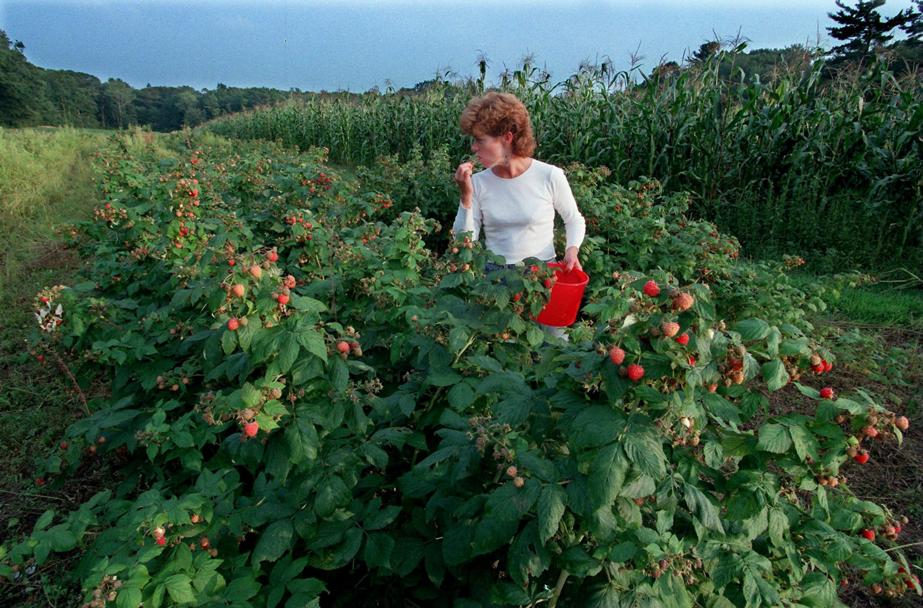
A. I’m very sorry for your loss. Raspberry and blackberry plants have a tendency to be biennial, fruiting their second year. You can simplify pruning if you have “primocane’’ raspberry varieties, which means canes that fruit their first year. If you’re not sure, try this experiment: Cut or mow all your canes to the ground now before the tips start to sprout leaves. Cut them as close to ground level as you can, and burn or bag the canes, which can carry plant diseases. When the new shoots reach 3 feet, cut the tips back by 6 inches to encourage side stems. If you have a primocane variety, you should get one big crop of berries in the fall. In that case, cut or mow these canes to the ground sometime between November and April and wait for new ones to sprout again.
But what if you don’t get fruit this fall? Then you don’t have primocanes and should adopt a two-year pruning cycle. In March 2017, thin the canes instead of cutting them all. Leave the four thickest and healthiest-looking canes per linear foot. (The best way to grow such brambles is in rows less than 2 feet wide, so you can reach all the fruit.) Test for winter survival by scraping the bark with you thumb to look for green tissue underneath. Cut back these remaining canes to a height that makes harvesting easy. You will then have a row of second-year canes that should fruit in the summer of 2017. Immediately after this harvest, cut out all the old canes to make room for the new ones that will have sprouted. They will be straight, flexible, and easy to tell from the battered and dying older canes. These youngsters should produce their own berries in autumn. Then you will be rewarded for your complicated efforts with more total fruit over a much longer harvest period. Yea! Thin these 2017 canes in March 2018. After the surviving old canes fruit in summer, cut them down. Again, spare the newly spouted ones.
Send your garden questions and comments to stockergarden@gmail.com. Please include your name and town for publication.

