


Massachusetts might be known as a liberal bastion, but the state’s political power structure has long been a boys’ club.
Voters have never elected a woman governor (Republican Jane Swift inherited the spot when her boss took an ambassadorship), and the Commonwealth didn’t send a woman to the US Senate until 2012. Only about a quarter of lawmakers in the Legislature are women — a number that hasn’t changed in two decades.
That boys’ club, however, appears shaky these days, as women pols have risen to prominence in recent years — bringing with them fresh clout amid the wave of female activism and candidacies set off by the election of President Trump.
There’s Elizabeth Warren, of course, who won that 2012 Senate race. A progressive rock star and the subject of much presidential speculation, she’s so well-known nationally that TMZ, the celebrity gossip website, regularly sends crews to ambush her at the airport in Washington, D.C.
There’s also Attorney General Maura Healey, who has grabbed national headlines as a leading force in challenging the Trump administration on everything from its travel ban against some Muslim countries to protections for defrauded student borrowers. Many Democrats hoped — to no avail — she would take on Governor Charlie Baker this year; they predict she’ll take a run at the corner office in the future.
Katherine Clark, US Representative from Melrose since 2013, meanwhile, has been anything but a back-bencher during her short tenure in Washington, seizing her own moments in the spotlight with pushes for new gun laws in response to mass shootings. She’s also impressed party leadership with her behind-the-scenes work to help Democrats win the House in 2018.
“It’s been quite a long time coming,’’ said Representative Niki Tsongas, who is retiring at the end of her current term. She was motivated to run 10 years ago to represent the Lowell-based district because “I just couldn’t tolerate that a woman hadn’t been elected to Congress [from Massachusetts] in 25 years,’’ she recalled.
Among the markers of change Tsongas sees now: Five of the 14 Democrats planning to run in the primary for her seat are women.
“The bad news is, Massachusetts, despite its reputation, is so far behind — or I should say middle of the pack. But that’s not where Massachusetts wants to be, in terms of electing women and especially women of color,’’ said Erin O’Brien, a political scientist at the University of Massachusetts Boston. “The good news is that there are these superstars emerging.’’
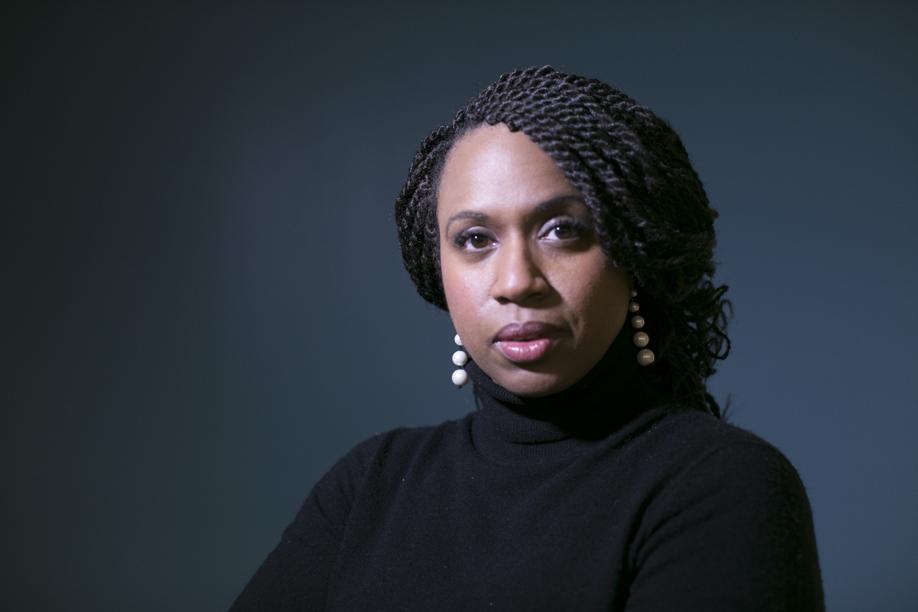
O’Brien highlighted Ayanna Pressley, the first woman of color elected to the Boston City Council, and her gambit to oust US Representative Michael E. Capuano, also a Democrat, from the seat he’s held since 1999.
Pressley, who is black, would be the first nonwhite representative for the strongly Democratic Seventh District, which is the state’s only congressional district where the majority of residents are minorities.
“It’s bold for any politician, and it’s particularly bold for a female politician, and especially a woman of color,’’ O’Brien said of Pressley taking on Capuano.
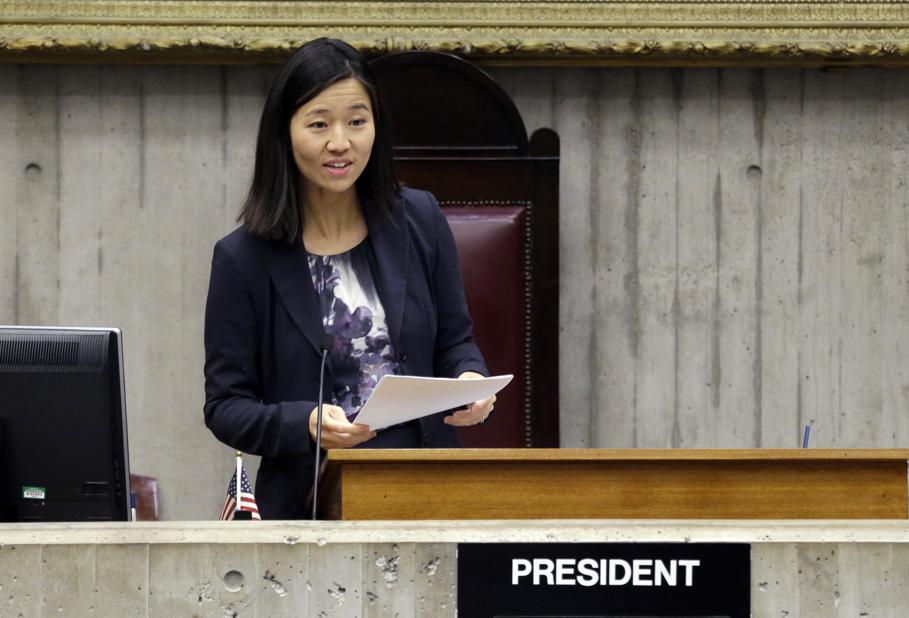
Another buzzed-about young Democrat is Michelle Wu, former president of the City Council, who has attracted speculation about a future mayoral bid. She and Pressley are among a group of six women of color elected to the City Council in November — an unprecedented number in Boston.
Research suggests that such top-level elected women could grease the way for others to enter politics at all levels. It might already be happening: Emerge Massachusetts, which recruits and trains Democratic women to run for office, reported training 66 women in 2017, up from 32 in 2016 and just eight in 2015, said Ryanne Olsen, the group’s executive director.
“It feels different, and it feels like it matters,’’ she said.
The rise in female candidates here mirrors a nationwide surge in the wake of Trump’s election.
Fifty-four women — 31 Democrats and 23 Republicans — have either declared or are expected to declare themselves as candidates for US Senate seats in 2018, double the number from this point two years ago.
On the other side of the Capitol building, more than 430 women are likely to run for House seats this year, the vast majority of them Democrats — also roughly double the level two years ago at this point, according to data from the Center for American Women and Politics at Rutgers University.
Clark is at the cross-section of these two trends — a standout Massachusetts woman who is helping women seek office as vice chairwoman of recruitment for the Democratic Congressional Campaign Committee.
The role puts her in the trenches of Democrats’ fight to take control of the House. As part of her job, Clark has nurtured numerous female candidates, many of them first-timers.
“I think it’s very important that women run and that women who are moms, who do have to balance careers and jobs, that they see a way forward in this process,’’ said Clark, a 54-year-old parent of three.
Among the advice she dispenses: “You can do anything as a family for a year, but campaigns are intense and there was no point in my campaign that I felt I was both a good candidate and a good mom. . . . And that will probably happen to them, and that is OK. You get through it.’’
Candidate recruitment is largely unglamorous work — think long hours in windowless conference rooms — for which Clark has received little notice. Her colleague, Representative Seth Moulton of Salem, has promoted his own efforts — somewhat controversially — to help 19 veterans run for the House.
But her DCCC work is impressing party insiders and marking her in Washington circles as someone to watch in the future, party officials said.
“I truly can’t say enough good things about Katherine,’’ said DCCC chairman Ben Ray Lujan, a representative from New Mexico.
She’s a solid fund-raiser, having raised about $800,000 for candidates and the DCCC so far this election cycle, with several other events scheduled in the coming months, according to a Clark adviser. And she’s taken on an informal role of progressive matchmaker, connecting anti-Trump constituents and activists in her deep blue district with Democratic candidates around the country who could use donations or manpower.
Warren and Healey have also been trying to boost other female candidates.
Earlier this month, Warren gave a speech in Austin that raised half a million dollars for Annie’s List, which helps elect progressive women in Texas. She’s supported several women running for Senate, including Representative Jacky Rosen, who is challenging Nevada GOP Senator Dean Heller, and Wisconsin Senator Tammy Baldwin, who faces a tough reelection fight.
In addition to campaigning for numerous women at the state and local level in Massachusetts, Healey cochairs the 1881 Initiative, which aims to recruit, fund, and elect more women to state office — with the specific goal of having at least half the Democratic attorneys general be women by the end of 2020.
Tsongas says she is encouraged by the wave of women running for the US House and other offices this year. Women’s voices at the table, she said, make a difference in policy and the direction of the country.
“Change comes inevitably, but it doesn’t come if we’re not there,’’ she said.
Victoria McGrane can be reached at victoria.mcgrane@globe.com. Follow her on Twitter @vgmac.

