


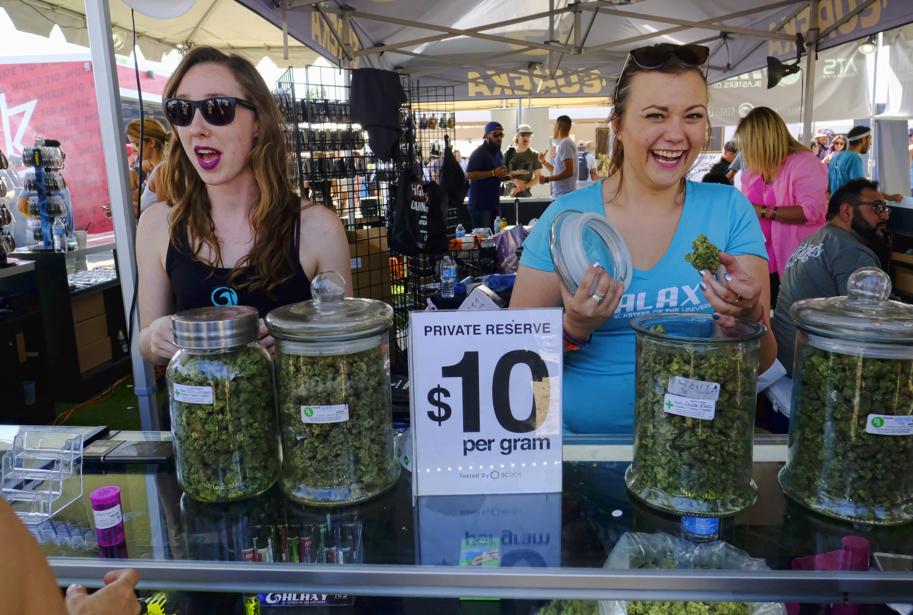
LOS ANGELES — Ready or not, California kicks off recreational marijuana sales on Jan. 1. And, mostly, it’s not.
Los Angeles and San Francisco are among many cities still struggling to fashion local rules for pot shops and growers. Without the regulations, there could be limited options in many places for consumers eager to ring in the new year with a legal pot purchase.
“The bulk of folks probably are not going to be ready Jan. 1,’’ said Cara Martinson of the California State Association of Counties.
California will treat cannabis like alcohol, allowing people 21 and older to legally possess up to an ounce and grow six marijuana plants at home.
In January, the newly legal recreational business will be merged with the state’s two-decade-old medical marijuana market, which is also coming under much stronger regulation. But big gaps loom in the system intended to move cannabis from the field to distribution centers, then to testing labs and eventually retail shops.
Massachusetts voters approved legalizing adult use of recreational marijuana in November. Massachusetts officials have been cautious about the rollout and sales were delayed.
California intends to issue temporary licenses starting in January and has yet to release its plan to govern the estimated $7 billion marketplace, the nation’s largest legal pot economy.
If businesses aren’t licensed and operating in the legal market, governments aren’t collecting their slice of the sales revenue. The state alone estimates it could see as much as $1 billion roll in within several years.
Operators complain about what they see as potential conflicts in various laws and rules, or contradictory plans.
The state expects businesses that receive licenses will work only with others that hold them. But that has alarmed operators who wonder what will happen if their supplier, for example, decides not to join the new legal market.
Others say it’s not clear what could happen in cities that don’t enact pot laws. Some municipalities have banned recreational sales.
Most banks continue to refuse to do business with marijuana operators — pot remains illegal under federal law — and there are problems obtaining insurance.

