


THE SOUND OF MUSIC
Presented by Broadway in Boston. At Boston Opera House, Tuesday through April 10. Tickets start at $44. 800-982-2787, www.broadwayin
boston.com
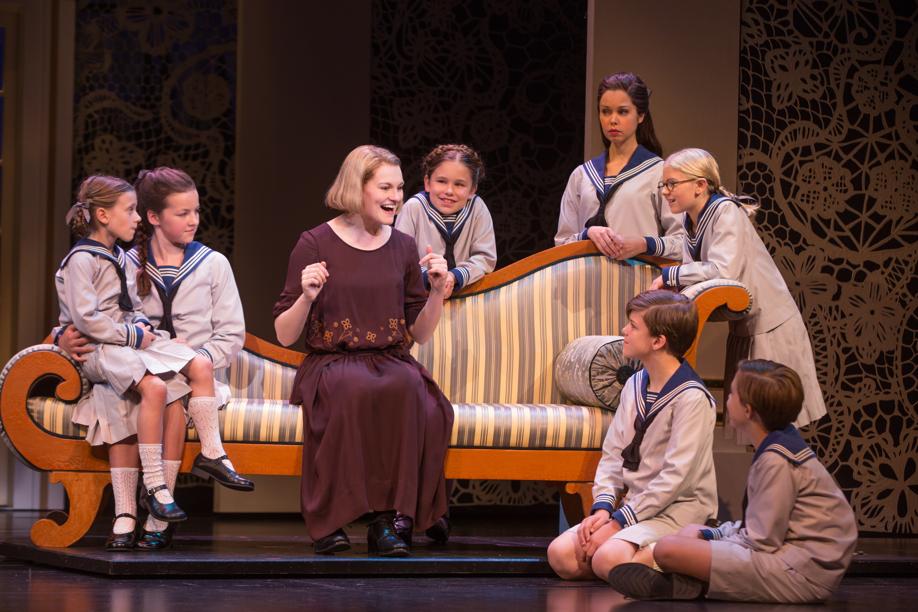
When director Jack O’Brien was casting for the national tour of “The Sound of Music,’’ he knew one thing: He didn’t want a star to play Maria, the iconic role immortalized by Julie Andrews and Mary Martin. “The first thing she does is stand on the stage and sing ‘The Sound of Music,’?’’ he explains. “That song is the equivalent of ‘To be or not to be.’ It should be in the second act, but it happens in the first minute of the show. If it is sung by a Mary Martin or a Carrie Underwood or even Cher, you don’t pay attention to the song. But if you have never seen this girl, it forces you to listen. And this is Nannygate. I didn’t want a star. I wanted a baby sitter.’’
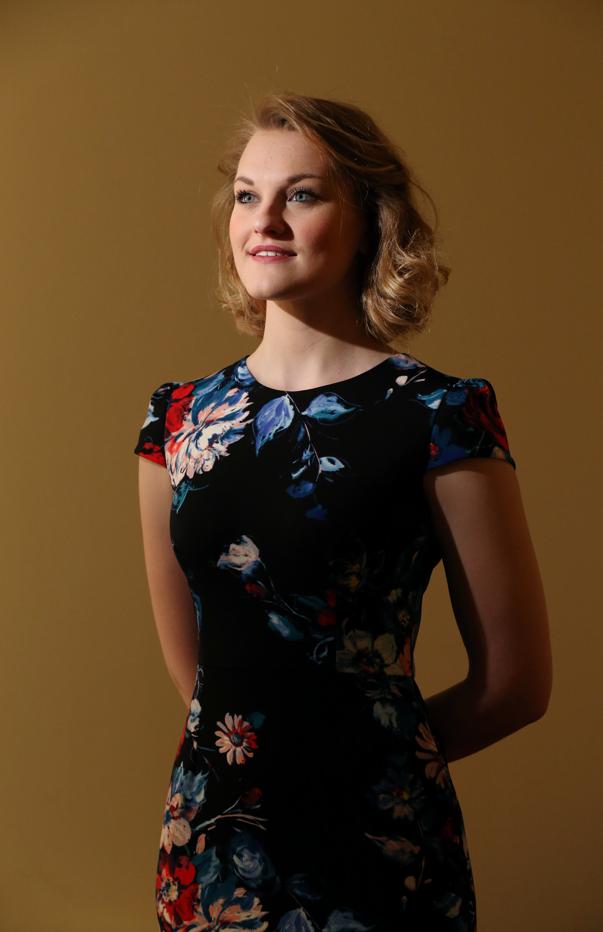
During casting, he saw a parade of actresses who looked like “cookie cutter versions of Julie Andrews.’’ But then Kerstin Anderson appeared. “She sort of loped in,’’ O’Brien recalls. “She is tall. She is rangy. She looked like a field hockey player. And then she opened her mouth, and tears fell from my eyes.’’
Anderson got the part.
At the time, she had just finished her sophomore year at Pace University in New York; she is now taking time off to star in the touring production, which plays the Boston Opera House Tuesday through April 10.
She says she went to the audition on a whim and was floored when she got the call from the casting director. “I was out to dinner, and I had to pack up the whole thing,’’ says Anderson, 21. “I couldn’t eat. It was earth-shattering.’’
O’Brien, a three-time Tony Award-winner, simply asked her to be herself. “I think I bring a youthful energy to the part and a slightly tomboyish nature,’’ she says. Anderson grew up in Burlington, Vt., about 45 minutes away from the Von Trapp Family Lodge, the place where the real-life Maria settled after escaping from Austria. She frequently went to the lodge while she was growing up, and she did her fair share of climbing mountains and fording streams. She remembers watching the 1965 film starring Andrews and Christopher Plummer.
“Maria was iconically Julie Andrews in that movie, and I didn’t think anyone else could play her,’’ she says. “It never crossed my mind.’’
But this production is decidedly not the movie. The producers gave O’Brien free rein, and he certainly didn’t want to re-create the original stage production of the Rodgers and Hammerstein classic, which he had seen as a college student in 1960. He also recently saw the musical in Russia. “It was this enormous, nonsensical production, and I don’t speak Russian,’’ he says. “But the girl playing Maria was so fresh and so immediate that I found myself deeply moved. I thought maybe this is a better show than I remembered.’’
He looked at the script and the score anew. “No one has asked any questions of this sleeping beauty of a musical in 40 years,’’ he says. “It hasn’t been anything but a decoration to hang around the neck of a star.’’
The first thing he noticed was the date and the place: Austria, 1938. Kristallnacht was just around the corner. Danger was in the air. O’Brien decided to revive the old chestnut by injecting a sense of urgency.
He also lowered the ages of the actors by about 20 years. Maria and the Mother Abbess are closer in age, whereas in the film, the head nun is a stately senior who tsk tsks Maria’s clownish ways. In this production, they understand each other, almost as peers.
Anderson is around the same age as the real Maria when she left the abbey to become the nanny for the children of Captain von Trapp, a man 25 years her senior. Ben Davis, who plays von Trapp, is 40. “Maria is the perfect second wife because she is so unlikely,’’ says O’Brien.
In order to dust off the classic, O’Brien had the actors speak the lyrics, rather than sing them, for the first two weeks of rehearsal. “I didn’t want them to settle in on that score and let them drift through the performance like a picnic basket,’’ he says. For Anderson, the rehearsals were a young performer’s dream. “It was like a four-week master class,’’ she says.
O’Brien looked at all of the characters closely, as if they were new to the stage. Rolf, the young boy who courts 16-year-old Liesl and ultimately betrays her, is often seen as an evil character, but O’Brien sees him as a young mountain boy scrambling to get by in life.
“What if he isn’t a baby Nazi, but that local kid that your mother didn’t want you to play with?’’ he asks. “He is probably low class. He is probably a sexy little boy who has laid every girl in the village.’’
The film version is hardly sexy, even though dear old Dad does run off with the nanny. “Do you remember Christopher Plummer kissing Julie Andrews?’’ O’Brien asks. “It wasn’t very hot.’’ Plummer, in fact, referred to the film as “The Sound of Mucus.’’ But O’Brien says that the kiss in his production is steamy, and it frequently elicits ovations from the audience.
That kiss takes place as the Nazis prepare to take over Austria, and O’Brien and Anderson say that fact looms over the entire production. “It is the same beloved songs, the same beloved story, but Jack O’Brien is bringing out the pieces that people haven’t seen in years and years,’’ Anderson says. “It has a really rich history, and with that comes urgency.’’
O’Brien says it wasn’t hard to put his stamp on the musical. “It was an easy birth. Nobody felt like we were replicating something. Everyone felt that we were peeling away layers of varnish and finding something beneath them.’’
The sets by Douglas W. Schmidt contain the requisite elements — the staircase, the abbey, the mountain — but there aren’t endless drop curtains while the scenery is changed. And, of course, as we all know, the von Trapp family climbs over that mountain at the end.
O’Brien hopes the final scene has a new resonance. “I kept reminding myself that this isn’t a musical with a happy ending,’’ he says. “This is a scenario for survival.’’
THE SOUND OF MUSIC
Presented by Broadway in Boston. At Boston Opera House, Tuesday through April 10. Tickets start at $44. 800-982-2787, www.BroadwayInBoston.com
Patti Hartigan can be reached at pattihartigan@gmail.com.

