


Nexus Pipeline work in early stages
Construction crews laying groundwork for huge pipeline
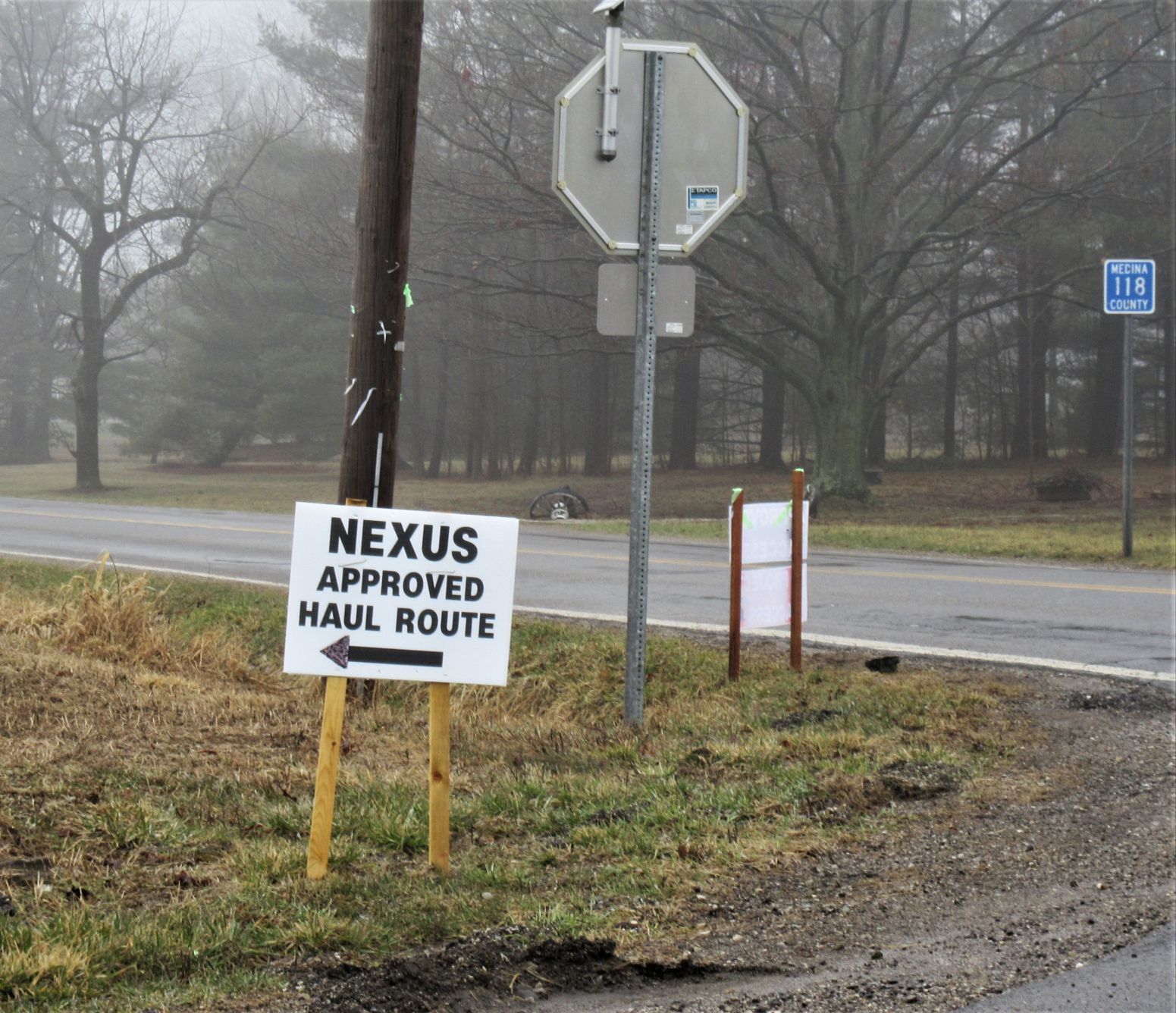
Signs like this at the intersection of Guilford and Blake roads indicate routes approved for heavy vehicles working on construction of the Nexus Pipeline. Photos by GLENN WOJCIAK
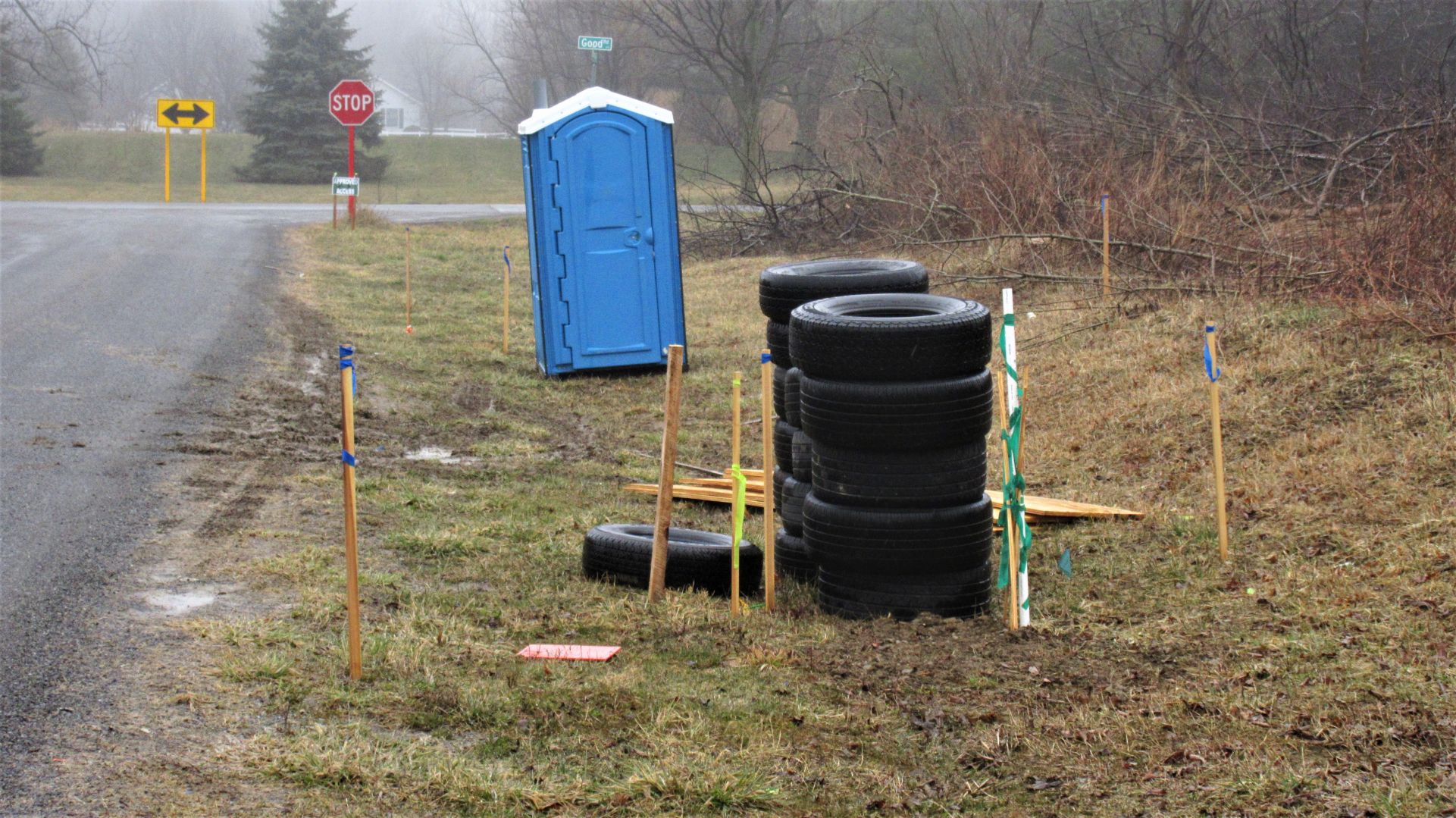
Old tires and a portable toilet near the intersection of Good and Hubbard Valley roads indicate where construction crews plan to begin work on the Nexus Pipeline. The tires help protect the road from damage by heavy vehicles.


MEDINA – Preliminary signs of construction of the Nexus Pipeline have become visible in parts of Medina County, but cold wet weather hasn’t been helpful to construction crews preparing to move in heavy equipment.
In addition to construction of the so-called Wadsworth compressor station which began last fall in Guilford Township, work crews have begun clearing and grading the route on which the pipeline will be laid.
The compressor station is being built along Guilford Road next to Interstate 76. It will consist of several buildings to house a 27,000-horsepower compressor and associated equipment. It is one of three along the 250-mile route for the Nexus Pipeline which will carry pressurized natural gas through a 36-inch pipeline from Eastern Ohio to Ypsilanti, Mich. from where it will be sent along existing pipelines to western Ontario.
A construction update prepared by Nexus Gas Transmission indicates construction crews planned to begin work in March on the section of pipeline passing through Medina County. Mainline construction will move from east to west employing the following steps described by company spokesman Adam Parker:
• Clear the work areas of brush and trees;
• Separate the top soil (where required);
• Grade the work area to level;
• String the pipe along the work area;
• Bend the pipe joints (as needed to follow the contours of the terrain);
• Weld sections of the pipe together;
• Dig the trench for the pipeline;
• Conduct visual and non-destructive inspections of each weld area to verify the integrity of each weld;
• Coat the weld with corrosion resistant coating;
• Place the pipe into the trench;
• Back fill the trench;
• Restore the work areas to pre-construction condition.
Restoration crews are expected to finish the majority of their work in the third quarter of the year when the pipeline should go into service.
Work should proceed in assembly line fashion with work crews covering up to one mile a day.
The 255-mile, $2.1 billion pipeline will have the capacity to deliver about 1.5 billion cubic feet of natural gas per day to markets in Ohio, Michigan and Ontario.
The pipeline route carries it across parts of Wadsworth, Guilford, Montville, Lafayette, York and Litchfield townships.
The pipeline project has attracted a group of vocal and active protestors since it was first announced in 2014. Among them is Sustainable Medina County, which plans to monitor air quality around the compressor station and has been lobbying to get Medina County commissioners to help pay for the tests intended to detect any harmful pollutants released at the compressor station.
Officials in Green also aggressively fought construction of the pipeline in their city and recently reached a $7.5 million settlement with Nexus and a pledge to closely monitor the pipeline once it is in operation.
In addition to construction of the so-called Wadsworth compressor station which began last fall in Guilford Township, work crews have begun clearing and grading the route on which the pipeline will be laid.
The compressor station is being built along Guilford Road next to Interstate 76. It will consist of several buildings to house a 27,000-horsepower compressor and associated equipment. It is one of three along the 250-mile route for the Nexus Pipeline which will carry pressurized natural gas through a 36-inch pipeline from Eastern Ohio to Ypsilanti, Mich. from where it will be sent along existing pipelines to western Ontario.
A construction update prepared by Nexus Gas Transmission indicates construction crews planned to begin work in March on the section of pipeline passing through Medina County. Mainline construction will move from east to west employing the following steps described by company spokesman Adam Parker:
• Clear the work areas of brush and trees;
• Separate the top soil (where required);
• Grade the work area to level;
• String the pipe along the work area;
• Bend the pipe joints (as needed to follow the contours of the terrain);
• Weld sections of the pipe together;
• Dig the trench for the pipeline;
• Conduct visual and non-destructive inspections of each weld area to verify the integrity of each weld;
• Coat the weld with corrosion resistant coating;
• Place the pipe into the trench;
• Back fill the trench;
• Restore the work areas to pre-construction condition.
Restoration crews are expected to finish the majority of their work in the third quarter of the year when the pipeline should go into service.
Work should proceed in assembly line fashion with work crews covering up to one mile a day.
The 255-mile, $2.1 billion pipeline will have the capacity to deliver about 1.5 billion cubic feet of natural gas per day to markets in Ohio, Michigan and Ontario.
The pipeline route carries it across parts of Wadsworth, Guilford, Montville, Lafayette, York and Litchfield townships.
The pipeline project has attracted a group of vocal and active protestors since it was first announced in 2014. Among them is Sustainable Medina County, which plans to monitor air quality around the compressor station and has been lobbying to get Medina County commissioners to help pay for the tests intended to detect any harmful pollutants released at the compressor station.
Officials in Green also aggressively fought construction of the pipeline in their city and recently reached a $7.5 million settlement with Nexus and a pledge to closely monitor the pipeline once it is in operation.

